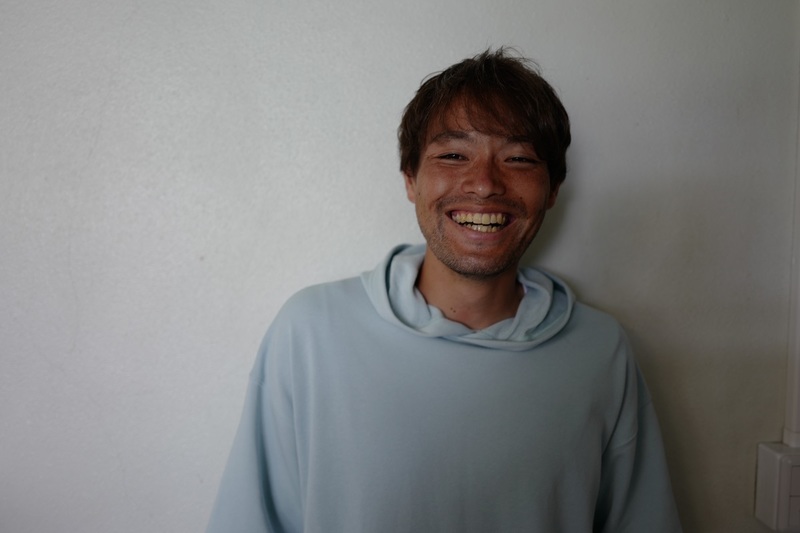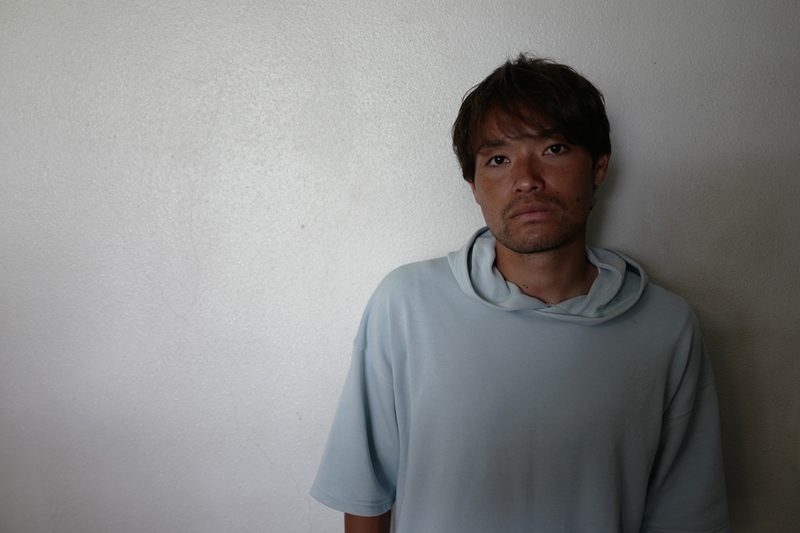


There is a special time with the singers of the Blue and Red song.
The armband on my left arm and the number 10 on my back, which I was entrusted with from this year, feel a bit heavy.
However, the moment I hear 'You’ll never walk alone,' I feel like 'I am not alone.'
Beyond the time of dreams――.
Keigo HIGASHI and the Tokyo family move in step, continuing to walk together.
Aiming for the first J1 League championship.
If it's Tokyo, it's got to be Yuruneba!!
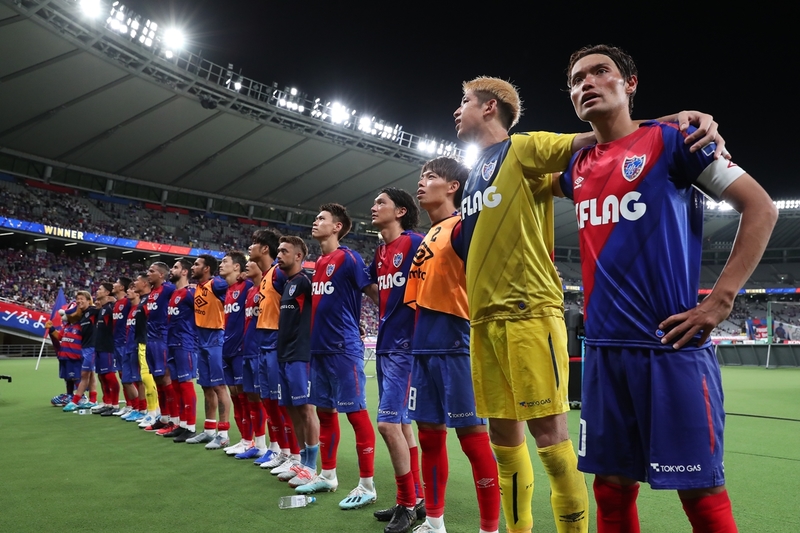
After the Sec. 12 J1 League match against Sapporo this season, Ajinomoto, buzzing with the 2-0 victory, was enveloped in a chorus of "You’ll never walk alone." This has become established as the victory anthem. The one who initiated it was Keigo HIGASHI, who has served as captain since this season.
It was when I watched the Maori tribal dance "Haka," performed by the New Zealand rugby team before a match, on a video streaming site. "This is amazing," I was captivated. As I thought, "If only we could create this kind of unity at Ajinomoto," the idea struck me, "For FC Tokyo, it has to be 'Yuruneba'!!"
"This year, especially because we were winning at home, I wanted to turn the feeling of 'wanting to win more, wanting to get more passionate' into something tangible. I also wanted to share that feeling with the people present."
We called on fans and supporters to bring this idea to life, but there was also a slight sense of anxiety.
"I don't know if everyone who comes to the stadium can sing along, and maybe it won't get exciting."
However, those worries proved to be unfounded. Fueled by the exhilaration of victory, the loud Yuruneba echoed throughout the stadium from the start. Higashi himself said, "I studied so I could sing properly; it wouldn't be right if the one who suggested it couldn't sing," quickly memorized the lyrics, and sang passionately together with the blue and red singers.
"This feels absolutely amazing"
It was a great success. Among them, the players who came from the academy welcomed this. It is a song they have grown up listening to since childhood. There is no way not to be moved by that scene.
"I was happy that Go HATANO, Tsuyoshi WATANABE, and Kiichi YAJIMA all said in unison, 'It's the best.' It was the moment I thought, 'I hope this becomes a part of everyday life from now on.'"
I want to get fired up――. If a few years ago someone told Higashi that he said such words, the one who would be most surprised is Higashi himself.
"To be honest, when I came here, I didn't think deeply about it. Playing in matches had become a given, and somewhere along the line, my ambition had faded. Although I said I wasn't satisfied, I had participated in the Olympics, and looking back now, I was actually content with that."
It was in 2013, the year after the London Olympics, when the team advanced to the Semifinal Round for the first time in 44 years, that Aoaka put on the jersey. At that time, Higashi was far from gritty and somewhat detached.
"I thought it was cooler to be able to do anything smartly. It's enough to give 100% in the game. I have my own way."
Prioritizing results over process. As long as I can give my all in the match, it doesn't matter if I don't feel like practicing on some days. I never doubted that this was the world of professionals.
The Backs That Were There
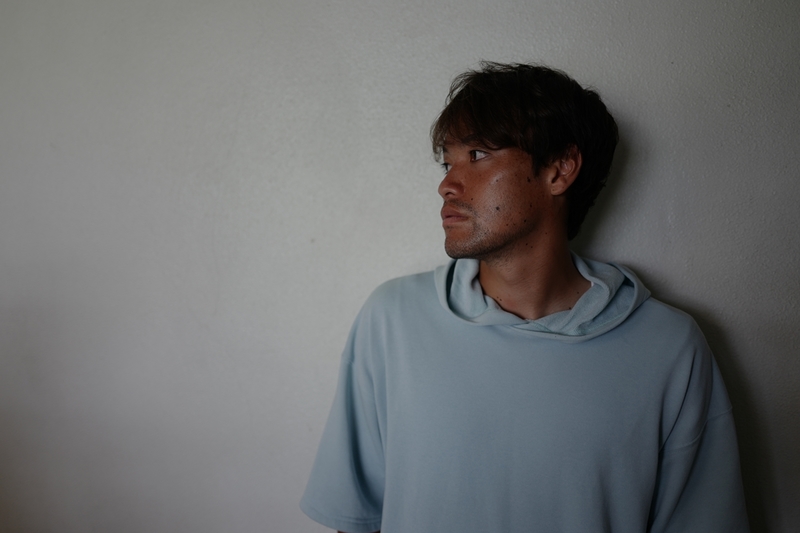
I don't want others to see me making an effort. Such smoldering talent quickly hits a dead end. In August 2014, I suffered a right thigh muscle strain, marking my first long-term absence since turning professional. The diagnosis was a recovery period of about 6 to 8 weeks. Although I returned as scheduled after two months, I lost my regular position and spent the rest of the season repeatedly coming on as a substitute.
"That's when I first thought this can't go on like this"
At that moment, the coach Bruno Conca (at the time) called me over saying, "Got a moment?".
"You try so hard during matches, so why don't you give your all in daily practice, Keigo?"
That hit a sore spot. From that day, he changed his attitude and how he spent each day. He learned daily, felt gratitude, and worked up a sweat. When he took his hands out of his pockets and started walking, the scenery changed too. "I wasn't originally the type to be interested in others," said Keigo HIGASHI, who realized that many role models were right nearby.
"Seeing Mr. Nyuu (Naotake HANYU) and Mr. Nao (Naohiro ISHIKAWA)'s attitude might have been a big influence. Those people were always thinking about the team. But when they stepped onto the pitch, they could also show their own strengths. That was truly a great learning experience. I often had opportunities to go out for meals with Mr. Nao, so we talked about many things. As I listened to his passionate feelings for Tokyo, it was natural for me to also want to make this team stronger. That's why my attachment and feelings for Tokyo grew stronger."
I was inspired by their backs that have survived the harsh professional world with small bodies, and their struggles while dealing with injuries. Those feelings naturally began to well up inside me.
And as Hanyu supports the team as an excellent supporting player, he begins to see his own future reflected in him. Higashi continues.
"Originally, I was a player who had to coexist with those around me. I'm not the type of player who can do something alone, and I have to coordinate with others. That was something I learned from Nyuu-san."
Continuously supporting someone in both attack and defense for the team. Always keeping an eye on the surroundings and filling the gaps. Never leaving anyone alone on the pitch.
You’ll never walk alone (You are not alone)――.
Before I knew it, that phrase had come to suit the player perfectly.
(Continued in Part 2)
◇Keigo HIGASHIProfile
text by Kohei Baba