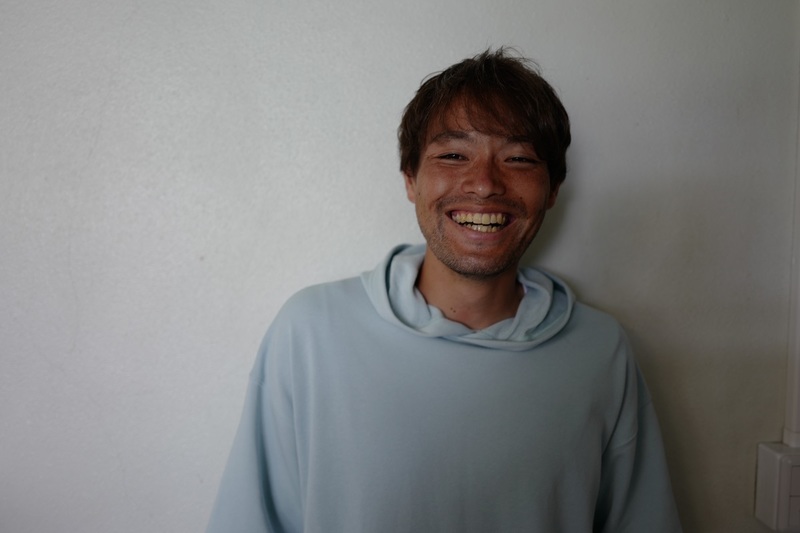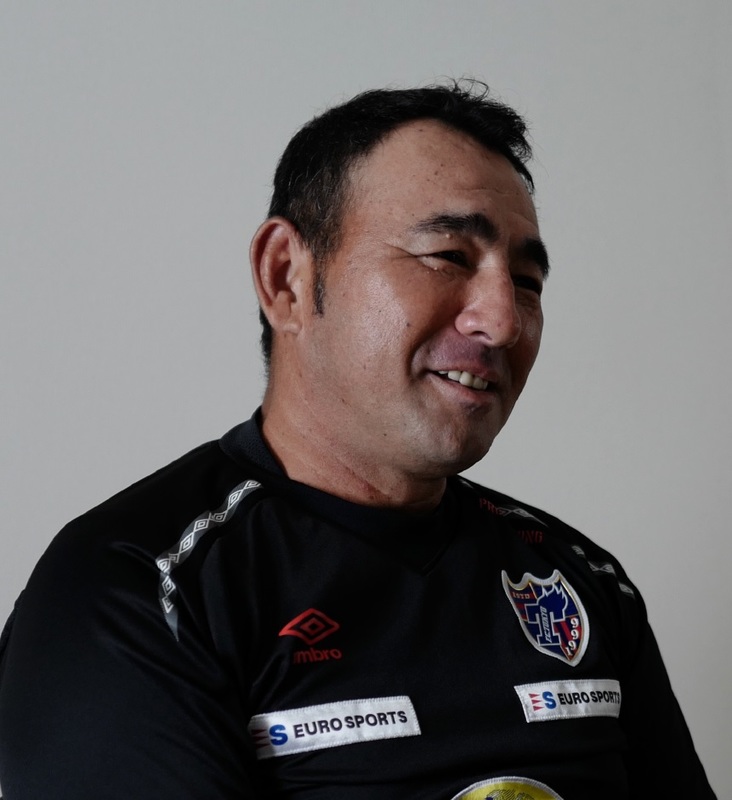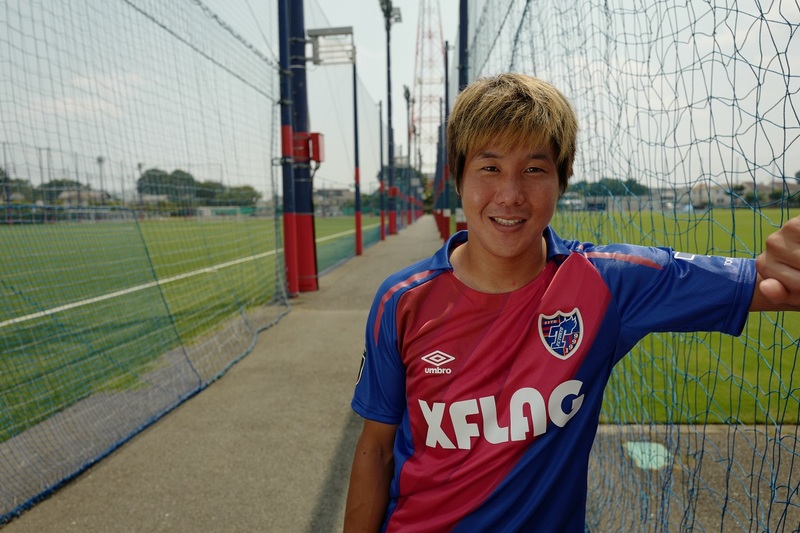


Returned to the familiar place.
The Kodaira Ground, filled with memories, welcomed us warmly just as before.
"Tama," loved and cherished by the blue and red.
The roots where that talent was nurtured, and the reason for donning the blue and red again this summer――.
What was there was a vivid, heartfelt emotion.
"I didn't want Tokyo to win without me."
That's why Tama came back.
"Because I wanted to make Tokyo the champion"
Roots of TAMA
――What made you start playing soccer?
"I've been playing soccer since I was born (laughs). I liked moving my body from a young age and also played baseball and basketball. Since kindergarten, I played various sports with my friends just for fun, but soccer was the one I was best at and loved the most. This continued after entering elementary school, and my parents said, 'If you like it that much, let's find a nearby soccer team.' However, the first team I joined only practiced once or twice a week, so I quickly felt it wasn't enough. At that time, Yocchi (Yoshinori MUTO) was also at the same elementary school, and our dads played soccer together in the schoolyard. Then, Yocchi's dad invited me, saying, 'Why don't you come to Buddy SC?' That was around the end of third grade."
――What is your connection with FC Tokyo?
"I joined the Fukagawa School in 5th grade. I trained three times a week at Buddy SC and once a week at a Tokyo school. Even so, I wanted to kick the ball more, so I attended another soccer school twice a week and also participated in morning practice with my elementary school team. So, my week was almost entirely filled with soccer every day (laughs). I just loved soccer, and I could do everything from dribbling to shooting, and I also enjoyed playing as a goalkeeper. I think I was the best when I was in elementary school (laughs)."
——Was joining FC Tokyo U-15 a natural progression for you?
"The reason I wanted to join the Tokyo academy was definitely because I joined the school. Deep down, I wanted to play at a high level. Also, I liked watching soccer. I even went to see the 2002 Korea-Japan World Cup. I watched two Japan national team matches. I saw the England match, the Semifinal Round, and the Final Round at the stadium. For the J-League, I went to many Tokyo matches. Since my school days, I bought tickets and went to Ajinomoto. After joining the U-15 team, I was given tickets, so I was happy thinking 'I can go anytime' (laughs)."
――What was your impression of the top team at that time?
"Nao-san (Naohiro ISHIKAWA) was incredibly sharp, and I also loved Kelly. The 2004 Yamazaki Nabisco Cup (now YBC Levain Cup) Final Round, which I watched together with everyone from the U-15 team, left a strong impression. Among the players, I especially liked Sasa SALCEDO. He scored impressive goals at crucial moments. That playing style was irresistibly cool. When I was at the Fukagawa School, I often waited around to get his autograph. Kelly, Lucon, Amaral... and also Yuta BABA. Because I liked him so much, Mr. Kuramata (Hisao KURAMATA, then U-18 coach) kindly got me his spikes when I was in the U-18 team."
*Note - Joined in July 2005 and played until the middle of the following season. Although the tenure was short, he scored memorable goals including the winning goal against Verdy. Mita's cheer song uses the same tune as Sasa SALCEDO's.
――What is the story behind your nickname "Tama"?
"It started when I was in U-15. While I was stretching, Coach Maruyama (Koji Maruyama, then U-15 coach) said, 'You always wear the same comfortable clothes. You're just like Tama-chan from the Tamagawa River' (laughs). Other teammates had names like Ruben, Pablo, and ZECA Carlos, which are football players' names... So at first, I really hated it. But I got used to it quickly (laughs)."
The Turning Point: Meeting My Mentor
――Memories from your academy days?
"In U-15, we were able to advance to the final round of the 'Prince Takamado Trophy All Japan Youth (U-15) Soccer Championship,' which is the last tournament for third-year junior high school students. The final round (December 29, 2005) was held before the Emperor's Cup semifinal round (Omiya vs Urawa). Even so, fans and supporters from Tokyo came to cheer us on. Although we lost, I remember it was very enjoyable to play at the Japan National Stadium in such an atmosphere. In U-18, it was also memorable to win the 'Japan Club Youth Championship' in my third year of high school (2008)."
The Club Youth Championship at the U-18 level, where he played a major role and was also selected as the tournament MVP, became a turning point for player Mita.
"That team back then was strong, and I never felt like we would lose. I think we hardly lost any matches throughout the year. I myself didn’t get to play much until the middle of my second year in high school, and there were frustrating times. However, playing alongside Yohei OTAKE (then a senior player, now at Nagasaki) and others a year older than me taught me a lot. In the end, I think I blossomed after switching from the wing to the defensive midfield position. Originally, I wasn’t very fast. As I got older, the physical level of those around me also improved, so I thought I could make better use of my strengths playing as a defensive midfielder rather than on the wing. The coach at the time, Mr. Kuramata, thought the same and put me in as a defensive midfielder. It fit me really well. In my third year, I played every match as a defensive midfielder, and I believe that contributed to the team’s results."
――What was expected of the team at that time?
"You always have to fight and run. In that sense, I was truly trained. You are not allowed to slack off during matches or practice. Once, when I was playing carelessly against a weak opponent, I was substituted after 15 minutes and got scolded badly (laughs). I still remember Kuramata-san telling me, 'You never know who is watching, when and where. So always give your all!' Also, maybe it's about enjoying soccer. Running hard, pressing, quickly regaining possession, launching fast attacks from there—it was just incredibly fun."
— Are the things cultivated during the academy days also the foundation of player Mita now?
"I was trained intensely to always base myself on fighting spirit. Mr. Kuramata, Coach Maruyama, Satoshi MIGITA (current U-18 coach), and Mr. Motoyoshi (Tsuyoshi Motoyoshi / current Shikoku Gakuin University manager) are all passionate people who trained me, and I believe I am who I am today because of them. Speaking of which, I was often scolded by former president Hiroshi Murabayashi as well. Things like, 'Don't eat bread while walking!' (laughs)"
A Model Called the World
――In your fourth year at Meiji University, you made your Aoaka debut as a 'JFA/J.League Special Designated Player,' and after graduation, you joined Tokyo as a professional. How was the journey from there?
"In my first professional year, under coach Ranko POPOVIC, I believe I was able to perform well in almost every match I was selected for. That's why I wanted to start more games... Although only once, I also served as game captain, and it was a fulfilling experience. Then, in my second year, Massimo FICCADENTI took over as coach. His style of football involved a somewhat unique system. To be honest, at that time, I sometimes felt that this style didn't suit me because I was very particular about the defensive midfield position. Now, I understand that formations and positions are decisions made by the coach. Back then, it was difficult."
――Was your strong commitment to the defensive midfielder position also a reason for your subsequent transfer?
"I wanted to show at least once what I can do as a defensive midfielder... The main reason I decided to leave Tokyo after three seasons was that. I had always played as a defensive midfielder in U-18 and university teams, and I believed that was where I could truly demonstrate my abilities. However, I couldn't really do that in Tokyo, and then I received an offer from Sendai saying they wanted to use me as a defensive midfielder. That's when I made my decision."
――Did you ever have the image of coming back to Tokyo someday?
"I wasn't sure if I could really come back, but somewhere deep down, I always had the feeling that someday I would return to Tokyo... Before last season, I received offers from both Tokyo and Kobe, and I struggled a lot with the decision, including whether to stay in Sendai. However, from Kobe, I received a specific proposal: 'We want to play attractive football like FC Barcelona, and we want you to play as a defensive midfielder in that style.' That was very appealing to me as a player. In fact, I believe that decision and choice were not wrong. Last season, I played the most matches and scored the most goals on the team. In about a year and a half of official matches, I scored around 20 goals, and I think that sense of fulfillment, which I hadn't experienced before, and the results I achieved gave me confidence."
――Did you imagine standing on the same pitch as Andres INIESTA?
"Iniesta and I have similar positions and playing styles, so I considered him a player to aspire to. That's why I have been watching his play since practice. His passing and trapping are excellent, and I also took reference from how he positions the ball. He truly values the ball, and when it's a 50-50 ball against an opponent, he always challenges to make it his own, and he can do that. Discovering this was a new revelation, and even at this age, being able to learn is a joy. Playing alongside David Villa and Lucas Podolski was also a truly valuable experience."
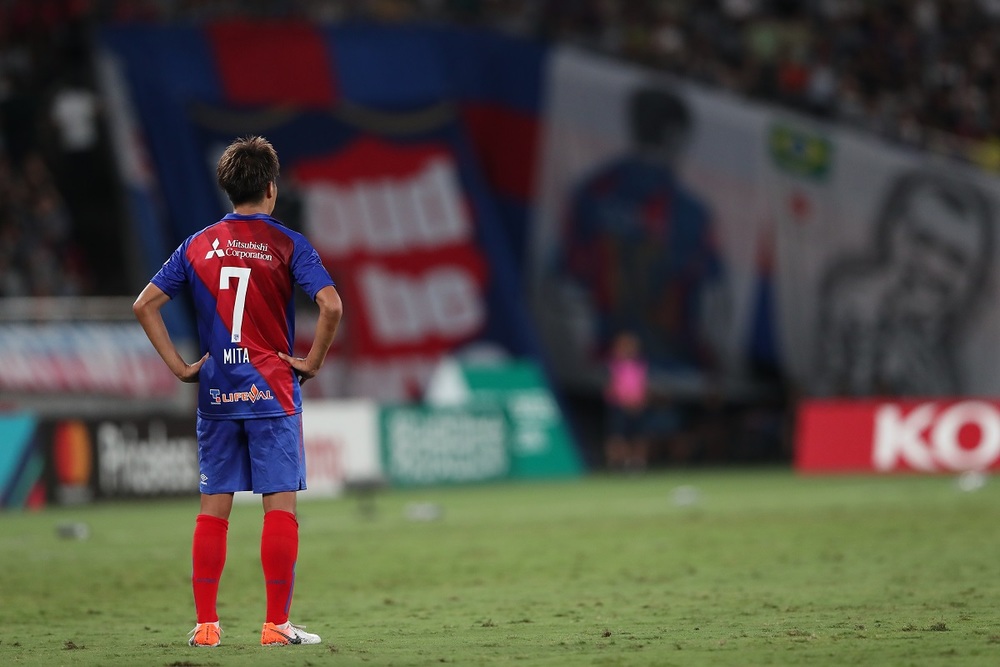
A Thought in the Corner of the Heart
――How do you feel about leaving Kobe?
"I also felt that I could stay in Kobe a little longer. However, at this timing, I received an offer from Tokyo, and honestly, I wanted to try playing under Coach Kenta HASEGAWA. Whether in Sendai or Kobe, I had always been watching Tokyo's soccer. From facing them, I felt that everyone runs and fights hard. They play good soccer. With that image in mind, I instinctively thought, 'I want to fight here too.'"
――Have you been curious about Tokyo's performance this season as well?
"This season, they have consistently performed well, and I have always hoped Tokyo would win the championship... However, to be honest, somewhere deep down, I might have felt that I didn't want Tokyo to win without me... Because I wanted to lead Tokyo to victory. Winning with Tokyo, the team I've supported since I was a child, has truly been my lifelong goal."
―― After actually joining, how do you see Tokyo from the inside now?
"Everyone can run and fight. That is established as the team's foundation. That was just as I imagined. However, the current results are something that everyone else has built up, not me, so I do feel the pressure. Even so, based on the confidence and experience I have cultivated, I have no choice but to play with full effort on the pitch. I believe this feeling can only be shown through results."
— I want to live within the Tokyo football I once learned, fought, and ran in.
"I think that style of football suits me. As I demonstrated during the U-18 period, the best style is one where you can run, fight, and connect the play. The current team has a concept of hard work and quick, simple attacks, but I believe there are moments when connecting play is also necessary. Each player has high ability, so with the awareness that I will join and further enhance that, I want to create a 'difference' in the attacking aspect."
――You will turn 30 next year. What is your vision as a football player?
"I still have a strong desire to aim higher. If I can steadily build up and achieve results here, I believe there is a chance, for example, to join the Japan national team. I want to play in matches, win championships, and keep improving no matter how old I get without giving up. Also, I was really happy that so many people were glad to see me return to Tokyo. So right now, I want to do my best for Tokyo and make an impact. I want to win the championship in Tokyo. That is my honest feeling. Let's definitely win the championship in Tokyo!"
◇Hirotaka MITA Profile
text by Yu Fujiwara
photo by Kenichi Arai, Masahito Sasaki