

<Match Review>
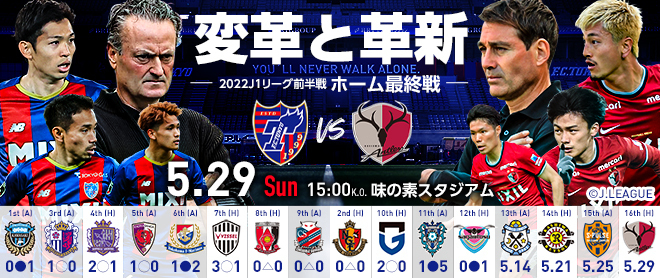
In the middle of the week, we had the Levain Cup match against Avispa Fukuoka, and now we face Sec. 14 of the J1 League after two days. The packed schedule continues, and starting today, we will play three matches in three days. For Tokyo, who has been away from victory in three league matches, this match is crucial to change the momentum at this turning point of the season and to gain both confidence in the growth of our soccer style and three points.
The opponent, Kashiwa Reysol, is in good form at 4th place. After dropping in the rankings over the last three matches, Tokyo wants to accumulate 3 points and stay competitive with the top teams. Captain Masato MORISHIGE, who had been sidelined due to injury, has returned to the team, and they are set to face a Kashiwa team with many energetic young players, along with a stable defense.
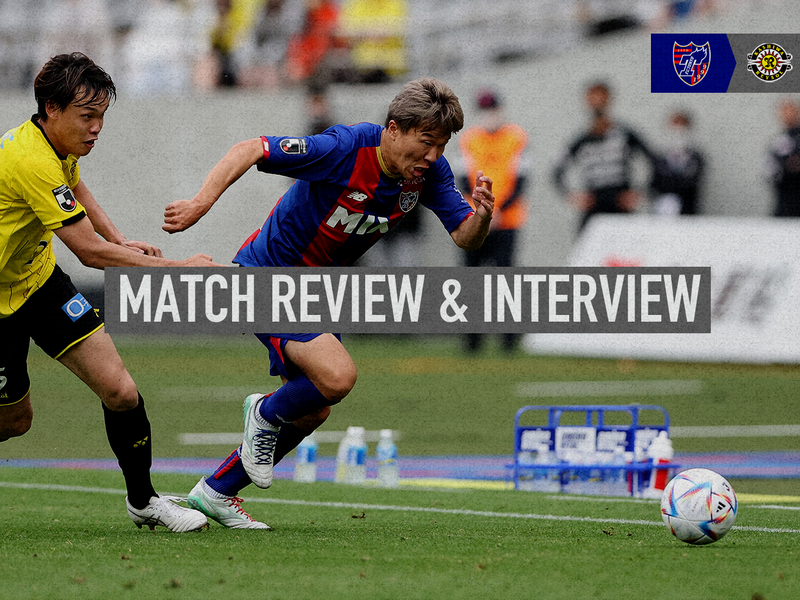
At the start, Tokyo immediately created a chance. In the 3rd minute of the first half, a sharp pass was delivered to left winger Adailton, and Shuto ABE rushed in to receive the ball dropped between defenders with one touch, exploiting the gap and moving toward the goal. Although his one-on-one shot with the goalkeeper was blocked, they showed a direction to break through the attacking zone with a change of pace. However, from this point, Kashiwa increased their intensity in ball contests and pressed closely, making it difficult to build up play, and the time spent being pushed back increased. In the 20th minute of the first half, the defense line was targeted behind, but Jakub SLOWIK closed the distance at the right timing and blocked with his body. In the 25th minute, they allowed deep penetration on the right side and a sharp ball was delivered in front of the goal, but SLOWIK saved again to avoid danger. Toward the end of the first half, there were more moments of carefully moving the ball, and Tokyo spent more time pressing the opponent, but they could not execute the fast-paced breakdown like at the start due to the opponent’s quick retreat. Defensively, Tokyo also responded quickly to the opponent’s fast vertical attacks with good transitions between offense and defense, preventing any decisive chances and ending the half.
As the second half began, the opponent increased their vertical momentum, pushing our formation back, making it difficult to mount a counterattack. In the 15th minute of the second half, a free kick was awarded just outside the penalty area, and Matheus SAVIO aimed for a direct shot, but it hit the crossbar. Tokyo struggled to pick up the tempo during attacks, but in the 22nd minute of the second half, Hotaka NAKAMURA delivered a cross from the right side, and the ball deflected off an opponent's defender at the near side, spilling in front of the goal where Ryoma WATANABE was waiting to make a one-touch attempt, but it went wide of the target. In the 28th minute of the first half, Ryoya OGAWA noticed the opponent's defensive line was high and sent a ball behind them. Substitute Kensuke NAGAI broke free towards the goal and attempted a shot from a tight angle just in front of the left side of the goal, but his shot aimed at the corner was thwarted by a great save from the opposing goalkeeper.
In the 32nd minute of the second half, Adailton received the ball on the left side, cut in, and struck powerfully with his right foot, but the ball that went over the outstretched arms of the opposing goalkeeper hit the crossbar.
In the 44th minute of the second half, as the pressure towards the goal increased and expectations rose for a goal, a corner kick from the left was bundled into the net during a scramble in front of the goal, but this was overturned due to a handball decision supported by VAR. In the remaining additional time, they launched a counterattack, but were unable to score, ending the match in a 0-0 draw.
[Interview with Albert PUIG ORTONEDA]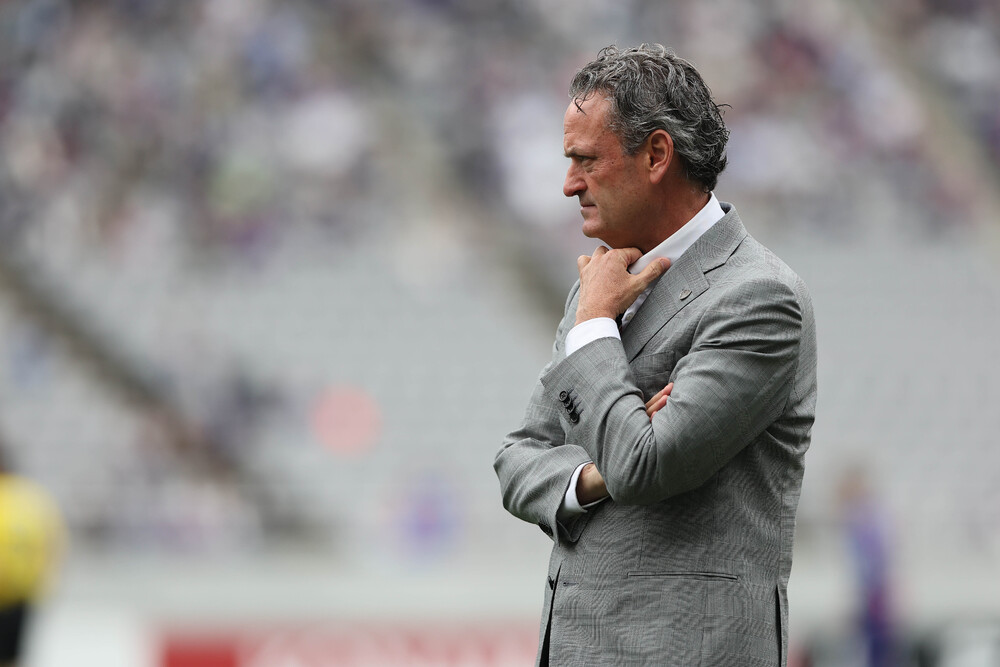
Q, please review the game.
A, there was a decisive chance immediately after kickoff. If we had converted that chance, I think the course of the match would have been different. This season, the J1 League is very competitive. Whether or not you can finish those final moments greatly influences the flow of the game.
After that, I think we had a long time controlling the game by moving the ball well, but there were too many passes at our feet, and I think there were few plays that utilized runs into space.
The team has been spending more time pushing forward. In that context, we are working on improving our vigilance against counterattacks after losing the ball. Today, we saw some improvement in that area, but we need to improve further, and at the same time, we must reduce the number of times we lose the ball. In the second half, we had about 15 minutes of good play. We wanted to capitalize on the chances we created during that time to take control of the match, but we were unable to do so.
The second half continued with a closely contested match. Kashiwa also had chances, and there was a possibility of losing if they had scored. Towards the end of the match, the opponent scored from a corner kick, but that goal was disallowed with the support of VAR. It was a tightly contested match where losing was a real possibility if that goal had counted.
In the last few matches, I think we have been able to express that the team is growing in a positive direction with longer periods of controlling the game. However, there are still some moments where we easily lose balls that we shouldn't lose. This creates opportunities for the opponent, so we need to improve a bit more and avoid losing the ball unnecessarily.
The time spent playing with this playing style is still not long. There are still imbalances, with too much focus on play at the feet or too much focus on play into space. We must grow to achieve a good balance between play at the feet and play into space. For the players, it is difficult because we are asking for a style of play that is clearly different from the soccer they have been playing until now. However, I have no doubt that the playing style we are currently aiming for will lead to the growth of each individual player. The team is moving in a good direction.
If we had been able to bring Leandro on in the second half, he would have brought a lot to the team, and if we had been able to bring Keita YAMASHITA on in the second half, I think he would have similarly been a positive for the team. However, these two felt discomfort and have been away from training. Also, during today's match, Diego and Nagatomo felt discomfort as well, so they were substituted early.
Q: There were reports of discomfort from player Nagatomo, could you please share what you can about it?
At the beginning of the season, we told the players to stop playing immediately if they feel even a slight discomfort. Forcing themselves to play can lead to serious injuries. We have instructed them to speak up right away to prevent the risk from increasing.
Nagatomo felt a slight discomfort, so we brought in Hotaka NAKAMURA. I think Hotaka covered well for Nagatomo's absence. Nagatomo's condition is not severe enough to be called an injury. He had some discomfort, and although we thought it had fully healed, that might not have been the case. We made the substitution as a precaution. I don't think there is any cause for concern.
Q: The opponent's midfield defense was solid, and it felt like our three midfielders were being contained. How was the preparation for that?
A, yes, that can be answered affirmatively. More than that, what I always ask of the players is to make appropriate decisions according to the situation and find a way to break through. Naturally, as part of the game plan, we can prepare in advance by predicting the opponent's approach. However, not every match unfolds as expected. I ask the players on the pitch to fully recognize what is happening in the game and solve problems as they arise. For example, in the second half, we deployed Ryoma WATANABE as the right wing. This was because we expected him to cut inside from the flank and play centrally. I believe this was one of the intentional strategies to break through.
It is indeed impossible to convey to each player all the anticipated problems during the match and their solutions. Rather, I believe it is more effective for players to develop the smart play of recognizing problems themselves and figuring out how to overcome them. For example, today, Diego made several good runs behind the defense, but the ball holders failed to notice and utilize those runs effectively. That is one of the areas we need to improve.
At the beginning of the season, we aimed to build up play while avoiding the center as much as possible. The opponents naturally counter this, and as our team's overall quality improves, we have gradually started to utilize the center more. There are parts where we are able to execute good plays in the center. However, there are also instances where we lose the ball due to mistakes we don't expect, leading to counterattacks from the opponents, so I believe this is a point we need to improve on.
We are clearly asking players who have continued with different playing styles for about four seasons to adopt a different playing style. I think it is very difficult to adapt well to that. We are asking the players themselves to solve the problems. I believe this is a high level of difficulty for the players. However, if we continue this, I think each player will become aware of the problems themselves and be able to overcome them, which will significantly enhance the team's overall quality.
[Player Interview]
<Kensuke NAGAI>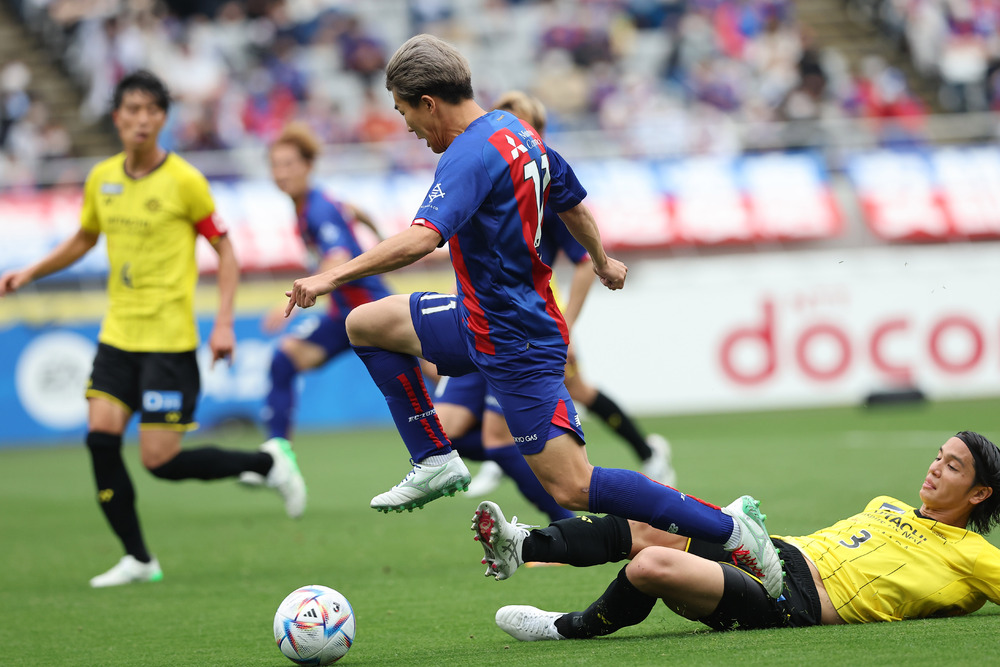
Q: How did you view the attacking part from the bench until you entered the pitch?
A, since there were hardly any players breaking behind the opponent, I was watching with the thought that if I could receive the ball behind, I might be able to stretch the opponent's defense.
Q: Did you feel that aspect improved once you actually stepped onto the pitch?
We had about two chances, and I feel it was my responsibility that I couldn't finish them. I believe the course of the game would have changed if I had scored then. I feel we need to challenge ourselves to increase the number of opportunities in front of the goal from the first half.
Q: Coach Albert PUIG ORTONEDA says that the team is starting to gain control of the ball, and that it is the next stage. As a forward player, how do you feel about the progress and challenges?
A, I feel that the opponents are gradually studying us more, so we also need to be creative and add something extra to increase our scoring. We want to refine the accuracy of crosses after pressing forward, who enters where, and how we compete for the ball.
Q: You came on as a substitute and created a chance immediately. After that, there were times when the ball didn't come to you easily.
A, there is also a relationship with teammates, and after the match, the players talk among themselves about points for improvement. I believe opportunities will gradually increase, and I want to keep demanding and continue moving forward.
<Yasuki KIMOTO>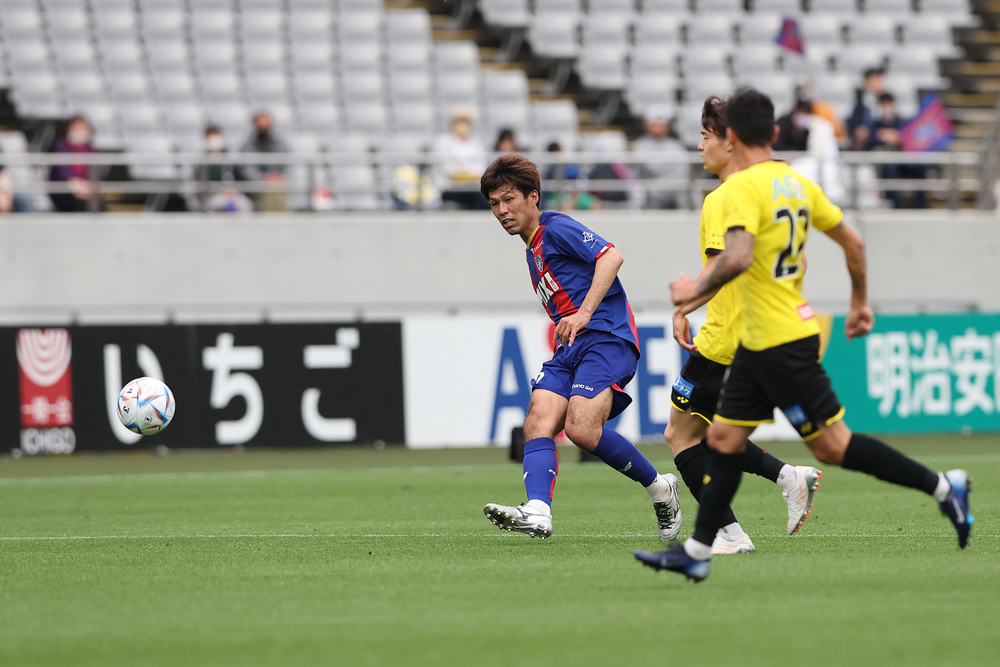
Q: Looking back at today's match, do you have the impression that you held the ball well, or do you feel that you held it well but things didn't go smoothly afterward?
A, not only in today's match but also in several recent matches without results, even if we have a higher possession rate, the impression is that we are not threatening to the opponent and rather seem to be allowed to hold the ball. I believe the key point going forward to change the momentum is how effectively we can execute ball circulation and attacks that are unpleasant for the opponent.
Q: How did you plan to break through as a team while Kashiwa tightened the center?
Although we are gradually able to play the style of soccer we aim for, it doesn't mean we can suddenly perform at 100%. I believe that unless we develop the ability to exploit the opponent's weak points during the match, it will be difficult to score goals. Therefore, I want the players to communicate more with each other and work on improving together.
Q: Although we couldn't win, how do you feel about stopping the losing streak?
A, I wanted to win at home, but there were also moments when we were helped by VAR at the end. In the last few matches, there have been issues with how the games finish, so I want to stay focused until the very end and finish the match properly.
Q: Has the ideal style of football permeated to some extent, or is it that while it has permeated, the opponent's countermeasures have prevented us from taking the next step?
A, there is a sense that the soccer the coach is seeking is gradually being achieved, and even though there is a gap from last year's style, there is still a feeling that it is being accomplished little by little.
<Ryoma WATANABE>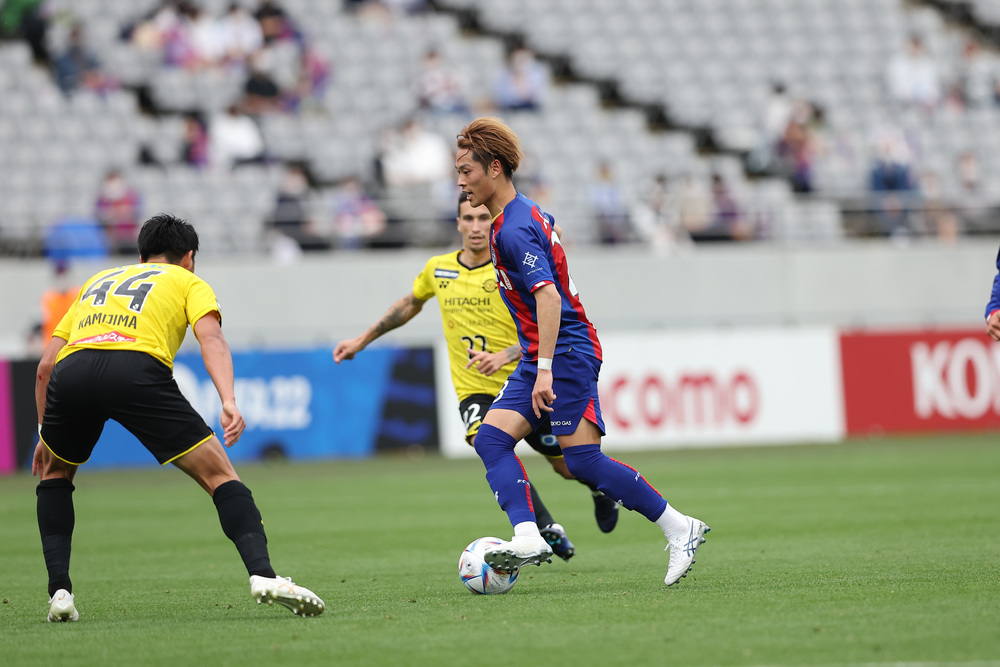
Q: How was it coming on in the second half?
Since the three players up front were making the same movements, I thought that if I played, it would be necessary for me to receive the ball in the center. I believe the coach also had that intention when putting me in the game. Hotaka NAKAMURA stayed wide on the side, and by moving inside myself, we were able to create several good opportunities. Of course, there was a chance where I could have scored and should have, but I think it was good that we were able to make some changes during the match.
Q: What was your aim in targeting the goal during the periods when you had possession of the ball?
A, simply holding the ball is meaningless, so I thought it was important to make vertical passes to break down the opponent's defense. If the opponent has five defenders, space opens up in the midfield, so I imagined taking advantage of that effectively. I also think that if the period like the end of the second half had continued a little longer, there was a possibility of scoring a goal.
Q: I think the opponent was aiming for a counterattack after stealing the ball. What do you think?
A. The players at the back were managing the risks well against the counterattack, so when I was on the field, I thought I would leave it to the players at the back and focus on playing my role. I was only thinking about scoring goals.
Q: How was the team's collaboration?
Currently, the style of soccer changes depending on who plays in the match. The key is how well we can adapt to the style of soccer that Albert PUIG ORTONEDA demands. Of course, it is important to play according to each player's individual characteristics, but a solid foundation is necessary within that. Without that foundation, the game becomes difficult, so I believe that if everyone communicates and builds it together, we will be able to grow.
Q: There were many scenes where crosses were made effectively using the sides.
<div>A. When attacking from the sides, the center opens up, and conversely, when attacking through the center, the sides open up. I think it is important for the players to have a shared understanding of how to use this effectively. I believe we were able to do this towards the end of the match and get close to scoring. Ultimately, scoring goals is the most important aspect, and since we are working towards that, we need to pursue it even more thoroughly.