Match Preview
The third match of the consecutive games played three days apart will be against Urawa Reds away. In the previous match, Tokyo fought in front of the "voices" of fans and supporters for the first time in two and a half seasons, receiving significant support and achieving their first victory in four league matches.
The opponent, Urawa, struggled in the first half of the season, going through a period without a win in 9 matches. However, in the last 5 matches, they have improved their form with 2 wins and 3 draws, and their ranking, which was once in the relegation zone, has now recovered to 11th place.
In the previous match against Kyoto SANGA F.C., although we took the lead in the first half, we allowed a quick turnaround in the second half and ended up drawing after equalizing shortly after. However, as indicated by the shot count of 17 to 6, we significantly outperformed the opponent in terms of finishing scenes and decisive moments close to the goal, making it a match where Urawa held the initiative in attack but could not secure the win.
In the first half of this season's match, both teams lacked decisive moments and ended in a 0-0 draw. There were periods where both teams held possession, but overall, it felt like Tokyo was under pressure from Urawa's vigorous attacks for most of the 90 minutes. For Tokyo, this was the third match in a row, and the fatigue was evident throughout the team. Additionally, playing in a daytime game with strong sunlight and a temperature of 25.6 degrees, it was a match where they managed to secure at least one point.
Urawa's Ricardo RODRIGUEZ, the manager, is characterized by analyzing the opponent's approach and adapting the attacking and defensive styles accordingly. Although results have been challenging, the tactical foundation has progressed in his second year, and the offensive style has finally started to lead to victories as the season reaches its midpoint. On the other hand, Tokyo has also rapidly advanced its tactics, achieving a dominant victory against the Kashima Antlers, who were at the top of the league at the end of the first half. Of course, there are aspects where the team can collapse suddenly due to a single misalignment, as seen in the match against Sagan Tosu, but experiencing that game has actually tightened the team's resolve.
In the clash of both teams with an attacking mindset, we want to push forward and uphold Tokyo's style, seize goals, achieve consecutive victories, and accelerate the evolution of the team once again.
[Interview with Coach Albert PUIG ORTONEDA]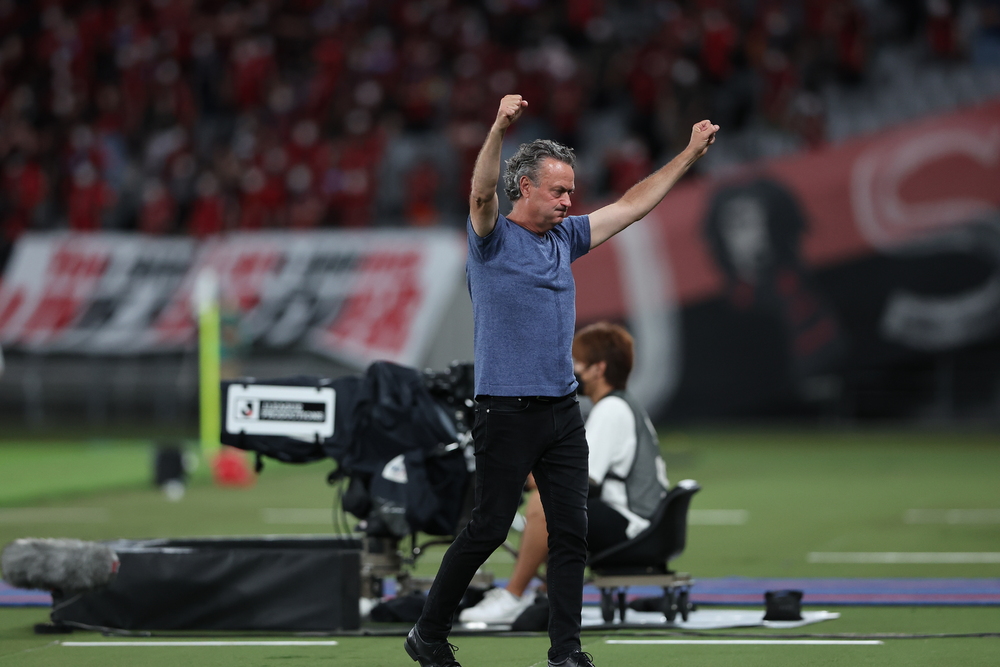
Q: Was the change in practice time influenced by today's coolness?
A, simply put, it is very close to Urawa. Therefore, there was no need to train early in the morning and rush to depart, so we delayed the start time a bit. We set it to 11 o'clock, but if we leave then, we will arrive there by 4 p.m. After all, the most stressful time when playing or managing a professional team is having to spend a long time at the hotel. Since there was not much difference in temperature between 9 and 10 o'clock, we decided on an 11 o'clock start.
Q: Does the content of practice change depending on the coolness?
A, if it is hot around 11 o'clock rather than the content, I think it will be necessary to start practice as early as 9 o'clock, or 8 o'clock if possible, and find a time slot where we can do what we want. However, the heat is currently bearable, so we are able to achieve the content we expect even at this time.
Q: In the training content, there is an 8 vs 8 plus 3 free men possession. What is the aim of this?
<div>A, for our playing style, this training is one of the core practice menus. Teams aiming for this playing style, such as Barcelona, Manchester City, and Liverpool, conduct this practice menu almost daily, and it contains many tactical elements. By repeating it, I believe it can be thoroughly ingrained in the players. It also leads to an improvement in technical level, and especially the tactical elements and decision-making will be further enhanced.
Some people mistakenly think it is the same as possession games, but it is definitely not. It is a very challenging practice that encompasses almost all elements of soccer. Positional game training sessions are held almost daily, not just the day before a match, although the format may change.
Q: Is the current practice content from when Coach Albert PUIG ORTONEDA was with the Barcelona Academy?
A, that is exactly right, but I have heard that not only myself but many coaches such as Guardiola and Jürgen Klopp also place great importance on this training menu. It is not something I created, nor was it created by Barcelona; it is a widely known training menu adopted by many club teams and managers.
Q: Player Kajiura participated in the last match against Sapporo.
A, I think it is a very simple matter. As player Kajiura proved in the Sapporo match, only players who step onto the pitch with a strong desire to succeed in this world can survive. You cannot survive by looking at the ground; you must raise your gaze and show the will to fight. Having that strong mentality is essential, and of course, talent is also necessary. Since Kajiura originally has talent, I believe that strong mentality allowed him to express his talent on the pitch. Even if you have high-quality technique and wonderful talent, without a strong mentality accompanying it, it is worthless.
Q: Are there players who play with ambition in Tokyo?
A, among young players, how can there be those who do not wish to go abroad? Where do the highest-level players in the world gather? Whether it becomes a reality or not, I believe everyone should have big dreams to some extent. For example, judo is considered Japan's national sport. I know Spaniards who practice judo in Spain, but Spaniards aiming to reach the top in judo would probably want to go to Japan and win there. As for soccer players, I think everyone dreams of succeeding in Europe. That is why everyone understands how difficult it is to succeed there. Not only the best players from Europe but also wonderful players from Africa and South America gather in Europe.
Q: What is the importance of the match against Urawa, and what kind of analysis are you doing in preparation for the match against Urawa?
A, first of all, we are facing Urawa, one of the clubs with the largest management scale currently in J1. I believe their current ranking is not where they usually are. And regarding management scale, we recognize that they clearly surpass us. Considering their situation, it is easy to imagine that it will be a difficult match.
We have a team full of high-quality players. If we allow them to play well, it will become a very difficult match. Therefore, we must neutralize their strengths. At the same time, naturally, maximizing our own strengths as much as possible will be the key point for tomorrow. We have been able to train well over the past few days. It will be a very tough match. That is precisely why it will also be a very exciting game to play in.
[Player Interview]
<Yuki KAJIURA>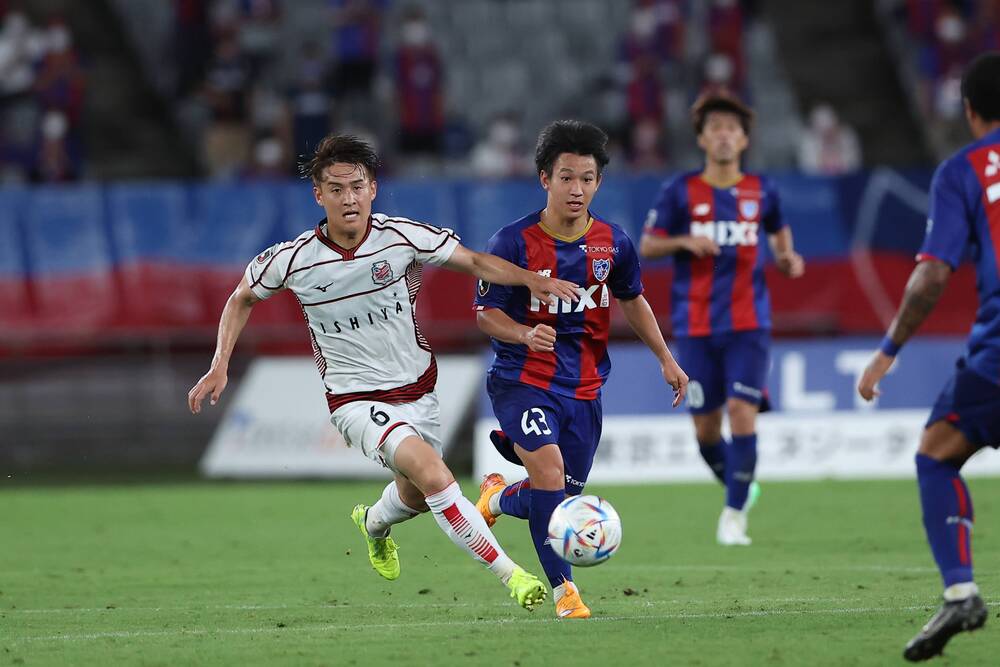
Q: It has been some time since the Sapporo match, but how do you reflect on the game now?
A, I reviewed the match again and felt that it was a game where I was helped by the surrounding players. It was good that we won, but looking at the content, there are still many areas to improve, and the match left the impression of clearly showing what we could and could not do.
Q: What were you thinking about being aware of before entering the match?
A, I thought opportunities like this rarely come, so from the beginning I kept thinking about giving my all to express what I can do. I'm glad I was able to show what I had prepared thoroughly.
Q: What were you able to do and what were you unable to do during the match?
A, increasing the defensive pressing intensity was a part that went well, but I was not able to get involved with the ball or participate much in the build-up. The style of football Tokyo aims for is to attack while carefully maintaining possession of the ball, so I want to be more conscious of increasing the number of times I get involved with the ball and improve.
Q: How was it playing with the cheers at Ajinomoto?
During the warm-up before the match, the cheers began, and I felt it was amazing at first impression. I am happy to be able to play in this environment, and the feeling that we must win has resurfaced within my emotions. Even during the match, when I glanced at the fans and supporters, I could see them cheering with all their might, and the feeling that I must meet their expectations welled up.
Q: What kind of play do you want to show in the match against Urawa?
A, while continuing to maintain high-intensity defense, I have only played in one match last round, so I need to keep this up, and within that, I hope to gradually increase the things I can do.
Q: What kind of analysis are you doing against Urawa?
Team A is good at circulating the ball, so I think it is important for everyone to work together to press and not allow the opponent to have the ball. Since our playing style also values possession, by increasing the time we hold the ball and preventing the opponent from showing their strengths, I believe this will lead to victory.
Q: What do you want to be aware of in terms of communication and collaboration with the players around you?
<div>A. During practice, I communicated a lot with the surrounding players and discussed in detail how to apply pressure in each situation. Even during the match against Sapporo, we were able to call out to each other and coordinate our defense without much hesitation. For the next game, I definitely want to maintain this awareness of calling out to each other and continue playing in coordination with my teammates.
Q: Please share your enthusiasm for the match against Urawa with the fans and supporters.
A, until the previous match against Sapporo, we had been unable to win, but we finally managed to secure a victory. We want to keep up the momentum and aim for consecutive wins in the next match against Urawa.