

Previous Match: Nagoya Match Review
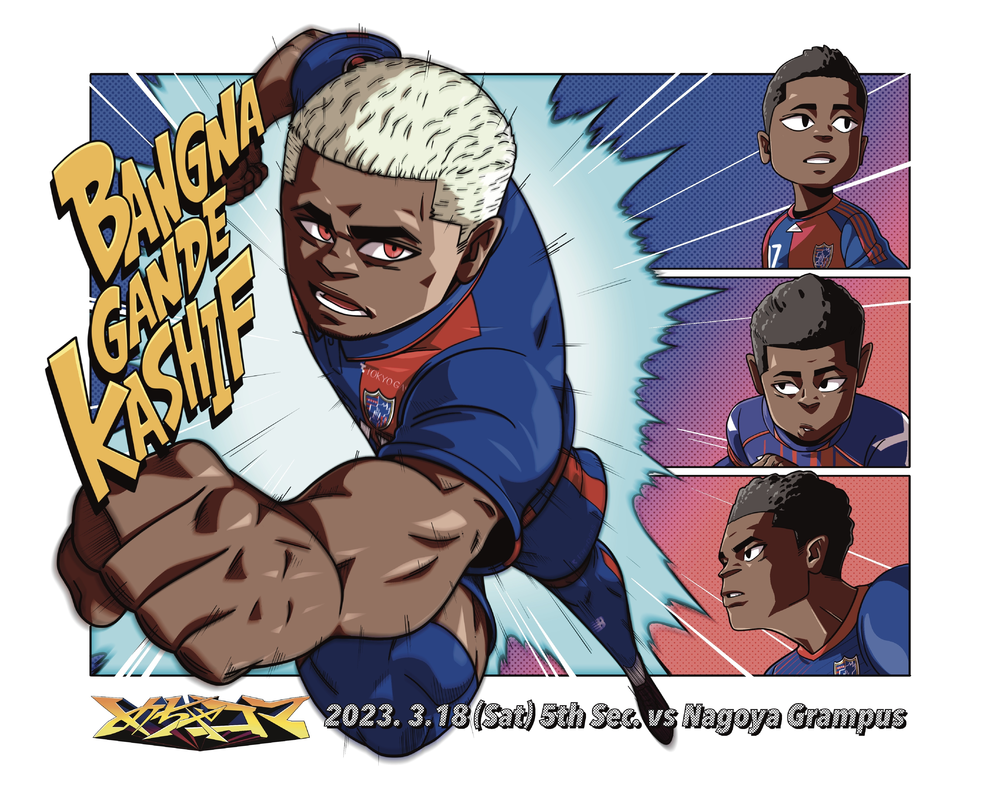
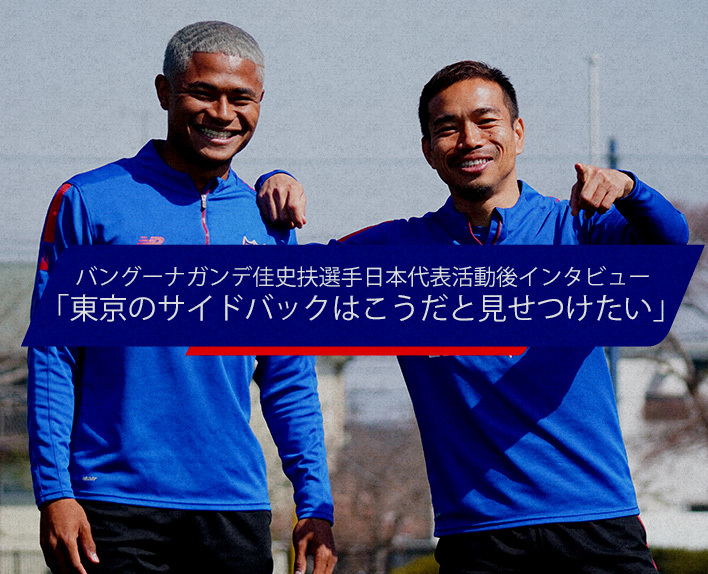
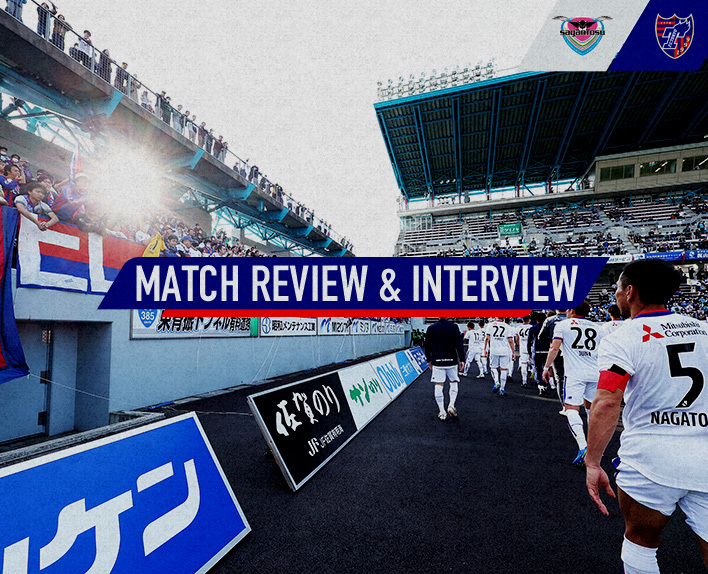
A match against Nagoya Grampus, managed by Kenta HASEGAWA, who brought a title to Tokyo. Although the score did not change, it was a "tactical match" (managed by Albert PUIG ORTONEDA) where both sides were cautious of each other's strong points, and Kashif BANGNAGANDE, who was just selected for the Japan national team, was active.
In a mirror game where both teams adopted a three-back formation to guard against the opponent's fierce counterattacks, it may have seemed like a stalemate with few scenes in front of the goal. However, in each situation, there was a fierce determination to exploit even the slightest positional discrepancies and a sharp tactical mindset aimed at maximizing their own attacking strengths by seizing any moment of weakness.
Tokyo gathers the ball to the left side with Kashif BANGNAGANDE, probing for a path to goal through attacks from the side, while Nagoya launches a fierce counterattack with their three forwards, exploiting the space behind the advancing Tokyo players.
Tokyo managed to deliver crosses, but could not break through Nagoya's solid defense in front of the goal. On the other hand, against Nagoya's counterattacks, Jakub SLOWIK made fine saves while the wing-backs quickly pressed back to delay the counter and reduce the accuracy of the scoring opportunities.
This season, although there were challenges in terms of results for Yoshifumi, who has rapidly grown and reached the Japan national team, it was a match that showcased his extraordinary talent in the offensive and defensive play on the side, leaving a strong impression of a "new star on the blue-red left side."
<Preview>
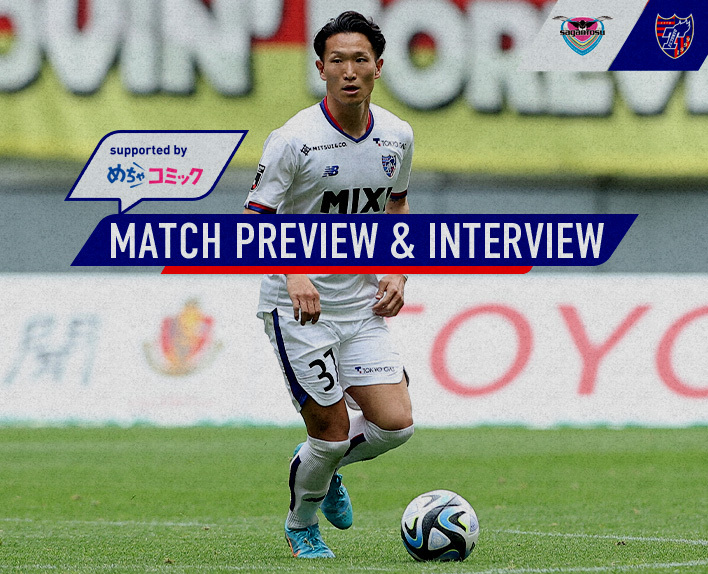
It goes without saying that the recent match record is here, and regardless of home or away, it is clear that Sagan Tosu is a formidable opponent for Tokyo.
This season, as Kei KOIZUMI, who joined from Tosu, has mentioned multiple times, the styles of Tokyo and Tosu are very similar. They thoroughly maintain possession of the ball, deliver decisive passes without being hindered by narrow spaces, and score goals. It is a style of play that emphasizes offense over defense.
This season, the team has struggled with a record of 1 win, 1 draw, and 3 losses, placing them 15th. However, in the second season under head coach Kenta KAWAI, there is an impression that the tactics and organizational maturity have improved.
If the match has a similar style, the difference will come down to the maturity of the organization and tactics, or the difference in individual tactics.
In the former case, Coach Albert PUIG ORTONEDA is working on deepening tactics in his second season in charge, aiming for the maturity of an organization capable of diverse attacking patterns and game development. The situation is similar for Coach Kawai in his second season with Tosu, and the key will be which team takes control of the ball and the game. In some cases, the strategy of allowing the opponent to "hold the ball" may also influence the outcome of the match.
In the latter case, Tokyo should have an advantage in terms of talent. They have a well-balanced roster of veterans, mid-career players, and young talents, along with foreign players who possess strong personalities. However, considering last season's away game where they were overwhelmed by the intensity on the ball side and lost momentum, individual abilities and tactics, along with intensity, will likely be factors that influence the outcome of the match.
The key player here is Koizumi, who possesses exceptional strength in duels. Koizumi believes in playing with a mindset of calculating backwards from victory, and considers winning in duels to be essential. Can he surpass the opponent's strength in midfield and tactically leverage his deep understanding of his former team's style to create a favorable situation? We hope for a great performance from Koizumi.
[Interview with Albert PUIG ORTONEDA] 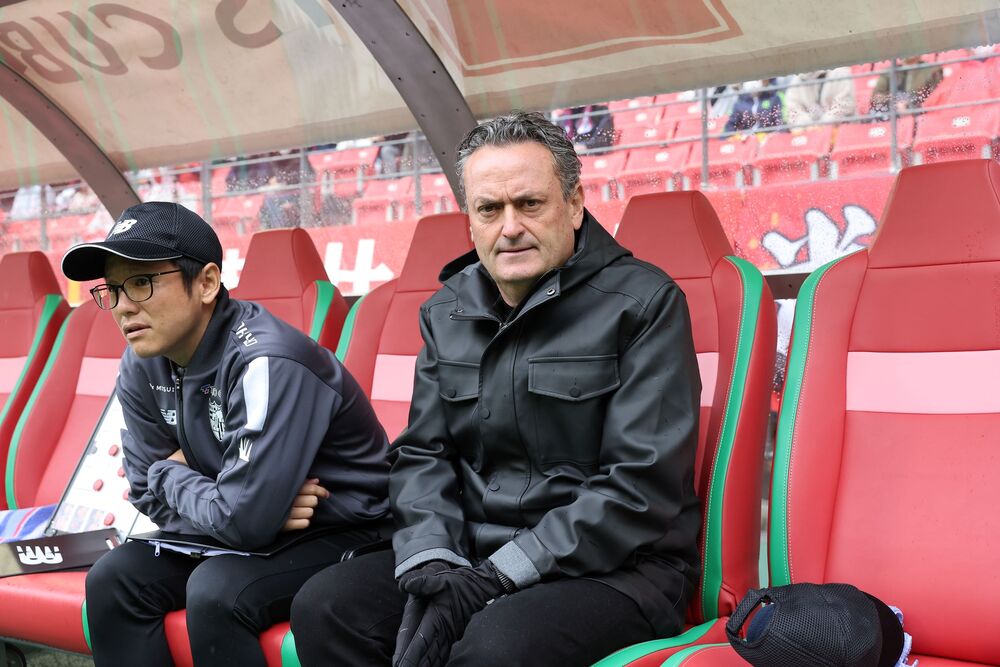
Q, Kashif BANGNAGANDE recorded his first cap for the Japan national team, did you see it?
A, I think you played well. You were calm, and especially in attack, you were able to play from good positions. I believe you performed well enough to be highly evaluated for your first match with the Japan national team.
Q: After finishing 5 league matches, we have 2 wins, 2 draws, and 1 loss.
A, I think we were able to start this season with a clear step forward. However, we did not expect multiple players to be sidelined. Matsuki's call-up to the U-20 Japan national team, combined with injuries, caused difficulties for the entire team. Because of this, we were unable to maintain continuity within the team. The season is long, and situations like this can happen to any team. We are currently in a difficult situation, so we must overcome it firmly. Despite this challenging team situation, we want to accumulate as many points as possible and maintain a top position. The season has just begun, and I don't think our current ranking is bad at all. However, with players in the same position absent at the same time, we must overcome this together as a team.
Q: We couldn't win against Tosu even once last season, and it was a tough match away.
A, last season, we struggled in matches against Tosu and Shonan. However, by the end of the season, we finished in a higher position than them. We faced them when they were playing well, and they played good football and outperformed us. Last season, the midfield was dominated by the opponents. We also did not have a good match against Tosu. Tosu is a dangerous team that plays well when given the ball. In tomorrow's match, we want to stay focused and aim to win by controlling the game.
Q: Tosu is on a seven-game losing streak in the league.
A, I think that is an interesting figure. However, that number can also be seen as proof that Tosu, despite not necessarily having a large management scale, continues to deliver excellent performance consistently. For that reason, I believe it is one of the clubs worthy of respect. However, what is important in the football world is the ranking at the end of the season in the long league competition.
Q, I think Matsuki had a significant presence in the Levain Cup.
A, I don't think it's necessary to comment now that I am evaluating him. At the same time, I believe everyone understands that he is a wonderful player.
Q: There is a possibility that Matsuki will be absent from the Japan national team activities in May.
A, Kumada player will probably be called up as well. Having our players called up to the Japan national team can be seen as one of our successes.
Q: Won't Matsuki's absence affect the support movements in the attacking third?
A, Matsuki and Abe have abundant stamina and can repeatedly sprint to apply pressure. At the same time, their play with the ball has improved since last season. When these two are absent, we need to approach matches by effectively utilizing players with different strengths. Naturally, there is a clear style regardless of the players' characteristics. However, in each match, we must consider the players' strengths when approaching the game. When Matsuki and Abe are present, they can press with their abundant stamina and make forward runs in attack. If those two are not available, it is my job as the coach to find alternative strategies and solutions.
[Player Interview]
<KeiKOIZUMI Player> 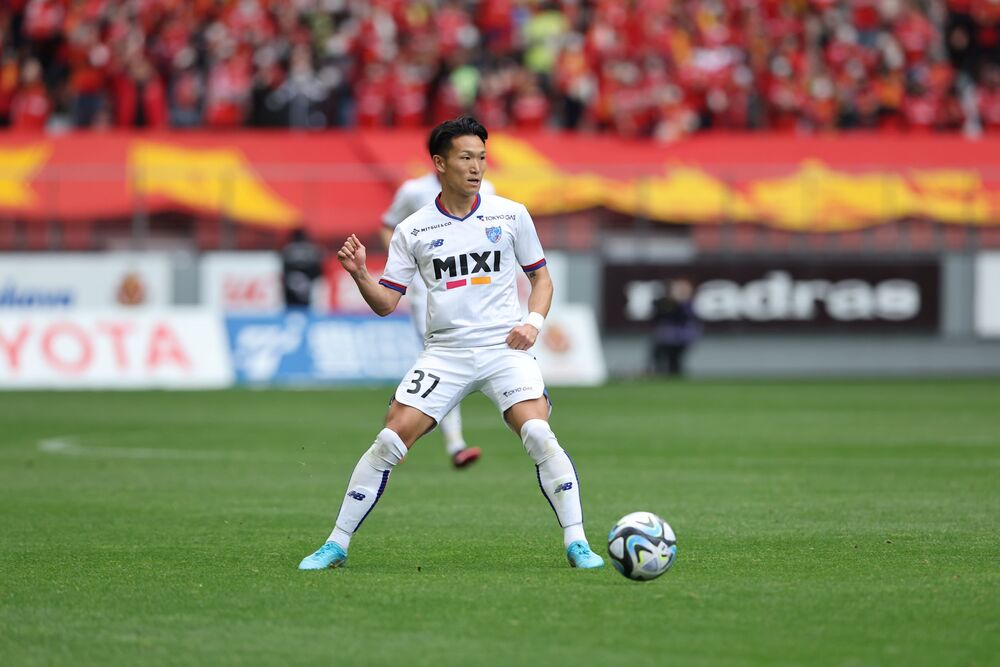
Q: How do you feel about the match against your former club, Sagan Tosu?
A, I am really looking forward to it. I spent one and a half seasons at Tosu, and I am truly grateful. I hope to play with a strong sense of gratitude. No matter who the opponent is, I am now a member of Tokyo, so I want to do what I can for Tokyo.
Q: Do you have any feelings about facing Tosu as an opponent?
A, I am looking forward to the match because I will be playing with players I have played with before. I can predict the style of soccer they will play. I also know the strengths and weaknesses of each player. While I am excited, I absolutely do not want to lose, and right now, I am only thinking about winning the championship in Tokyo.
Q: What is important to focus on in order to move up from here?
A, during the season, there are injuries and various other things that happen. Whether it's better to keep passing the ball or to play simply changes depending on the opponent, and there will definitely be good times and bad times. However, as long as Tokyo does not lose in terms of playing intensity as a base, I don't think there will be any major collapses. First, we want to fight firmly on the base level and turn what we practice in training into a positive. Like in the Levain Cup match against Kyoto, if we play with confidence and keep challenging ourselves in ball possession, I believe we will definitely improve.
Q: How was your time in Tosu for a season and a half?
It may have been a short period of just one and a half seasons, but I believe this club helped me grow tremendously as a football player. As a player, I was able to learn a way of thinking that I had never had before through training and matches. It was a team that was very particular about build-up play, so there were many challenges for me, and when I first joined, I was confused about how much emphasis was placed on connecting the play. Moving from Kashima to Tosu, a team with a different style, I was initially confused and struggled to demonstrate my abilities. Over the course of a year starting from the training camp, working with Tosu's coach Kenta KAWAI, I learned a lot about build-up, positioning, and attacking aspects more than defense. I was able to rediscover the joy of football, and many younger and older players at Tosu treated me very well. I am deeply grateful despite the short period of one and a half seasons, and I hope to express that gratitude through my play.
Q: How do you want to show what you learned in Tosu during the match?
A, I am now a member of Tokyo, so once I step onto the pitch, I believe that doesn't matter. Tosu's stadium is a place I have a deep attachment to, and by playing boldly there, I hope to clearly express that I am giving my best here now. It is difficult to show gratitude through play, but I think it’s important to fight with respect. Of course, since I have transferred, I don’t know how people feel. From the perspective of Tosu’s fans and supporters, I was only there for a season and a half before transferring, so some may feel positively, while others may not. Including all of that, I have nothing but respect for Tosu, and I want to carry that feeling and do my best.
Q: How was it for the three players of the same age, Shuhei TOKUMOTO, Junya SUZUKI, and Koizumi, to play together in the Levain Cup?
A, during the camp and before the Levain Cup match, the three of us talked about the possibility of playing together someday. I was happy that, in the end, the three of us were able to stand on the pitch together. The presence of the other two is definitely significant, and I am very grateful for their support both on and off the pitch. They are so reliable that they don't even look the same age as me. Tokyo has many young players, and I think the three of us are considered the mid-level players. When we went out to eat, we talked about how the mid-level players need to speak up more. I hope to be more conscious of that and raise my voice.
Q: I think the characters have distinct personalities and are well-balanced. What do you think?
A, I think the two of them are very reliable. I don't know about Tokumoto, but I think his mental age is so high that he doesn't look like he's the same age.
Q: With the image of young players rising, and the veterans being energetic, I think it would be even more exciting if the middle layer is also active. What do you think?
A, the three of us, Ryoma WATANABE, Shuto ABE, and Hotaka NAKAMURA are like that too. By producing results both during practice and in matches, I believe it motivates both the senior and junior players to push themselves harder. I feel that we, the mid-level generation, need to work hard and lead the way.
Q: How do you feel about Suzuki's presence and attitude towards practice?
In a world where only 18 players can be included in the A squad, no matter how hard everyone works, there is the complex reality that not everyone gets a chance. But that is the reality. Even if Suzuki doesn't get much game time, by hearing him vocalize during practice and seeing him fight hard for every ball, I think the players not on the field realize that if those not playing are putting in this much effort, then the players on the field have to do even more. I believe that when I play, I have to carry the feelings of those who can't get on the pitch. Of course, there were times when I wasn't even on the bench, but regardless of whether I played or not, I learned the importance of working hard without getting too elated or discouraged. The players who do get on the field definitely have to fight bearing the feelings of those people, so I hope to do that properly.
Q, is showing your culmination your mission in Tokyo?
A, I have truly had a variety of experiences. This year marks my 10th year, so being able to play for various teams has been a significant experience. I came here because I believe Tokyo is the only place to win a title. I hope to make use of my past experiences within the team, and I feel I must demonstrate them. Ultimately, no matter how good the soccer is, I believe we have to win, so I want to play with a strong focus on victory.
Q: I believe Tokyo is also in a process of change, so please share your enthusiasm for this season.
A, I think this season is a time when I joined and Tokyo itself is also challenging. I want to work hard together there, and I believe everyone's goal is to win the title. This season, I want to challenge together toward that goal. As long as I am playing in matches, I have to keep producing results to continue playing, and in that sense, I think I must focus not only on the result of victory but also on visible numbers. Above all, the most important thing is to play for Tokyo to win.
<Koki TSUKAGAWA> 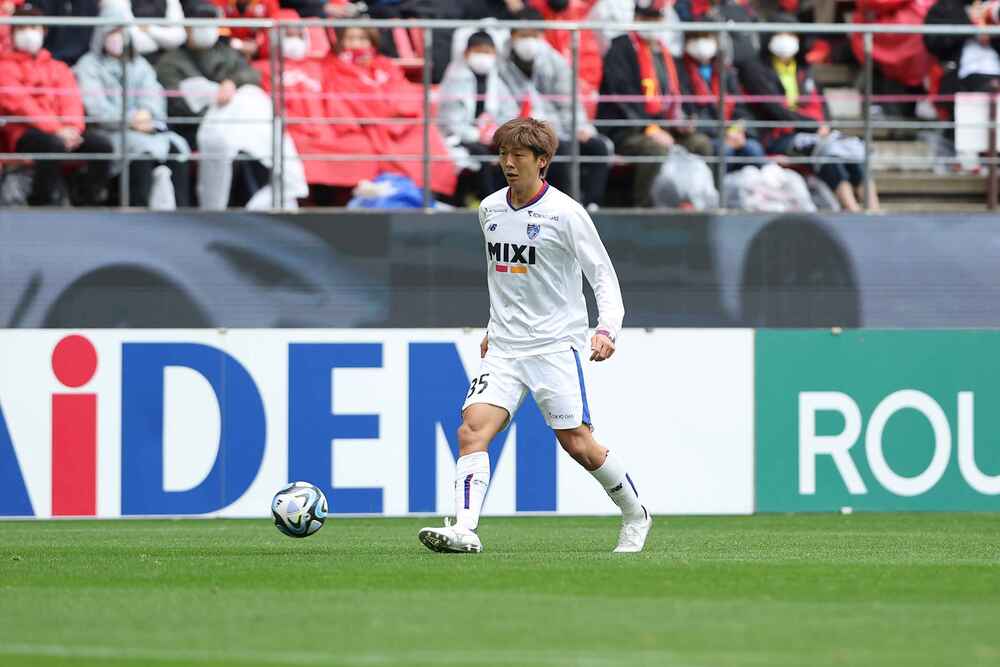
Q: In the difficult situation where the number of injured players is increasing, what kind of play do you want to focus on?
A, as I have always said, I strive to contribute to the team's victory by making plays that lead to scoring.
Q: What preparations did you make for the match against Tosu?
As the coach also mentioned, I think it is important to bring out our strengths. Last season ended with disappointing results, so we have prepared to overcome that and want to express it through our play. I believe this is also one of Tosu's strengths, but first, we want to focus on not losing in one-on-one battles. Additionally, how to break down the defense in front of the goal to create scoring opportunities will also be important. After winning the ball, whether to carefully maintain possession or launch a quick attack is a decision we want to align on as a team.
Q: Do you want to showcase your strengths in the attacking third?
A, as you said, I think what you can do after entering the attacking third becomes important. I hope to better demonstrate in the game the final ideas and the ability to change decisions based on the opponent. I want to make sure we can connect this to results in the Tosu match.
Q: I think it's important to hold on here, especially with injuries coming up.
A, I believe a strong team is one that can cover for injured or absent players. We want to show that through our results. Although some players are absent, I think everyone sees this as an opportunity, and I hope that by achieving good results, a positive cycle will be created within the team.
Q: Is it necessary to leave an impact?
A, I think it is important to consistently show your strengths. The match against Tosu will also be very important. I want to steadily aim for results in each and every game.
Q: I think there were appearances in positions that are not your main position. It seems that the boldness is not yet visible compared to last season, what do you think?
A, there are parts that I tend to overthink. I believe that is due to my lack of skill level. In order for me to grow on a larger scale, I need to work harder on my challenges starting from practice. Even within myself, if asked whether I was in great form during the Kyoto match, the answer would be no, and I think the only way to resolve this is by achieving results in matches.
Q: Are you struggling with physicality or fitting into the team?
A, you could say we are struggling, or rather, the team is taking on new challenges. Last season, everyone focused on connecting passes and we were able to do that, but this season, we have various options such as connecting passes or launching quick attacks. It is necessary for the whole team to align on what decisions to make in each situation. I want to play while considering my positioning so that I can connect things smoothly. However, sometimes I overthink this and end up playing too small-scale, which prevents me from showing my strengths. If I can play while balancing this well, I believe I can grow more and the team will improve as well.
Q: Tokyo has been unable to win against Tosu.
A, I want to win here to change the momentum, and I want to play in a way that completely dispels any negative feelings.