

Match Review & Preview
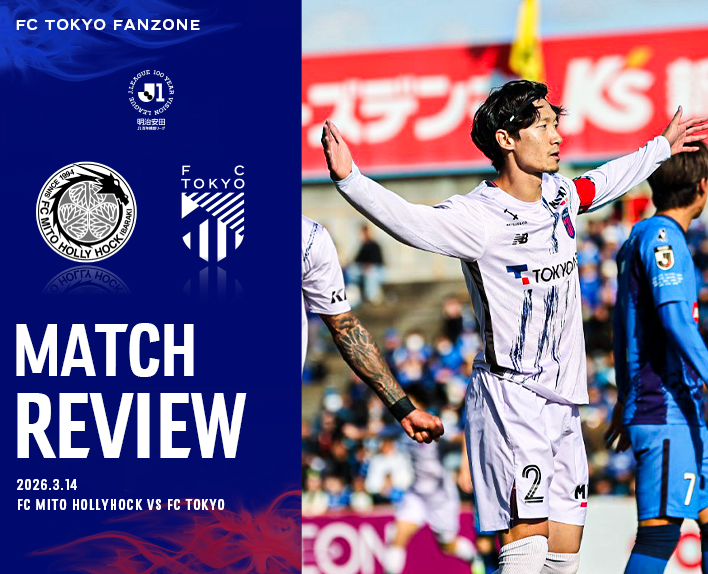
Review of the Previous Match Against Mito Hollyhock
After achieving 10 points and 3rd place in the first 5 opening matches, the consecutive away games played over one week, aimed at seriously contending for the top positions, started with the game against Mito Hollyhock. Aiming to steadily improve from the complete victory in both score and content against Yokohama F.Marinos, the match progressed from the start with both teams aggressively pressing to deny each other freedom on the field.
Tokyo faced an accident in the 20th minute of the first half when Yuto NAGATOMO was forced to leave the game due to injury, leading to the introduction of Kento HASHIMOTO as the left side back.
After that, neither side was able to create decisive scenes as they wished, and at the 14th minute of the second half, with Mito continuing their thorough hard work and gradually taking control, Kento HASHIMOTO, who came on as a scramble substitute, changed the game with his proud left foot.
After boldly joining the attack and receiving a pass from Ryunosuke SATO, he looked up and delivered a sharp cross ball aimed at the far side. Sei MUROYA, who was waiting there, said, "I made eye contact with 'Hasshi' (Kento HASHIMOTO), so I thought it might come to me. Since it was a wonderful ball, I focused only on making contact," and extended his right foot to brilliantly strike a direct volley, successfully scoring the opening goal. Despite the difficult period, they showed strong determination by converting this one chance, and Tokyo took a step forward.
Being able to finish with limited chances is a quality befitting a championship-winning team. Following the previous match where goals were scored early in both halves, the high scoring ability demonstrated showed the team's growth. However, just 16 minutes later, perhaps feeling relieved after finally taking the lead, they were caught off guard for a moment and allowed the opponent to be free inside the penalty area, conceding an equalizing goal.
The match ended after 90 minutes as it was, leading to the third PK shootout of the special tournament. After all five players scored, in the sixth round, Mito missed by hitting the post, and Tokyo, playing second, secured victory with a precise shot by Kento HASHIMOTO. After struggling to earn 2 points, captain Muroya reflected, "It was a very regrettable game," but also looked forward, saying, "I want to take it positively that we earned 2 points in such a tough match."
This Week's Preview
Tokyo aims to steadily reach new heights by correcting issues while winning. Including 3 wins in penalty shootouts, they hold a record of 5 wins and 1 loss since the season opener, placing 3rd in the Meiji Yasuda J1 Century Vision League EAST Group, 4 points behind the leader. Since this tournament is a short competition of 18 matches in total, to stay in the championship race, the team must focus on each match ahead and steadily accumulate victories together.
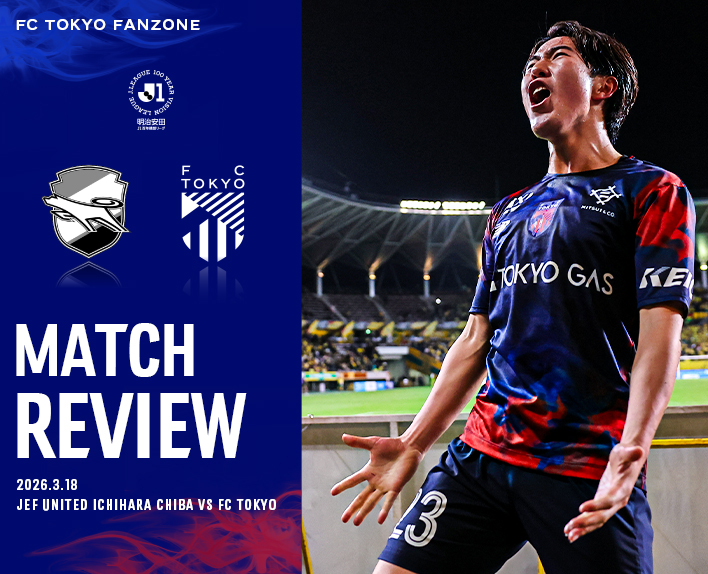
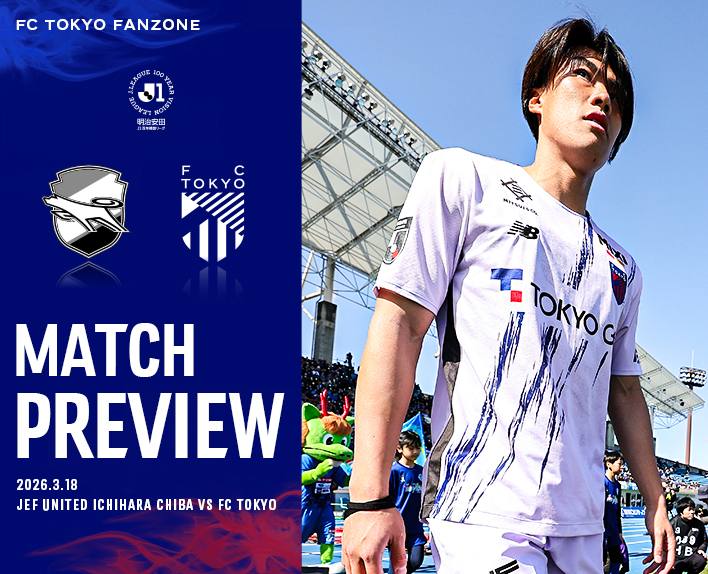
This week's match against JEF United Chiba is the second game of the three consecutive away matches, which the players unanimously describe as the turning point of the first half of the season. Having struggled but managed to earn 2 points in the previous match against Mito Hollyhock, this game is crucial to secure a solid victory and take a step forward. Captain Sei MUROYA also said, "Since the special tournament has fewer matches, every single game is really important. We want to firmly accumulate points in the next away match against Chiba as well."
In the previous match against Mito, while showing strong determination by capitalizing on limited chances, it was also a regrettable development to concede an equalizing goal immediately after taking the lead. Coach Rikizo MATSUHASHI prefaced by saying, "It's not that we are letting our guard down," and added, "It was the same in the opening match against Kashima Antlers, and to become a 'team worthy of the championship,' we cannot afford to concede such simple and cheap goals. We need to thoroughly investigate whether the cause is just a coincidence or if there is some tactical issue from various angles. The staff is also considering what should be done, and we want to firmly share this with the players." Efforts are underway to translate this fighting spirit into results.
It can be said with certainty that there is a solid sense of accomplishment in the team's ability to work hard. Even in situations where the attack is not going well, the defense that puts their body on the line, the strength in one-on-one situations, and the awareness of pressing back do not decline. Player Muroya also commented, "Everyone is positive about being able to endure at the edge. The players all understand that the timing of conceding goals was not good, and I believe that by correcting those points, we can become a stronger team." While demonstrating the team's strengths shown so far, they are eager to move forward by solving the visible challenges.
Chiba, returning to J1 for the first time in 17 seasons, has struggled with 1 win and 5 losses in 6 matches of the Meiji Yasuda J1 100-Year Vision League so far. However, in Sec. 5, they defeated Kashiwa Reysol, and as a team, they have created chances through aggressive pressing from the front line and sharp attacks after regaining possession. Although their scoring has been sluggish due to a lack of finishing ability, Coach Matsuhashi warns, "Having chances means that eventually, they will score. Their defense is challenging, and in attack, they boldly enter the goal area without hesitation."
Tokyo seemed to struggle against Kashiwa and Mito, who applied intense pressing from the front line, but this match they want to focus on possession beyond that, while also showing flexible counterattacks by sending long balls to break through behind the defense. They aim to play soccer that firmly takes the initiative in both offense and defense with aggressive defense and timely attacks, without getting drawn into the opponent's game.
The second match of the back-to-back games comes just three days after the previous round. Considering the continued tight schedule, it is highly likely to be an all-out battle including the substitute players whom Coach Matsuhashi calls “game changers.” The key point is whether the team can demonstrate the strengths they have built together so far. Being able to compete at a high level no matter who plays is one of the conditions for becoming a “team worthy of the championship.” This is truly a match that tests overall strength. The Blue-Red Army heads to the away Fukuda Denshi Arena with the determination to win every single game.
Interview with Manager Rikizo MATSUHASHI
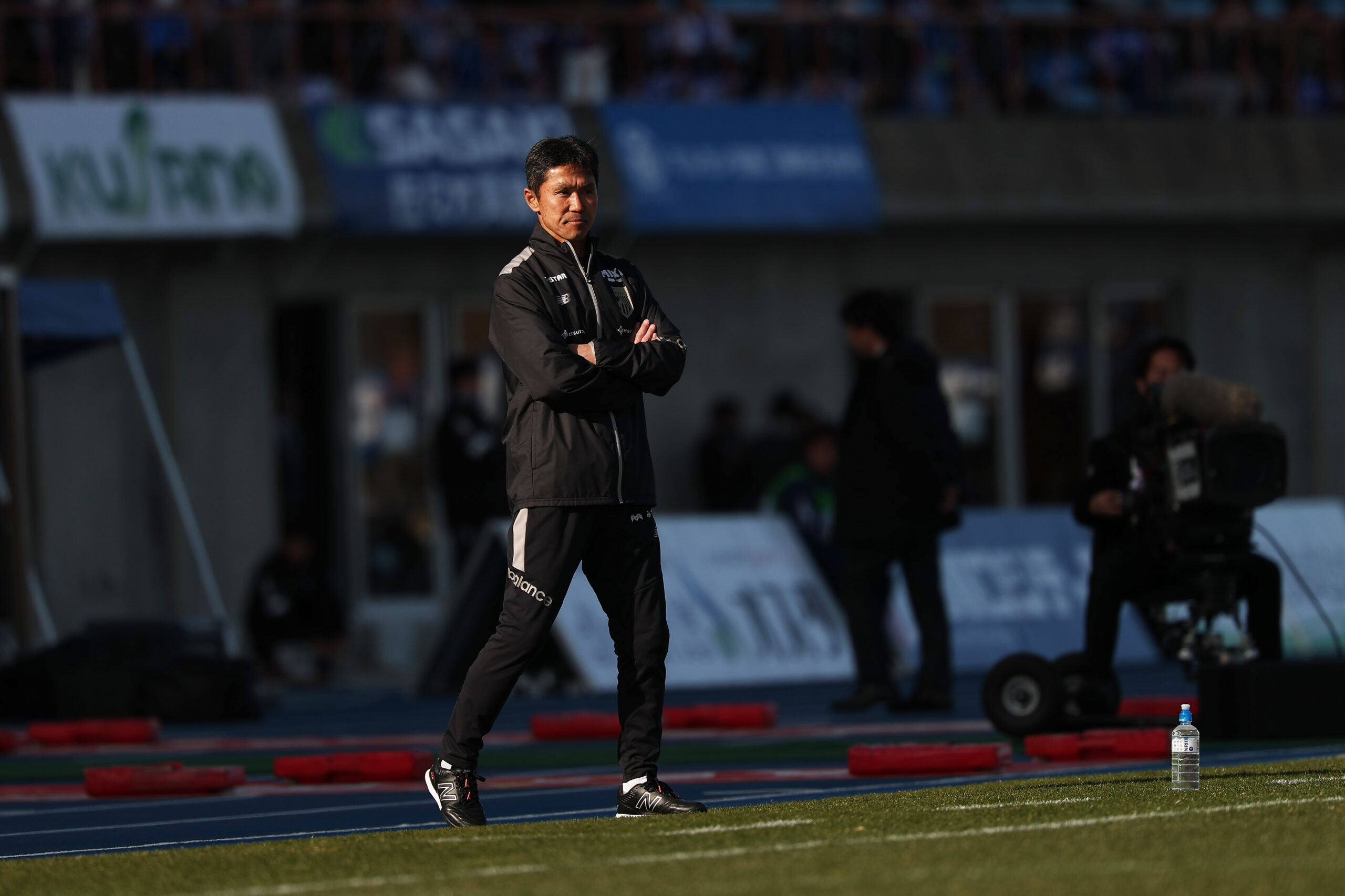
Q. The last match was a difficult one, where we earned 2 points, and although we scored first, we were caught up. What kind of feedback did the team provide?
AAlthough it is something that has already ended, I have organized the causes even within a short time. I was able to convey the key points during today's training, and I would like to touch on them again in the pre-match meeting. One issue was that there were unnecessarily many long balls. The opponent's pressing was good, but we must challenge ourselves on how to respond, fully aware of that, or nothing will change. The positioning and movements are designed with that in mind, so if those are slightly off, the long balls will not be effective. I want to make sure we share this thoroughly. I will explain the intent, but it is the players who choose, and since the situation I convey is not the only one, it is also important how they judge according to the circumstances.
Q. As a team aiming for the championship, how are you planning to improve the area of conceding goals?
A, this was the 2nd Round in the previous match, and after scoring first, we conceded an easy goal. To become a team worthy of the championship, we cannot afford to concede goals like that. We need to address this not as a mere coincidence but from various angles, including tactical aspects. We also want to organize this among the staff and share it with the players.
Q. Is changing the flow of the game also a challenge?
A, we expect players who come on during the game to act as game changers. Sometimes they directly change the flow, and other times indirectly, which is also fine. Ultimately, I want all players to focus on how to create a situation where we can finish with a smile.
Q, This is the second match of the three consecutive away games.
A, it remains unchanged every match, and this time as well, it is an important game. The opponent is JEF United Chiba, and no one else.
Q. Please tell us your impression of Chiba this season.
A is challenging in defense, and in attack, players confidently move into the goal area and deliver the ball. Their style is simple but detailed and clearly structured. If we can firmly control these aspects, I believe we have a good chance to win.
Q, What are the key points of this match?
A, since it is a series of consecutive matches, many players may be involved. It is an all-out effort, or rather, it is important how we can demonstrate what we have worked on so far. Not only the 11 starting members but also the 20 selected players, and all members of the team who have spent these three days together, it is crucial to show the accumulation of that effort in this game.
Q. Regarding the fact that the team has been on a winning streak, do you feel the team's competitive strength has grown?
A, it doesn't always go well, but if you give up just because things don't go well, nothing will happen. Opportunities come your way precisely because you keep going even when things don't go well. Effort is not always rewarded, but those who succeed are always making an effort. Those who neglect this do not have such luck. Because I have this mindset, I convey this attitude to the players, and they embody the effort that deserves it every day. This is the small difference that shows up in the end, and I believe it is influenced by the daily attitude.
Player Interview
Rio OMORI
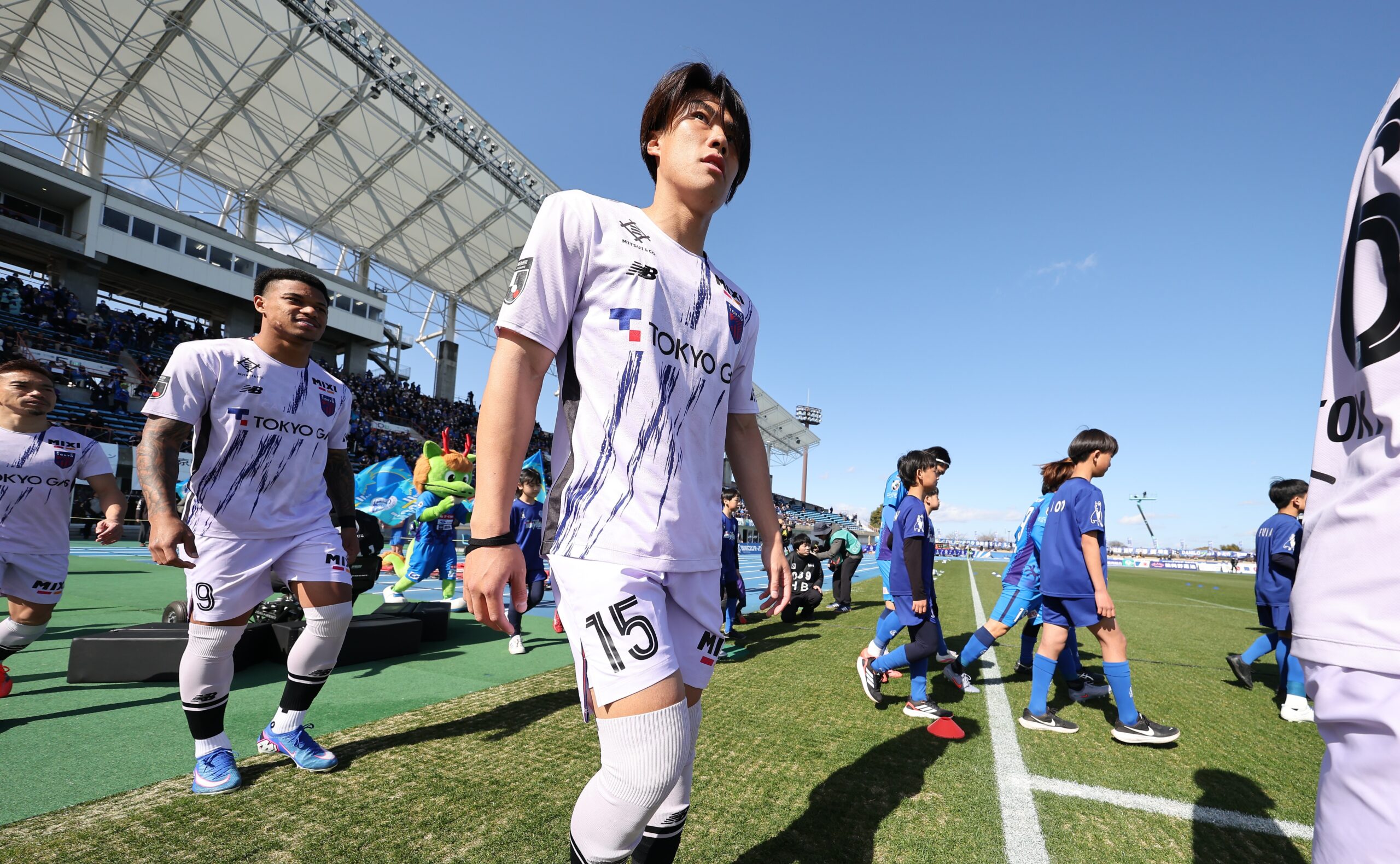
Q. You have returned to Tokyo and played in two matches. How do you assess your own performance and the team's situation?
A, the team performed well against Yokohama F.Marinos, but we couldn't do what we wanted against Mito Hollyhock. In the match against Mito, I think it was a big positive as a center back to be able to return without conceding a goal despite the difficult situation, but it was unfortunate that we ended up conceding. On the other hand, there were moments when conceding an additional goal was possible, so the scenes where everyone reacted to the loose balls showed the team's very high defensive awareness, which was a good aspect. This also contributed to not dropping points.
Q. Given the experience you have accumulated before returning to Tokyo, do you think you have been able to smoothly demonstrate your performance and composure on the J1 League stage in these two matches?
AYes, that's right. I think gaining match experience has been very significant, and having played on the pitch for about four seasons, while analyzing opponents is important, I have gradually come to understand what aspects of my own play I can and cannot do. I need to broaden my range more, but at this stage, I feel I have a sense of where I can challenge myself and where I need to play it safe. By controlling that balance, I want to aim for an even higher level of play.
Q. After gaining good momentum in the Yokohama FM match and then struggling in the Mito match, what do you think can be done from the defensive side to help the team function well in the upcoming JEF United Ichihara Chiba match?
AFirst, in terms of offense, I think there was some inconsistency in the overall awareness about whether to hold the ball firmly under the opponent's pressure or to create a base up front and then slip through there. First of all, executing good offense leads to risk avoidance in defense and results in a more substantial attack. Although the preparation period is short this week, we are reviewing the Mito match within the team once again. When things go well, we can perform like in the Yokohama FM match, so unifying that intention is one key point.
Regarding defense, I personally struggled with the timing of pressing, and as a defensive line, we ended up pulling the opponent into our own half a bit. The conceding goal scene is easy to understand; the player who took the final shot was quite close to the goal. We continue to push back as much as possible and maintain pressing from the front line, so rather than quantity, it's about quality — how well we can move those around us becomes crucial. Even in the tough situation against Mito, the front players kept up the pressing in terms of quantity and speed, so the key is how well everyone can synchronize their timing. If we, as defensive midfielders, can move and in turn move the front players, and if good communication is established, Tokyo's press will become a threat. First, I want to correct that. I believe that if we can organize things rather than trying something new, we can compete fully.
Q. Even in the tough match against Mito, it felt like the team's perspective and what they want to do have not wavered.
A, well. There were really many moments where if we connected just one thing, it would become a very good form, and conversely, in the Yokohama FM match, there were very few mistakes. I think the players understand that, and it’s not like there’s no place to return to or that things absolutely won’t go well. If our sense and timing align just a little, I believe we can become more threatening, and we are confidently continuing without change. I think this links to the situation where we aim to move up even one rank, so I want to face it aggressively without holding back.
Q, the next match will be against Chiba. Based on what you just mentioned, while it is natural to study and analyze the opponent, the key point seems to be whether you can take the initiative and not just react passively.
A, that's right. Of course, some teams adjust their playing style functionally for each match based on the opponent's formation, but for Tokyo, the key is whether they can establish their own style. They have players with quality, and I think the issue is whether they can bring that out. So, I believe it is important to continue playing in the characteristic Tokyo way.
Kota Tokiwa
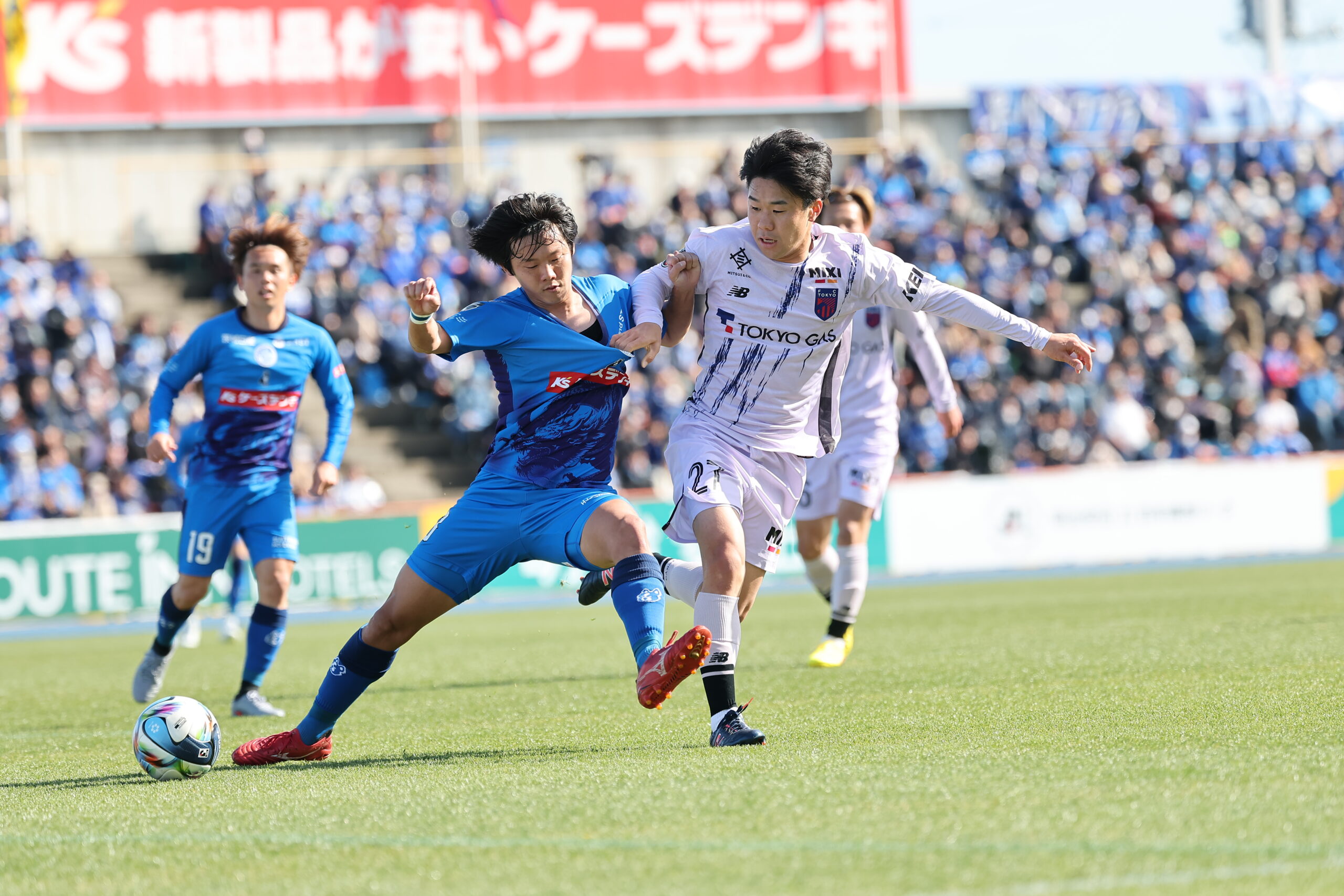
Q, please review the game against Mito Hollyhock.
A, the opponent used many long balls that bypassed the midfield, resulting in a match where the ball was in the air for extended periods. We ended up engaging in that style of play, which was a problem. Spending too much time fighting on the opponent's terms prevented us from playing our own football, which was unfortunate. To break through, I felt from the start of the first half that the key was to win more second balls and then calmly control the balls we won. I think the biggest issue was that we couldn't fully express this until the end of the match and spent too much time playing into the opponent's style.
Q. How do you want to approach the match against JEF United Chiba, which comes after three days of rest?
A, like in the previous match against Mito, they are a team that has been promoted and carries momentum, so although Chiba lost to Yokohama F.Marinos in the last match, they have beaten Kashiwa Reysol, a team that Yokohama F.Marinos could not defeat. They have a very clear style of play they want to execute and are a good team. I think they have the momentum from being promoted, but to win the championship, we must firmly beat such teams. Since it is a series of consecutive matches, it is difficult to confirm and coordinate various things on the pitch, so I want to have close communication with various players and coordinate with the staff accordingly. When the game unfolds like that, the team as a whole must share a common understanding of what should be done. However, it is not enough to just have a common understanding; when that situation arises, the 11 players on the field must make solid decisions. We have thoroughly coordinated the basis for those decisions, so I want to express that. Although it is a series of matches, since I was substituted early in the previous game, there are no physical issues, and on the contrary, I believe I am a player who thrives in consecutive matches, so I want to give my all and face the challenge.
Q, How do you think about the difficulty of accumulating 3 points to win the championship while expressing your own style of football?
A, I have painfully realized how difficult it is to earn 3 points in the 6 matches so far this season. If we only accumulate 2 points each time without securing 3 points, the gap with the top team inevitably widens by 1 point each time. There were a few matches where we were able to express the style of football we want to play and push through, but since football involves an opponent, more often than not things don’t go smoothly. I believe we need a more realistic approach to securing 3 points, so I want to focus firmly on scoring goals and solidly defending them. By doing so, I believe the 3 points will naturally come into view. Balancing this is truly difficult, but to continuously achieve the J.League championship as a team, we must also develop the aspect we are currently working on—maintaining solid ball possession. However, as we continue with this style of football, opponents will implement various countermeasures such as high pressing, so I want to also showcase Tokyo’s inherent strengths: solid defense and counterattacks from there. We have many players up front with momentum and speed, so by skillfully switching between both approaches, we want to seize victory.