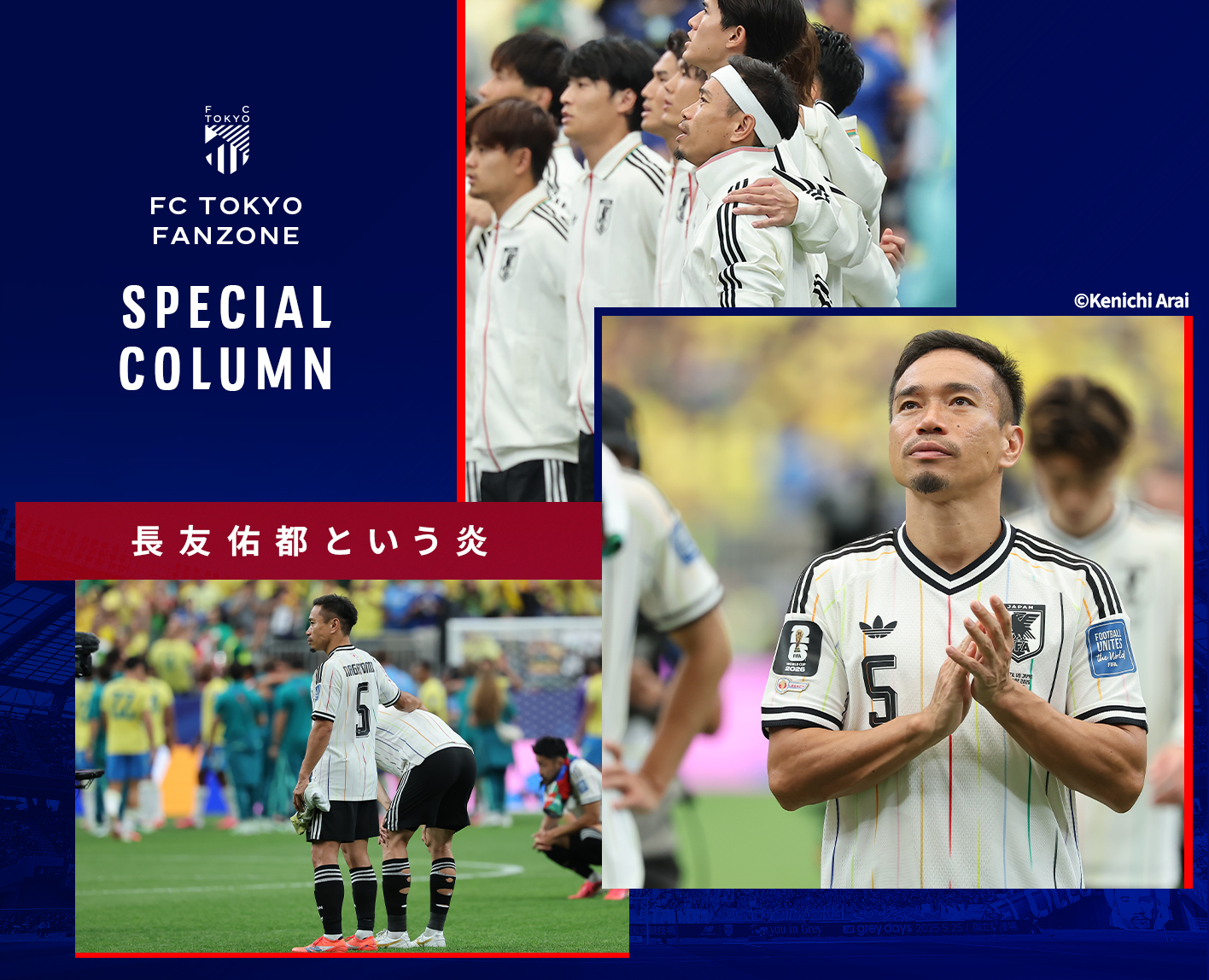


The passion he has continuously burned for the Japan national team had, before long, grown into a great flame that could no longer be contained within a single player.
That flame was not just something to ignite himself. It warmed his teammates, united the team as one, and at times became a light that showed the direction to move forward. Watching him, I thought about this many times.
He always ran at the front during practice, constantly raising his voice to energize the team. It was not uncommon to see him stepping ahead of head coach Hajime MORIYASU on the bench to call out to his teammates. Whenever a goal was scored, he was the first to rush over to his teammates, and during tough moments, he shouted encouragement from the bench. His determination to "never let anyone feel alone" brought a powerful sense of unity to the Japan national team.
The flame he was burning was the Japan national team itself.
Yuto NAGATOMO achieved the great feat of becoming the first in Asia to participate in five consecutive tournaments. However, his role was clearly different from the previous four tournaments. In South Africa, he fought desperately on the dream stage for the first time; in Brazil, he experienced frustration; in Russia, he was heartbroken by just missing the mark; and in Qatar, he showed the world the new potential of the Japan national team.
And then came the fifth grand stage. While shining as a player himself, he also devoted all his energy to creating the right atmosphere to see the “best scenery” by leveraging his past experiences.
The unique atmosphere of the World Cup, understood only by those who have experienced four tournaments──. Just before the opening, a players' meeting was held at the initiative of Daichi Kamada. With captain Wataru Endo's withdrawal, the team was somewhat unsettled. Each player voiced the feelings and anxieties they held deep inside, creating an opportunity to realign their focus once again. It was then that Nagatomo spoke up.
"There is a pressure at the World Cup like never before, and whether you perceive that weight negatively or positively is up to you. I want everyone to play proactively, and I want to play that way myself. Let’s go with a strong spirit. Now that we’ve come this far, it all comes down to mental strength. Even if we concede a goal, let’s not fall apart or hang our heads; let’s talk together and connect our hearts."
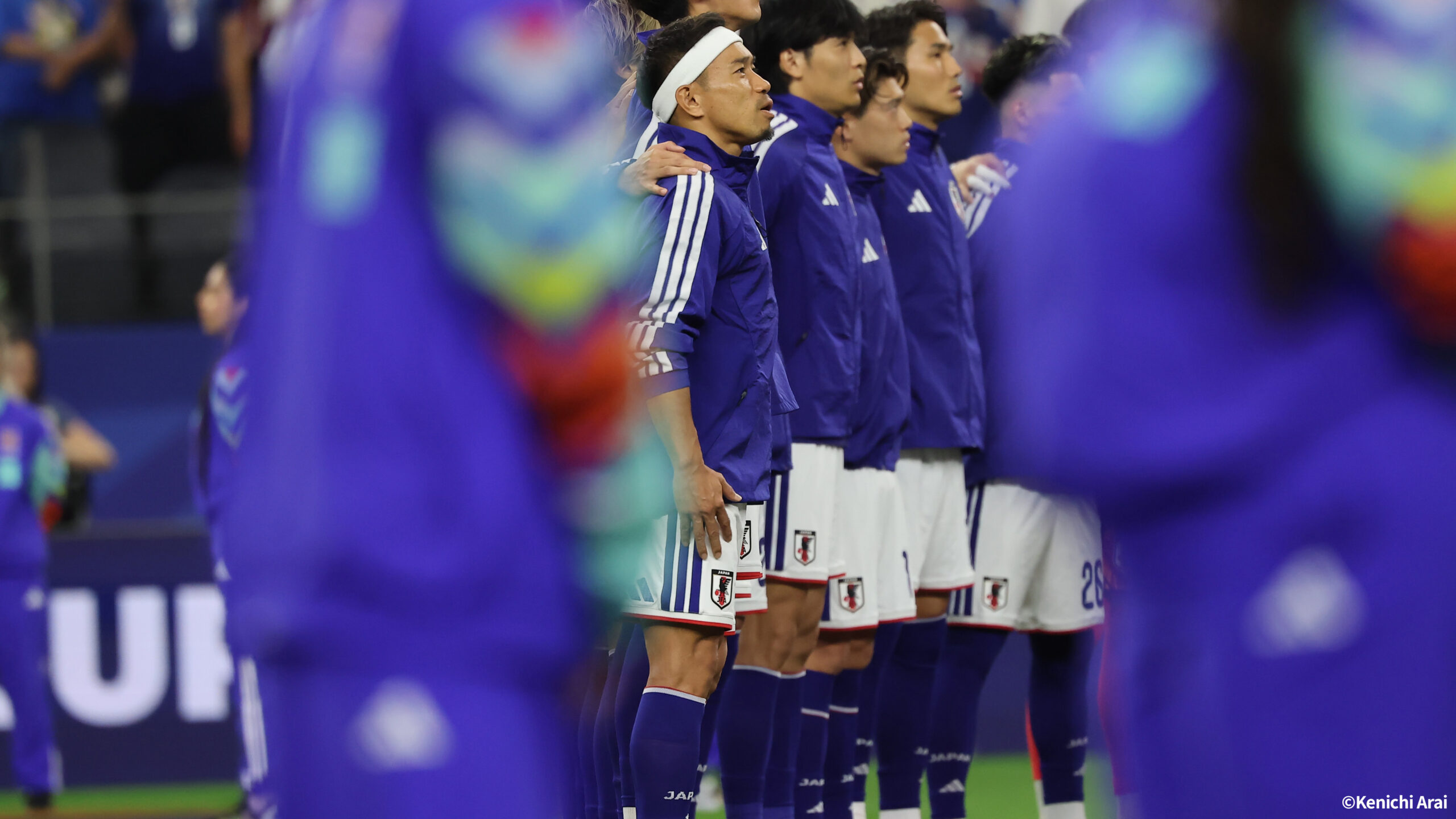
What is necessary to advance is not just technique or tactics. He understood the importance of the Japan national team facing the same direction, uniting as one, and demonstrating an attitude of fighting together. To that end, he generously shared his own experience and paid close attention to his teammates' hidden efforts, conveying his feelings. The flame of his experience became a light, illuminating the direction the team should take.
After bringing the first match against the Netherlands to a dramatic 2-2 draw with a last-minute equalizer, he proposed another players' meeting before the second match against Tunisia. The sense of crisis that Japan had not won the second match in the past four tournaments, including the experience of defeating Germany but losing to Costa Rica in the first match of the previous Qatar tournament, drove Nagatomo to take action.
“After finishing the first match, which we have prepared for a long time, there are times when the tension snaps. We have struggled in the second match in all four tournaments. You really have to face the World Cup with a serious mindset and a strong determination, or else you will be caught off guard. There is nothing to say about the good preparation we have built up. From here on, it’s about uniting our hearts, raising the tension, and how we approach the match. That is the most important thing in a short tournament.”
The result was a resounding victory for the Japan national team with a record four goals in a World Cup match. For him, who was confident after seeing the atmosphere in the locker room before the game that "there would absolutely be no problems today," this victory in the second match was the 'fifth time's the charm.' He finally broke through that barrier.
After the Qatar tournament, he once considered retiring from active play. However, witnessing the world's highest-level Final Round ignited a passion within him to challenge this stage once again, sparking a new flame that burned in his heart. The following four years were a more arduous journey than anyone could have imagined.
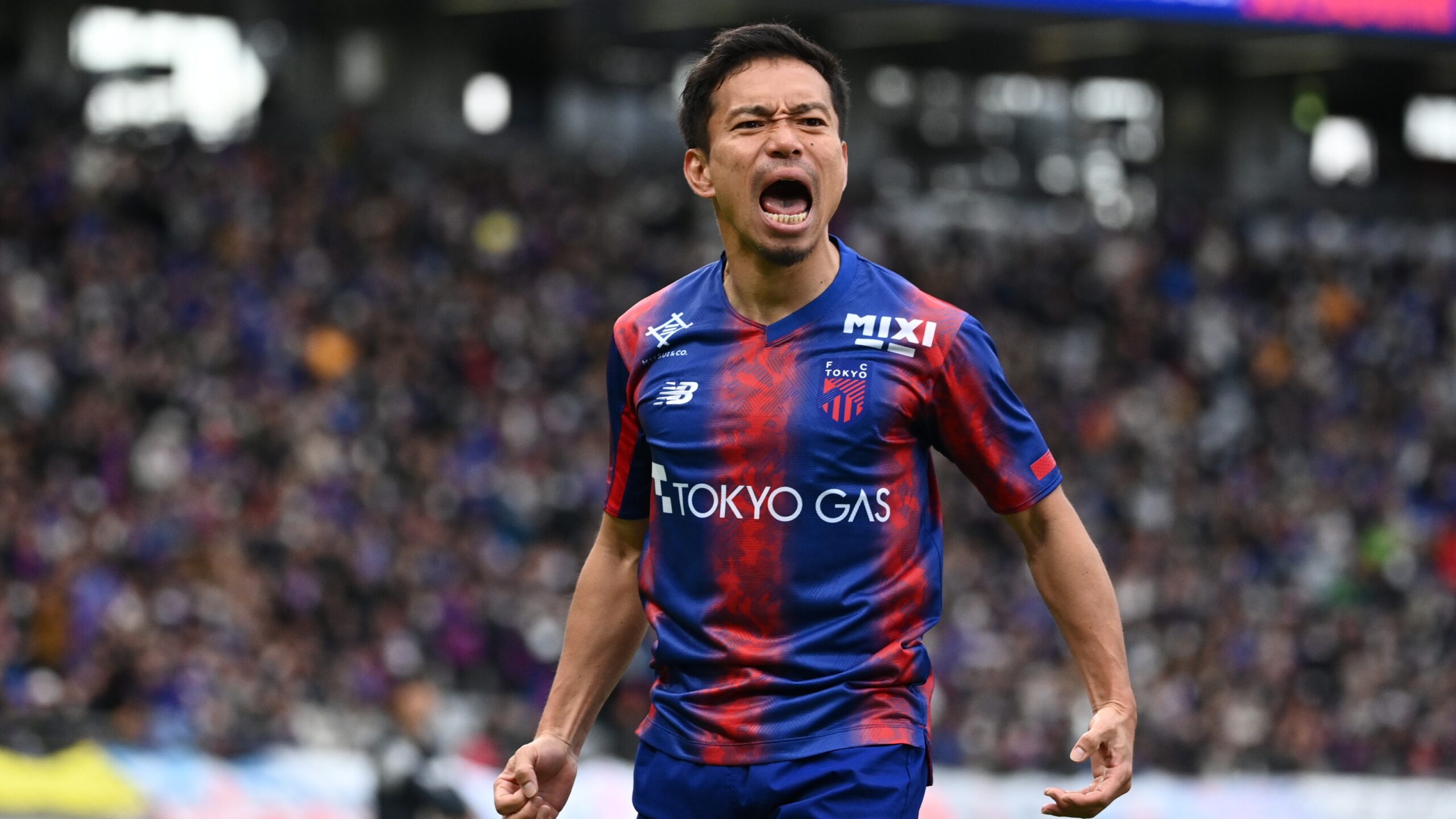
There was a period when he was away from the Japan national team. Even so, his feelings for the Japan national team did not change. He realized for the first time after stepping away just how significant the team was to him, saying, "The Japan national team was my driving force." A major turning point came with the team's exit in the Round of 8 at the AFC Asian Cup in early 2024. Although aiming to conquer Asia, the team ended the tournament halfway through their ambition, and a somewhat heavy atmosphere lingered. In March of the same year, to change this mood, Yuto NAGATOMO's name was once again added to the Japan national team roster.
On the first day of joining, the impression he felt was that "the atmosphere was stagnant." However, at the same time, he was also certain. "If it's me, I can change it." As he later described himself as an 'air purifier,' he understood that his role was to transform the stagnant atmosphere into a positive one.
It was not an easy task. Even after making a comeback to the national team, what awaited him was not a regular starting position. He also had to accept the reality of being left out of the bench for a long time during the final qualifiers. As a player, there was no way he wouldn't feel frustrated. Still, he maintained his attitude of putting the team first until the very end. Believing that doing things for the team, even if it meant suppressing his own feelings, would lead to the World Cup—he accumulated each day with that conviction.
During those days, the fire burning within his heart was not fueled by smooth sailing. In the final qualifiers, there were voices questioning his selection for the national team due to his age and performance. However, he turned even such criticism into fuel, continuously growing the blazing fire in his heart. It was okay to be laughed at. It was okay to be doubted. The only things he believed in were himself and the days the team had built together.
After the Qatar tournament, when he said, "I aim for the next World Cup," the majority responded with skepticism. Even so, he never doubted himself for a moment. At the press conference where he fulfilled that dream, Nagatomo told children, "Have big dreams that might make others laugh, and always hold onto an unwavering belief." That conviction also became a driving force that moved those around him in the Japan national team, which aims for the "best scenery."
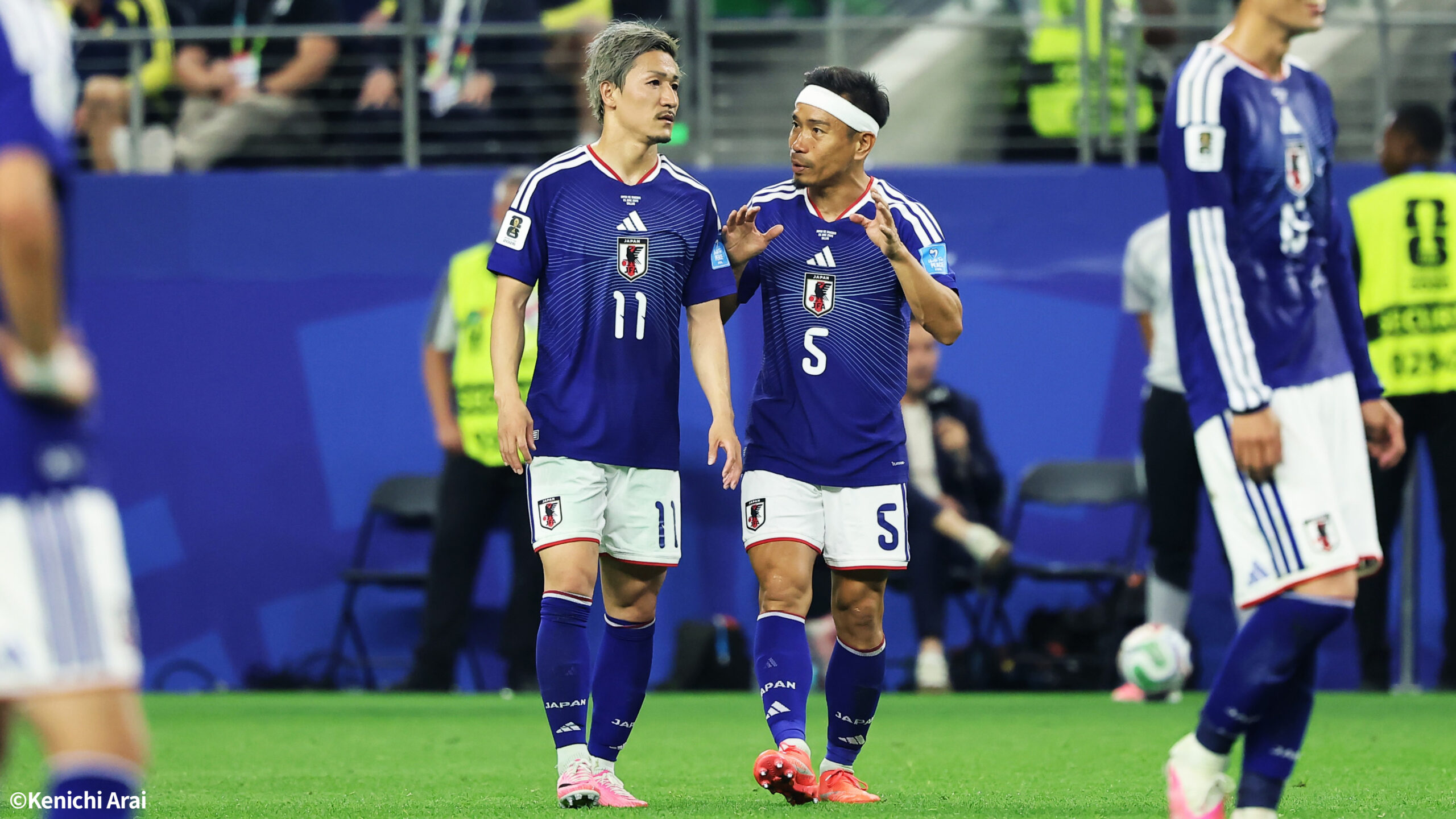
What can be done both on and off the pitch to secure victory? Nagatomo kept an eye on the entire team, paying attention to each individual’s condition. If a player seemed down, he would speak to them. If he sensed hesitation, he would give them a push forward. Whether during training, matches, hydration breaks, or halftime, he constantly tightened the team with a loud voice while sending positive words. It wasn’t just the 11 players on the pitch. He continuously demonstrated by example the importance of fighting together as a whole, including the bench and staff.
One of the things Nagatomo emphasized in this tournament was the sense of unity, including the bench. He leaned forward so much in the technical area, encouraging the pitch, that he was warned by the fourth official. He himself said with a serious face, "I'm already on the pitch. So, there are 12 of us fighting on the pitch." Takumi Minamino, who joined as a mentor, told him, "If Yuto comes on, we'll cheer insanely loud including the bench!"
In the third match against Sweden, Hajime MORIYASU finally called on Nagatomo. With the score at 1-1, the mission given was to stop Anthony Elanga, the key attacker who had scored the equalizer. His heart burned with the trust from the coach. At the same time, passionate shouts came from his teammates.
“Let’s do this!”
“Go for it!”
“We’re counting on you!”
Nagatomo, who was brought on as the left wing-back, took a position in front of the Japan national team’s bench. Throughout the match, he was continuously encouraged by voices of support, and fighting alongside his reliable teammates, he helped firmly close out the game, securing 1 point and advancing to the Final Round in second place for the Japan national team.
“My juniors pushed me forward as if it were a cry from the soul. There were an incredible number of fans and supporters nearby. I wanted to encourage the players on the pitch from the bench, to give them courage, and to make sure they never felt alone, so I kept calling out to them, but this time, they actually embodied that for me instead. I realized that my feelings were resonating with them. I truly felt a connection of hearts, a connection of souls.”
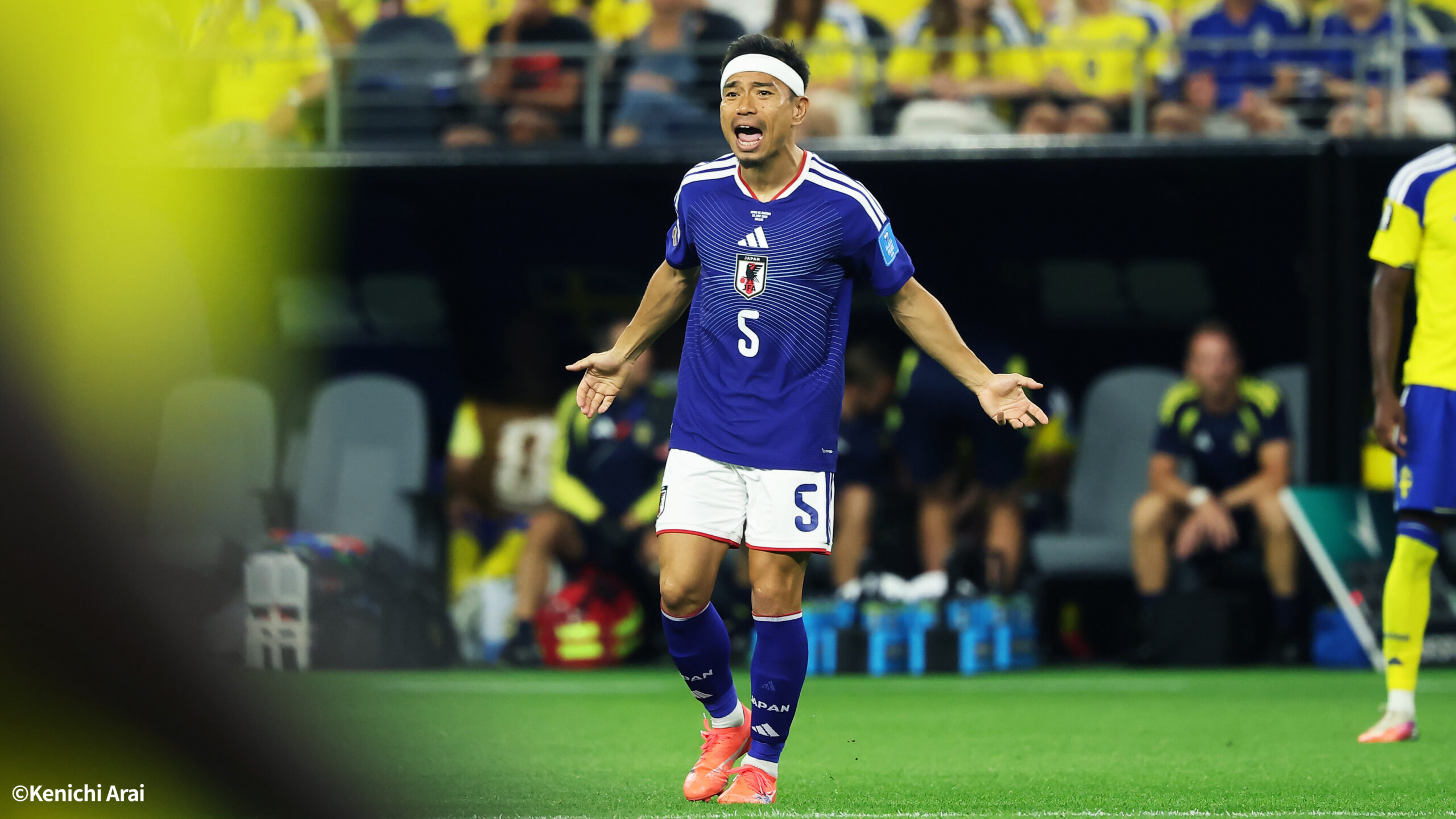
Before the tournament began, he also said, "I am confident that I can get my teammates to perform at 120%." This was by no means overconfidence or an attempt to make himself look bigger. He believed that he had a role only he could fulfill: to cleanse the stagnant atmosphere felt after the Asian Cup, rebuild the team, and draw on his experience from four previous World Cups. That pride was proven once again in this tournament.
The flame that Nagatomo has been igniting had surely been passed on to the hearts of the younger players.
The 1st Round of the Final Tournament faced Brazil. Regarding the knockout stage battle, where they had never won even once before, he said, "In terms of unity, we definitely surpass Brazil. First, we must thoroughly analyze and ensure that everyone fully understands each player's characteristics. We should not rely on momentum alone but fight calmly with a proper strategy. That is what I want to convey to the younger players."
It was truly a significant match both in the history of Japanese soccer and in Yuto NAGATOMO’s soccer career. From the first half, the game developed with Japan controlling the ball, troubling a serious Brazilian team. Kaishu SANO’s strike gave Japan the opening goal. However, in the second half, Japan struggled against relentless long balls and crossing attacks, and the situation drastically changed. A goal in added time of the second half resulted in a heartbreaking come-from-behind loss, and Japan fell just short of making history.
The World Cup is always cruel. The wonderful journey with great teammates, which was supposed to continue much longer, was suddenly brought to an end. In the mixed zone after the match, Nagatomo showed a melancholic expression and likened the days of continuously challenging the world by saying, "The past four years have been too heavy, and the fleetingness of it ending in an instant is too disproportionate."
"The World Cup was my youth, and our youth. Since I didn’t spend my youth immersed in soccer practice when I was young, the World Cup became my youth. So many adults, with such passion and spirit, united as a team, getting fired up for their teammates. Moments like that don’t exist anywhere else. That’s why there’s a sadness that this youth has ended. I didn’t want to be separated from these comrades."
After speaking as if putting a period to this chapter, he let slip the words, "My future vision is completely blank," revealing what was on his mind.
"The flame that had been burning for four years has now gone out. If I were forced to give an answer immediately, I’d probably say I’m quitting, so I want to take my time to rest, calmly talk with my own heart, and decide what to do next."
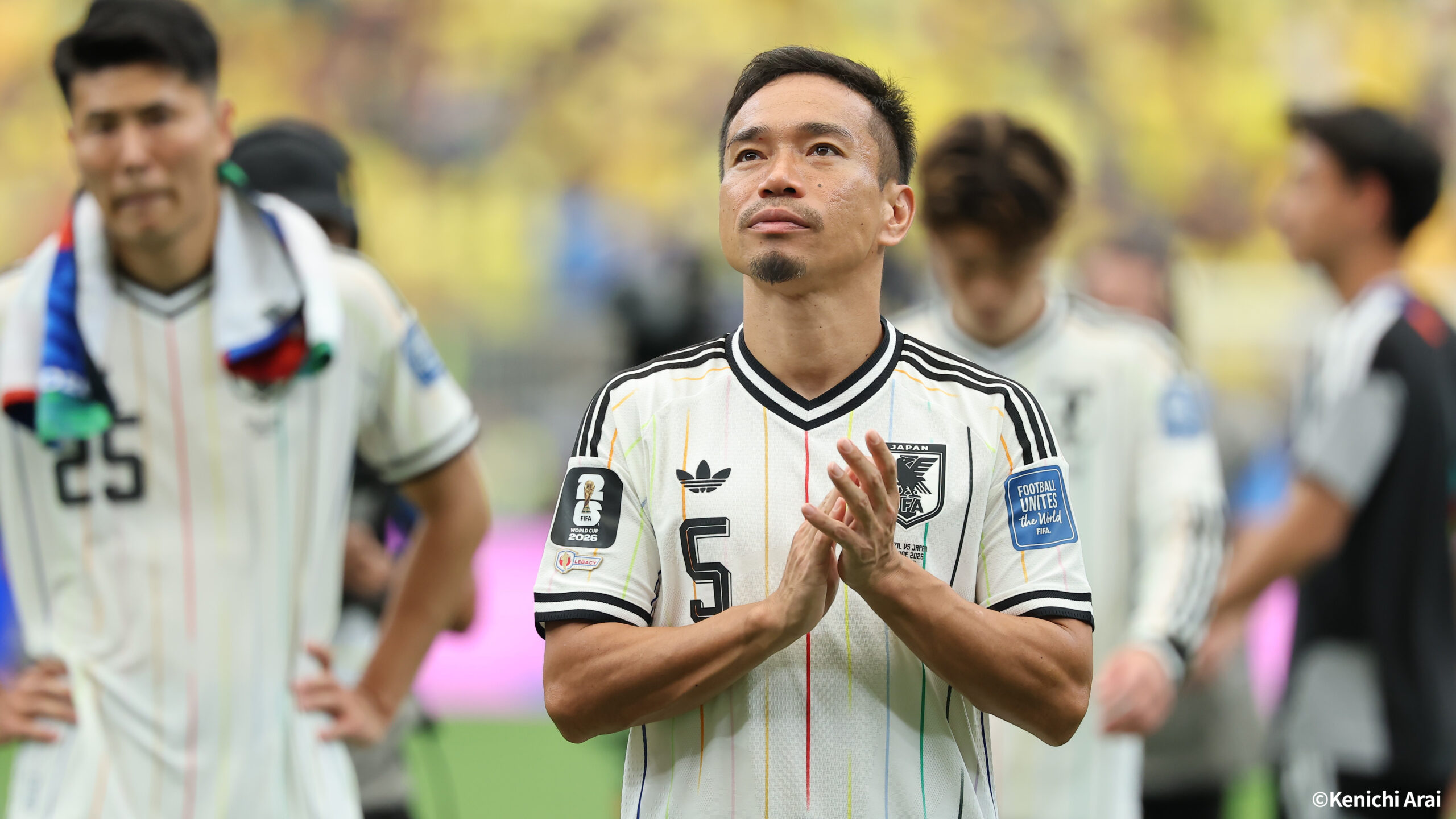
Carrying the responsibility of not being able to lead the team to victory and having run full throttle while sacrificing many things over the past four years—reflecting on the 19 years since his Japan national team debut and the stage of five World Cups, Nagatomo continues to speak.
"The World Cup contains cruelty intertwined with suffering, and within that suffering lies a joy that cannot be replaced by anything else. The deeper the suffering, the deeper the joy becomes. The only place where I, as a player, can truly feel this is the World Cup. It is cruel, but I am deeply grateful. I am proud as a player to have experienced such a cruel and magnificent tournament five times. This experience feels like something that was given to me, and I have a very strong sense of mission that, regardless of my position, I must give back to Japanese soccer. Compared to after the last tournament, this sense of mission is clearly different."
The pride and determination to fight as a member of the Japan national team. The loyalty and mindset toward the team have been surely passed on to the next generation. He speaks while embracing both joy and sadness.
"I want to deny myself for the parts where I couldn’t contribute to the team, but in the aspect of igniting their souls, I believe I have greatly contributed to Japanese soccer. I think I was able to pass on a significant part of my own spirit. I believe I conveyed everything that needed to be conveyed, and they must have realized that the Japan national team is such a proud place, and that the Japan national team and the World Cup are such precious things. I believe they will carry it forward from now on. They will become stronger. Absolutely."
Each individual had their own flame in their heart. He gathered those flames and directed them all in the same direction, evolving them into a great fire called the Japan national team without leaving a single person behind. That source of heat was the man named Yuto NAGATOMO.
However, it is said that the flame has gone out. Can such a thing really happen──?
Looking back, time and again at life's crossroads, he found sparks and each time poured his energy into turning those small sparks into a great flame. Even flames that seem to have burned out always have sparks remaining. The deep-seated passion he holds for Japanese soccer will never extinguish. When, where, and in what form his spark will blaze again is unknown. For now, I simply want to quietly wait for the day when that spark once again becomes a great flame.
(Honorifics omitted in the text)
Text by Tomo Aoyama
Photos by Kenichi Arai