

Ajinomoto is filled with memories for everyone.
There may have been times when your heart was moved with excitement and tears fell from anger. Perhaps love or romance was born there.
In an era where everything can be handled on personal devices, there are still people who continue to visit the home stadium to relive the emotions they experienced there.
In the story that began in 2001, there is a man who joined 10 years ago.
Even as many years passed, Masato MORISHIGE has continued to wear the blue and red uniform without change.
And then, he shouted.
Let's win the championship in the home where we spent 10 years.
Words from a Mentor That Stuck in My Heart
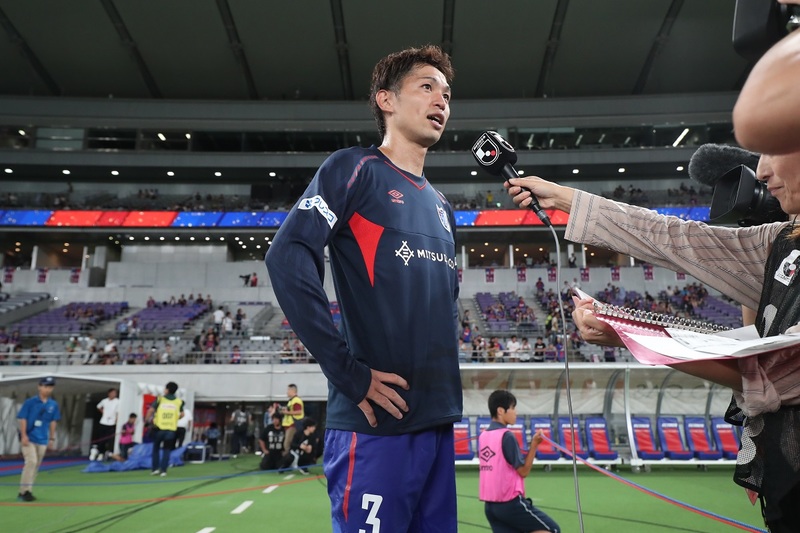
"10 years, huh..."
After Masato MORISHIGE's whispered words, a lingering impression remained. He continued as if to fill that silence.
"I hoped I could stay with this team for a long time. When I became a professional, my coach from Oita taught me that I should aim to be a player who can stay with one club for a long time. That advice stayed with me. In terms of leveling up, moving from Oita to Tokyo was a consideration. But if possible, I didn't want to transfer. Moving from Tokyo to somewhere else was never on my mind from the start."
Breaking out of the old shell and evolving, I have spent that much time in the city of Tokyo. They say ten years is a long time, but unable to keep up with the changing era, people tend to dismiss it with a kind of resignation, saying, "Young people these days..." Ettore Scola depicted the sorrow of cinema being overtaken by television in "Splendor." However, now the once avant-garde television is about to be replaced by devices. Scola is probably bewildered over there, saying "Hey, hey." Even so, Morishige has been running at Ajinomoto Stadium for ten years as a Japan national team defender. Fearless of change, cultivating self-discipline, and overcoming the walls he built each time—.
In 2010, he joined FC Tokyo on a permanent transfer from Oita Trinita and has experienced many things. When asked, "A lot has happened during that time, hasn't it?" he echoed back with a nod, "Yes, it has."
"At first, there might have been more bad things than good. From there, I humbly listened to various advice, and since then, things might be said to have gone smoothly. Aside from the quality of the matches, I think I was somewhat recognized by the fans and supporters in Tokyo."
The "beginning" was the worst. In his first year after the transfer, he lost to Kyoto SANGA in the final matchday, personally experiencing relegation to J2 for the second consecutive year. Right after the game, he sat down on the spot, unable to accept reality, thinking, "No way." At that time, he was welcomed to Tokyo with great respect and was eager to achieve success here. However, that excess youthfulness ended up working against him.
"Accumulated, straight red card, second accumulation... 8 yellow cards, 2 red cards..."
He kept receiving cards like that and frequently disrupted matches. He was suspended for four games throughout the year, causing trouble for the team. His momentum was halted, and he came to a standstill. During the off-season that year, he encountered a voice that resonated deeply in his heart. It was from his elementary school coach, Kazuhiro Uemura, who taught him the joy of soccer, saying this to him.
"I can't show your play to the kids."
It pierced deeply. Then, he spat out that he was the "Worst Player of the Year" and sincerely began to face soccer in order to be reborn.
"The people who took care of me when I was little were happy that I became a professional, and they are happy again when I succeed in the professional world. Since I am in Tokyo, I am grateful for and cherish the voices of those who still know the old me and my hometown. I transferred at 23 and experienced J2 the following year. From there, I understood how to make efforts. I found how to approach things. To aim for a big goal, I became able to organize what I need to do now. Once you enter that cycle, it’s not that hard. I had a trigger to find it and thought about various things myself. That beginning was the two years after transferring to Tokyo."
An Aura That Keeps Others Away
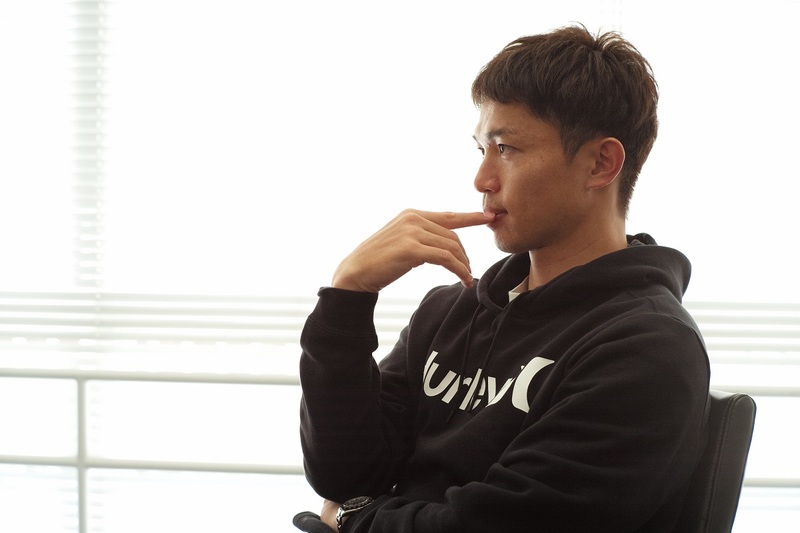
Our relationship has lasted for 10 years. Over that time, the number of shared stories has grown. Looking back on my football career, the conversation blossomed with nostalgic tales like, "At 25, there was 'that story,' and after that..."
"In the first two years, I began to feel that I was gradually overcoming some of my challenges. Then, I found a new, higher-level goal. Perhaps that was becoming a national team member or a captain. Maybe it was also about timing. As I established my position in Tokyo and progressed step by step, the role of captain naturally came into view before I realized it. The further you go in life, the more the next thing naturally becomes visible. I was somewhat prepared mentally for that, so I didn’t panic."
In 2013, he was appointed captain, and in July of that year, he was first selected for the Japan national team, after which he began to exude an aura that kept others at a distance. Even so, he always gathered feedback from those around him and continued to make efforts within the limited time available. Each time, his innate competitiveness surfaced. "Back then, I was always told, 'Morishige's play is unstable.' I worked hard to dispel that image," he says. He reviewed his detailed footwork and body positioning, building a physique that could withstand strong forwards. Furthermore, he began to pay meticulous attention to body care.
"I had more things to do, and I started to withdraw into my own shell. I focused on myself, or rather, I used to enjoy eating and chatting with everyone. But I prioritized maintaining my own pace first. The priorities shifted. Various timings overlapped. Becoming captain was one of them, and it was a period when I found what I needed to do and had to do it. I think it was a good timing. Also, I felt it was more like me to show through my attitude and actions rather than words."
Once dependence was cast out, there was no missing the opportunity for growth from there.
"Once the goal is set, what you need to do becomes inevitable. Playing football, I haven't really complained much. For example, even if I don't want to do strength training, I realize that if I don't do it, I won't reach my goal. So, I do it."
The journey led to the 2014 Brazil World Cup (W Cup). His goal along the way was to "stand on the pitch for Brazil W Cup's first match." He made his starting debut in the first match against Ivory Coast, but lost his position from the second match onward. Allowed only to watch the game from outside the touchline, the tournament quickly ended after the three group matches. Only feelings of regret remained.
Passionate Pledge
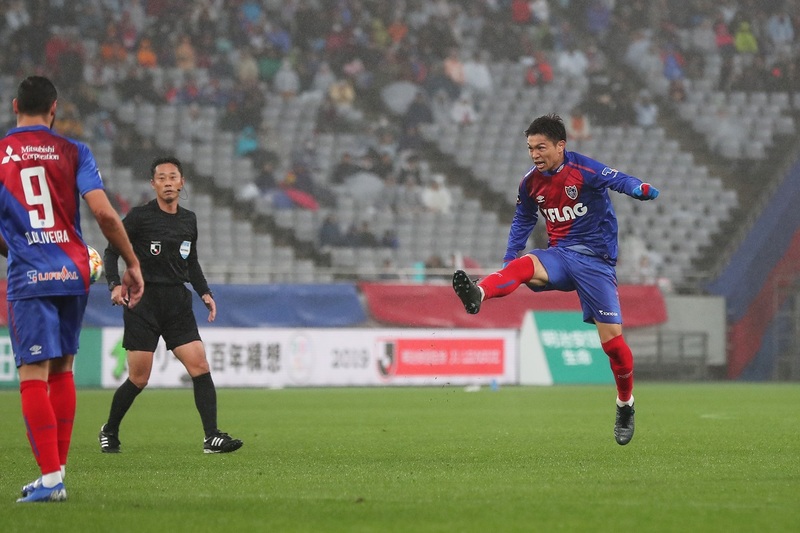
"I achieved my goal, but the next goal was blank. If I had set my goal to play in every match or to perform well, things might have been different. I also learned the fear of setting goals. Given my position at that time, I think everyone thought that goal was good. But I was naive. In the end, it really ended after just one match. That was a mistake. I need to have a goal twice as big. Because I set limits, I ended up only reaching that far. So I needed to bring in bigger ambitions."
That experience flipped the switch firmly. I became even more stoic and immersed myself in training. The words left in the interview notes from that year were as passionate as if burned.
"There is no one who keeps winning forever. But I want to be the kind of player who makes the team win because I'm here, or who can win if I'm on the field. I don't want to give up saying 'whatever.' To say that losing leads to something positive, you have to win somewhere. I want to be the kind of person who doesn't wait for that, but draws it in."
The next goal was set, and the four years began with that pledge. At the same time, it became extremely busy. Traveling back and forth between the national team and the club continued, and returning home from the clubhouse after training and body care was always the last thing done. Around this time, he often said, "There’s not enough time. The things I want to do and have to do keep increasing. I wish a day was about 36 hours." Even so, as the face of the team and a representative defender of the league, he stood on the pitch despite injuries and started every match from the first game in the Asian final qualifiers for the Russia World Cup. Ultimately, even if his condition declined, he took full responsibility for it himself.
However, in June 2017, just after vowing to start over following his exclusion from the national team, where he had established an unshakable position, the tightly stretched thread suddenly snapped. In the following month's match, he injured his left ankle and had to leave the game. Later, he was diagnosed with a dislocation of the left peroneal tendon, requiring four months of recovery, causing him to miss the rest of the season. A yellow light was lit on his path to the big stage for the second time.
At the end of that year, he conducted self-training in Okinawa Prefecture, diligently completing a tightly packed daily menu. It might have been forced, but he managed to be ready to compete by the start of the World Cup year, although pain remained in his left ankle. "They say illness is all in the mind. That's why I didn't tell anyone." He was that desperate.
"It's really frustrating that everything has gone back to zero, and I have to turn my anger at myself into energy. Surely, various things will happen, both good and bad. That's why I thought I have to make it a good year."
A quietly struck period
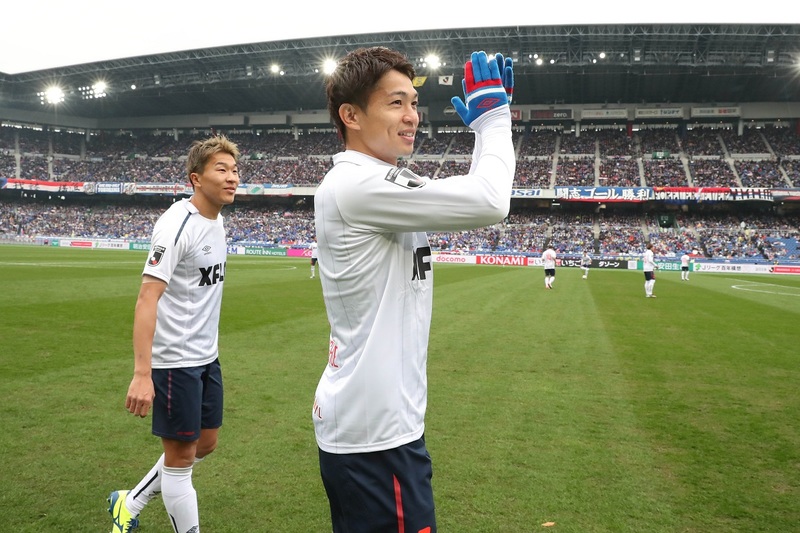
The announcement of the members for the Russia World Cup finals was narrowed down to 27 players on May 18, 2018, and finally, 23 players were decided on May 31 in an unusual selection process. However, even in the initial selection, Morishige's name was not included. Immediately after the announcement, he said, "This was my goal. I have come this far with the help of many people, so I am very disappointed. But things like this happen often in life. How I move forward from here is important, both as a footballer and as a person. I want to show that kind of attitude."
Afterwards, the national team training camp progressed, and member replacements due to injuries were possible until 24 hours before the first match against Colombia (June 19), but that hope gradually approached zero. The J1 League was suspended, and Tokyo players were given a long break. During that period, I heard from a club staff member that some players visited the Kodaira Ground. It was hard to believe at first. When I stopped by the clubhouse and looked toward the practice field, there was indeed a figure moving where there shouldn’t have been anyone. It was Morishige running alone on the grass. Knowing the strength of his determination, I could only watch from a distance. After he finished running, I didn’t even think to talk to him.
When I told him that story, he said, "Everyone turns it into a heartwarming tale," and smiled with dimples on his cheeks.
"It was just that it hurt more when I wasn't moving. To be honest, I don't think I could have been satisfied with the tournament if I had joined the team in that condition," he said, then paused before continuing, "But, well..."
"I thought the first chapter of my football life would end there. So, part of me felt I wouldn't be satisfied unless I did everything I was supposed to do until the very end. I guess it was both. It's true that I wanted to keep going until I was fully satisfied. I'm not the type to switch gears quickly. But what happened can't be helped. Above all, I believed I had to maintain that kind of attitude."
Quietly, he put a period. That might have been a fitting way to close the circle for someone who had lived a soccer life like a seeker.
Reliable Teammates
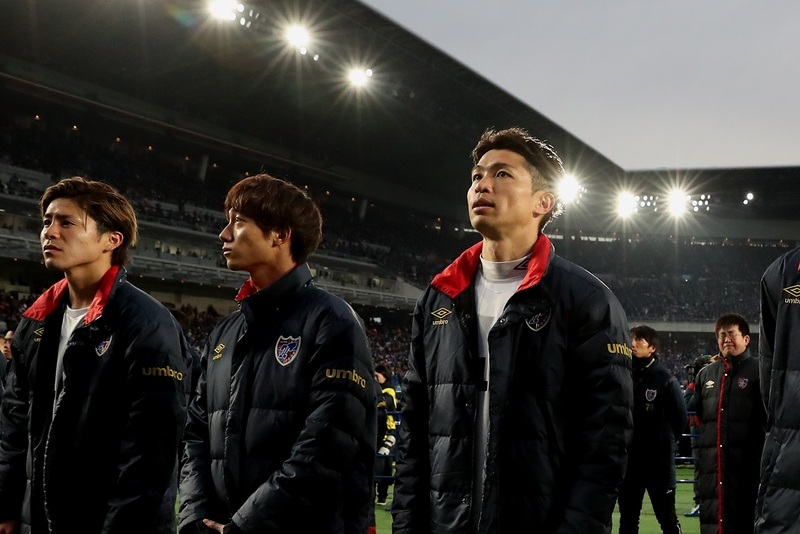
And so, the protagonist of the second chapter seemed like a completely different person. In the 2019 season, Morishige gave the impression of being more relaxed. He delved deep into the essence of football, showing a somewhat different side from his previous unapproachable demeanor. It wasn't that he had lost his curiosity; rather, he appeared to be enjoying football with a childlike spirit.
"For some reason, I am able to enjoy playing football. I can't help but have fun. Previously, I thought that the only form of success was to be active in the Japan national team and to participate in the World Cup, and I believed that was the pinnacle of the football player's pyramid. But even now, I am enjoying it and discovering new things. What was strange was that I realized that the style of play I want to do and the objective evaluation from the outside might not necessarily align. Until now, I aimed for 120% of what was expected of me. But this year, I was able to focus on what I should do as a center back. Until now, I tried to do this and that. So maybe I was physically lacking in the most important job, which is to protect the goal. I eliminated that waste. When I focused on the job of a center back, the accuracy there improved. That was a new discovery."
He has always led the team from the front, speaking through his actions. However, there were times when he felt a gap in enthusiasm compared to others. 'U-5 mid-level' and 'weak under pressure' have been said to be synonymous with Tokyo. He has continuously resisted that.
"I was not convinced. I came here wanting to drown out that impression and the voices around me, but no matter how much I wished, I couldn't change it."
Every time we lost an important match, I blamed myself for not being able to change the team and vented my anger, thinking "This can't go on like this." Every time I attended the J.League Awards as one of the Best Eleven, I bit my molars, wishing "If only more of us could come here."
"Looking back now, maybe there was something I was carrying on my shoulders. Before, I used to get irritated with those around me. I accepted that it was inevitable to have a difference in passion between myself and others. But now, it's different."
Perhaps that is the reason for becoming a different person. It was because the burden that was once carried alone is now shared by teammates.
"Keigo HIGASHI shows leadership, and Kensuke NAGAI energizes the team. On the pitch, Yojiro TAKAHAGI says a lot of things. Sei MUROYA also shouts during the game. I'm glad that more players have come to do what I used to do. More players can fight, and everyone works with the same passion. I find such teammates reliable. Right now, it feels comfortable. Even if I don't express something, someone else will, so it's easier. I don't have to say everything from one to ten; just one or two words are enough for them to understand. Also, since I've been here a long time, everyone respects me (laughs)."
At the surprisingly unfair end of life
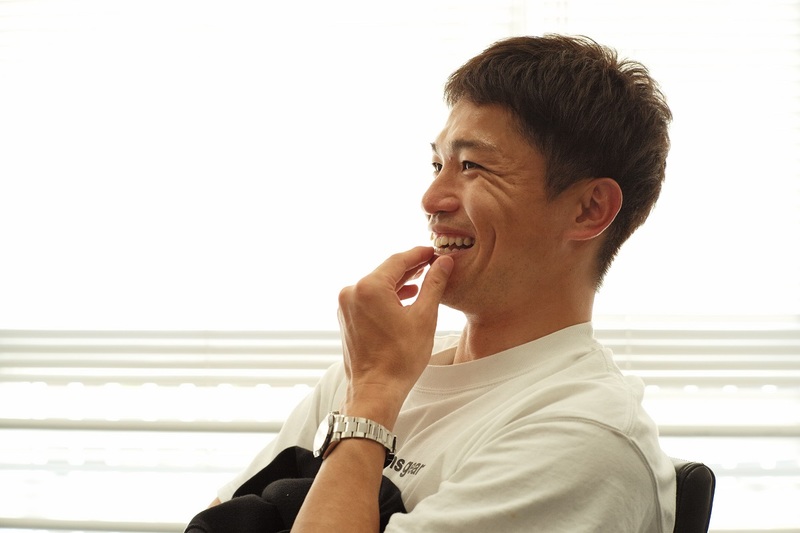
The league championship was missed by just a step. However, the 2019 season ended with the club's highest ever 2nd place finish, and together with five teammates, he was selected for the Best Eleven for the first time in three years. It seems that both he and the team have matured over the course of ten years. His hairstyle and atmosphere have changed considerably since ten years ago. His way of speaking even seems to have become somewhat witty and sophisticated. Yet, some things remain unchanged. On the pitch, which stimulates all five senses, he has remained both elegant and rugged. The fans and supporters who have watched him know this well.
In the final scene of the movie "Splendor," people gather at a cinema that is closing due to low attendance. One by one, the audience grows, as if picking up irreplaceable memories experienced at that place. Then, the scene merges with the world of the final scene of the classic film "It's a Wonderful Life," which was screened there many times and holds special memories for the owner and protagonist (Marcello Mastroianni). As the audience begins to sing "Auld Lang Syne," which started with a harmonica solo, snow falls—just like in the ending of the classic film—though it shouldn't be the season for it. Massimo Troisi shouts an out-of-season "Merry Christmas!" with all his voice, releasing that feeling of happiness. The work closes with this grand finale.
The miraculous climax that happened there. For the blue and red, the Splendour Theater is Ajinomoto, and "Hotaru no Hikari" is surely "You’ll Never Walk Alone."
"I can only be grateful to the fans and supporters. We've kept losing at crucial moments. Even so, tens of thousands of people keep cheering for us. Because so many people support us, I’ve always felt that we can’t afford to be disappointing. It’s not just words; I’m deeply moved by the actions of all the fans and supporters. We’re going to go after what we couldn’t get this year, together. That’s all. Things have changed over the past one or two years, and maybe it will be easier once we get it? Personally, I think it’s about how long I can keep playing as a center back in Tokyo. I’m not thinking about the end yet. If I keep going like this, I might be able to prepare for the time when 'someday' comes. I’m sure I’ll make decisions while observing various things. Since I won’t know until that time comes, it’s fine to think about it when I feel that way."
No matter how hard you try, more often than not, your efforts go unrewarded. For 10 years, I have asked, listened, and heard about this. The ending of the first chapter woven by Morishige expressed a slightly bitter phrase.
"What to do when something happens is what I've learned over the past 10 years. Life is surprisingly unfair, too."
I hope the ending of the second chapter of the sequel will be different. Surely, the number of people wishing for that has increased compared to 10 years ago. The year 2019 is also approaching its end.
I want to see him wearing the blue and red, hearing Yuruneba, and shedding tears of joy in the final scene someday. Surely, even if he cries, he would probably deny it himself, but to make such a miracle happen, Masato MORISHIGE continues to stay here unchanged even now.
◇Masato MORISHIGE Profile

text by Kohei Baba
photo by Kenichi Arai, Masahito Sasaki