

Sometimes, numbers can hold special meaning because of the men who bear them.
That will become history and tradition.
For example, Manchester United in England.
Known as the "fifth Beatle" and boasting idol-like popularity, the glory of the number 7 created by dribbler George Best has been passed down to Eric Cantona, David Beckham, and Cristiano.
Or, Real Madrid from Spain.
The legendary striker, Emilio Butragueño, who preferred to wear the number 7, passed it on to Spain's treasure, Raúl González, and to Cristiano, who became the best player in the world both in name and reality at this club.
A lineage that FC Tokyo should cherish and protect is beginning to take shape.
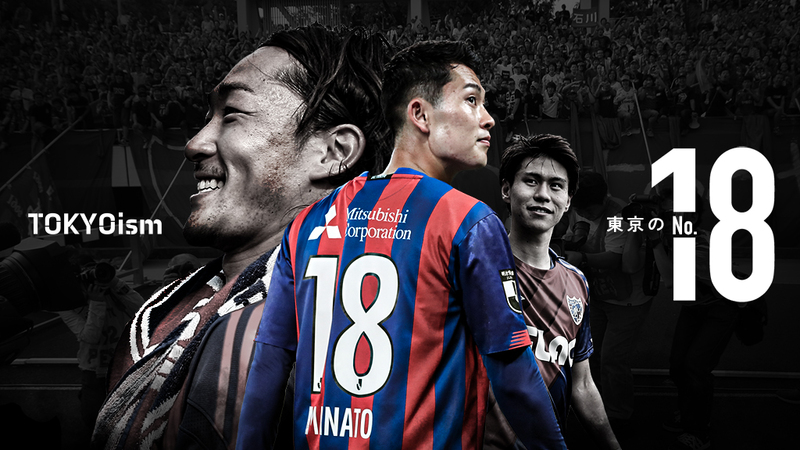
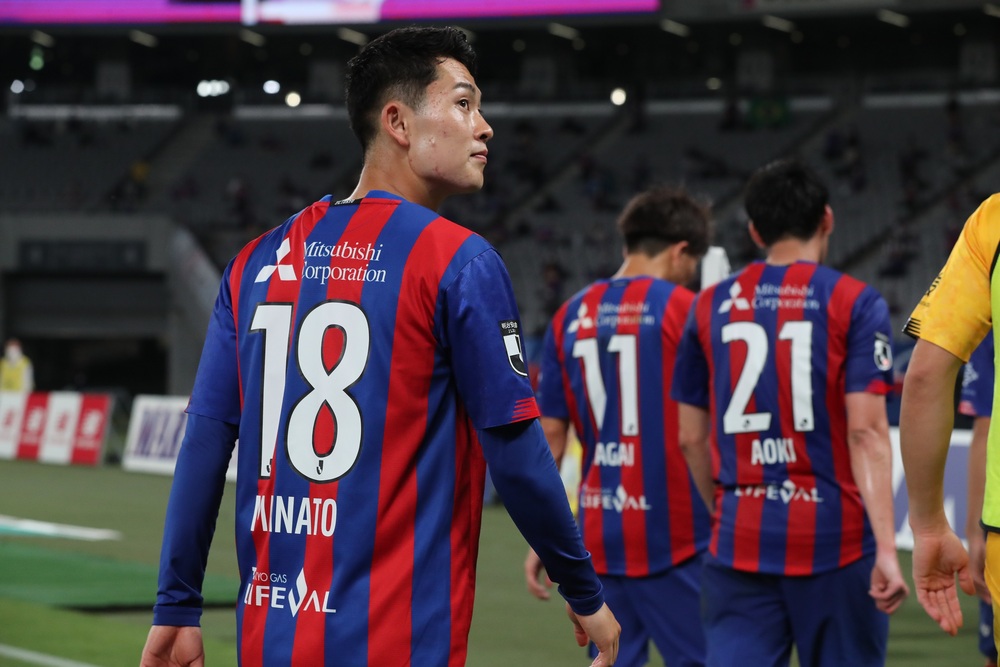
The number 18 passed from Naohiro ISHIKAWA to Kento HASHIMOTO and then to Manato SHINADA.
This is the story of the bond between three men connected by the number 18.
I will strengthen Tokyo and lead them to victory
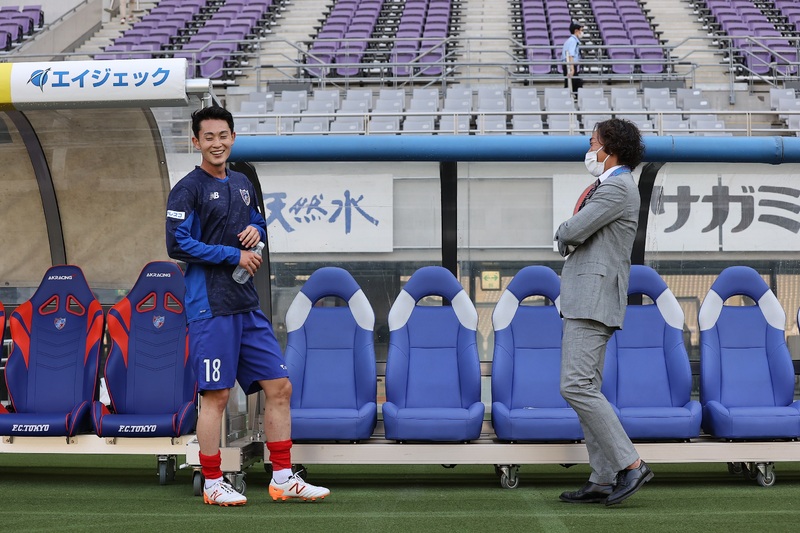
When he received a message from Manato SHINADA and heard his determination, Naohiro ISHIKAWA felt a surge of passion rising within him.
"Aito said, 'I want to make Tokyo the best club in Japan. I want to wear the number 18 and become its symbol.' For example, Kenzo Nakamura, who wore the number 14 at Kawasaki Frontale, made the team so strong and led them to victory. 'I want to be that kind of presence and change Tokyo.' Hearing that gave me goosebumps."
And what I remembered was an event from when I was in my early twenties, just like Shinada.
In 2003, the fourth season of FC Tokyo's battle in J1 came to an end, and it was decided that Amaral, an iconic figure of the club beloved by fans and supporters as the 'King of Tokyo', would leave the team.
During that off-season, Ishikawa received a proposal from the club. It was the inheritance of the number 11 worn by Amaral.
"I was advised by the strengthening department to wear number 11."
If Ishikawa had accepted that proposal, the lineage of number 18 would not have been born.
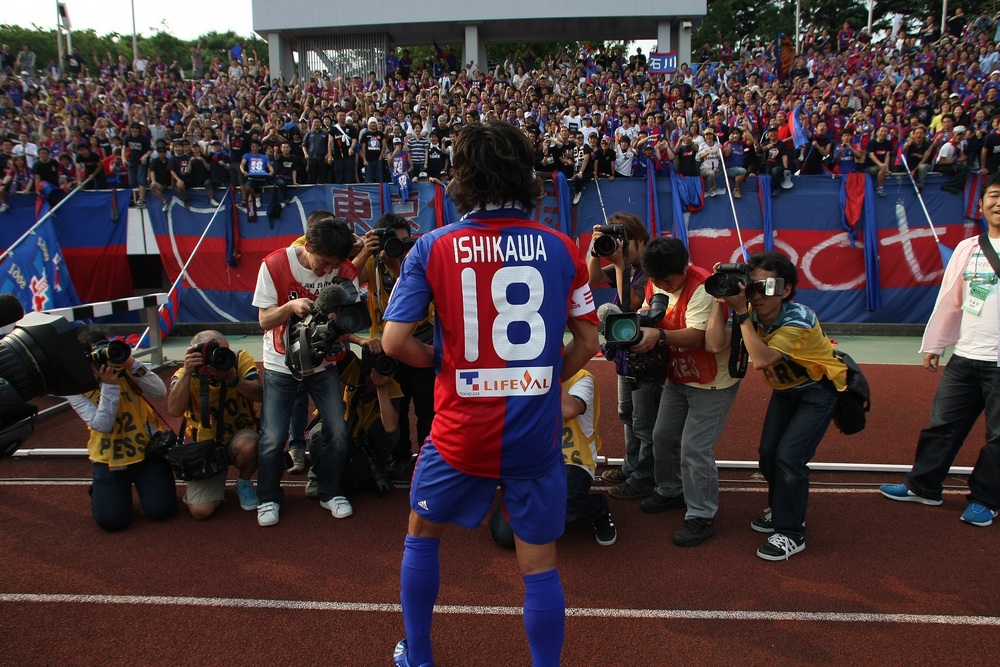
At this time, Ishikawa felt a sense of fulfillment beyond just inheriting the number 11, and there were things he wanted to challenge himself with.
"The number 11 was certainly an attractive number. However, I joined Tokyo in the summer of 2002, starting with number 36, and I had just changed to number 18 in 2003. I was determined to make number 18 my own and lead this team. Aito is around the same age I was back then. I want him to spread his wings, so I thought I would fully support him."
On the other hand, Kento HASHIMOTO, the first successor of number 18, was truly surprised by the offer, which could be described as a bolt from the blue.
However, as I listened to Shinada's serious feelings, my desire to support my junior who is six years younger grew stronger.
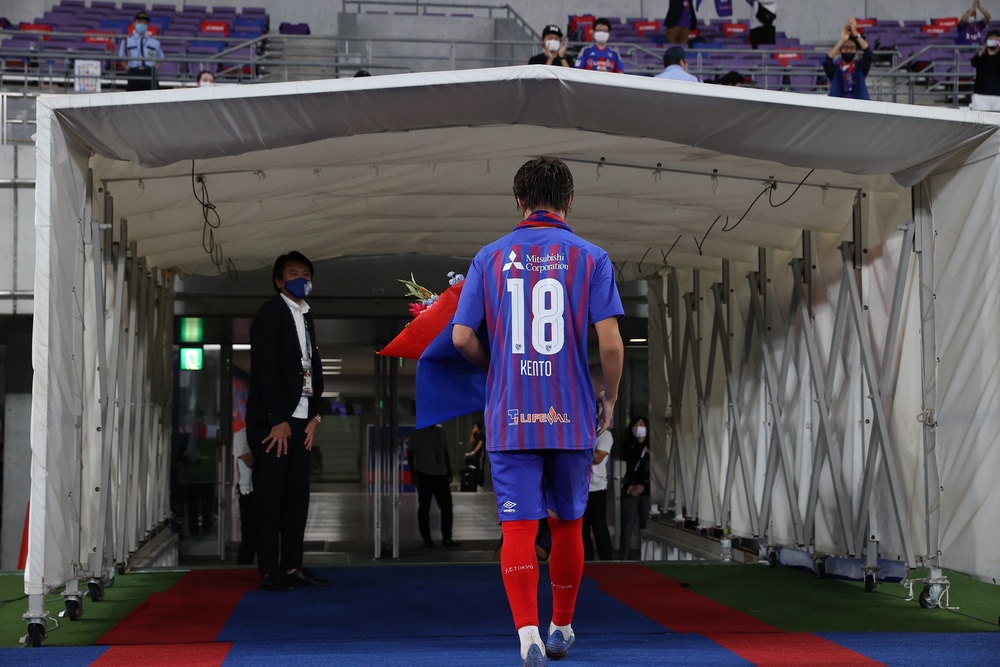
"I never expected this. Just six months after my transfer to Rostov in Russia, the number 18 would already belong to someone else. It's a bit lonely, I guess. Of course, I didn't plan to return to Tokyo right away, but what I was really concerned about when transferring was letting go of the number 18. However, I thought if someone were to take it after me, it would probably be Aito."
Hashimoto and Shinada both attended a soccer school in Tokyo since elementary school, and they have progressed through U-15 Fukagawa, U-18, and have risen to the top team as homegrown players.
Although they have not played together during their academy days due to the age difference, Hashimoto felt a connection with the rugged and passionate personality of Shinada, which is unusual for today's youth. Since becoming teammates in the top team, he has frequently invited him to meals and has taken care of him.
"I often talked with Aito, and his feelings towards Tokyo were exceptional among the young players. Even when he couldn't get on the pitch after moving up to the top team, he never considered a loan transfer and vowed, 'I will definitely play for this team.' I was inspired by Aito's passion, and he is a player that makes you want to support him so much."
At the end of last year, when we talked after a long time, Hashimoto passionately appealed to Shinada.
"In a very serious tone, he said, 'Kento, please let me wear number 18. I will carry this team on my back.' I could feel Aito's determination, so in the end, I encouraged him by saying, 'That's fine, do your best.'"
What lies at the core of Shinada's request to the two seniors to wear the number 18 is his love for Tokyo.
Because Shinada loves this club that he has been a part of since elementary school, he couldn't help but feel frustrated.
The inability to achieve the league championship no matter how long it takes.
"Kawasaki Frontale has been playing really great soccer in recent years, and they have shown an overwhelming difference in direct confrontations. I was truly frustrated. I deeply want to make Tokyo stronger. I want to build Tokyo into a strong team and win as a key player. With that feeling, I asked to wear the number 18."
Of course, I fully understand the weight of this number. It is precisely because I understand it well that I made this offer with determination.
When thinking about number 18, what comes to Shinada's mind is the scene on the pitch in December 2017.
The day after the final match of the J1 in his last active season, Ishikawa took the pitch in J3 as a member of FC Tokyo U-23.
At this time, Shinada, a third-year high school student belonging to the U-18 team, was also on the bench.
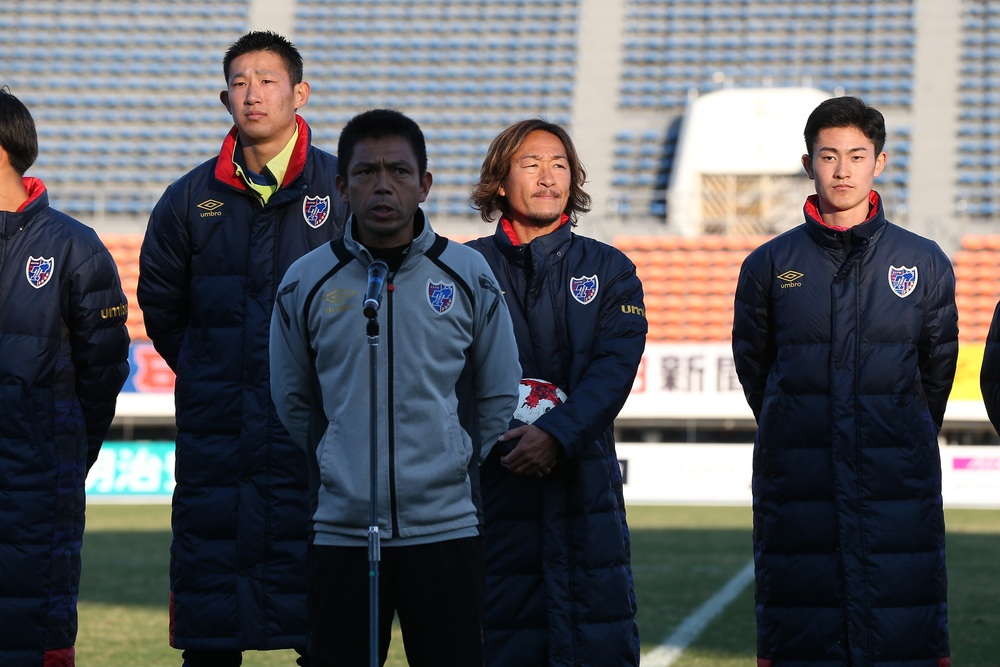
"In that match, I think we were able to compete with just the top players because there were over-age players, including Nao. I was allowed on the bench and got to see Nao's dynamic performance up close. I believe that was the club's parental affection. Nao's success made the number 18 a symbol of Tokyo, and with Kento, who succeeded him, being selected for the Japan national team and starting to thrive overseas, its value has greatly increased. When the question arose of who would carry that number next, I strongly felt that I wanted to take it on myself."
When Aito explodes with emotion
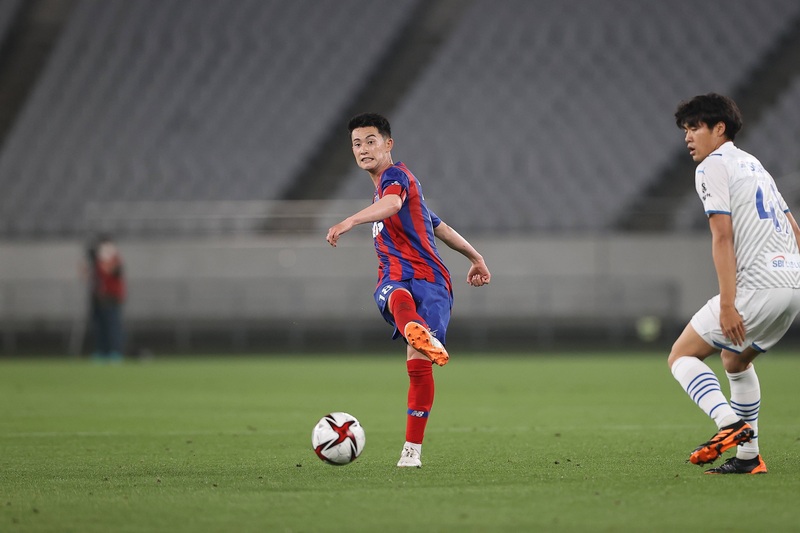
Ishikawa was a side attacker known by the nickname "Speed Star."
Hashimoto is a midfielder known for his high intensity and driving force in both offense and defense.
On the other hand, Shinada is also a central midfielder like Hashimoto, but he is a playmaker type. Their playing styles are distinctly different. What the three have in common is their passion for Tokyo and their fiery hearts.
The two seniors point out that Shinada's strong point is his high level of skill.
His ability to distribute the ball accurately and create rhythm while building up the attack is reminiscent of his senior from the academy, Yohei KAJIYAMA.
In addition, what Ishikawa is enamored with is the aggressive attitude and the surprising passes.
"Aito has a good posture when holding the ball and the ability to control the game. However, what excites me the most is his ability to make incisive vertical passes. It's about whether he can make that pass at the right moment. Because he has the ability to create plays, I also want to expect goals from Aito. For example, pretending to pass and then quickly carrying the ball for a one-two finish. Or feigning a play to the side, evading the opponent, and aiming for a long shot."
In response to Ishikawa's request, Shinada humbly replied as follows.
"I want to be able to do anything, so I want to take on challenges. I think having challenges is a good thing. I want to work on them while having fun."
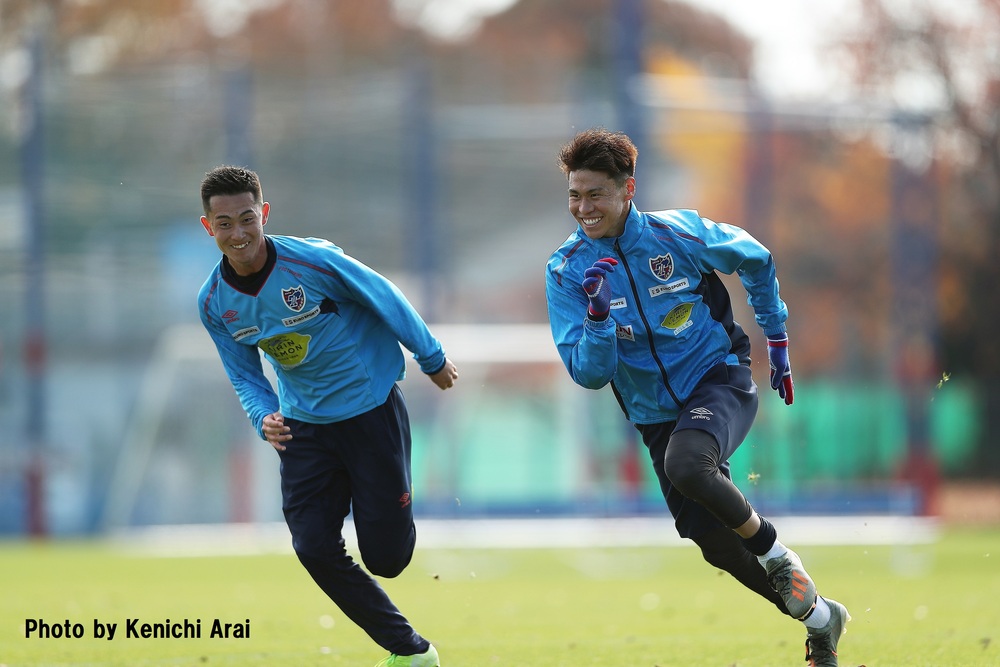
On the other hand, Hashimoto cannot forget the day he first saw Shinada.
"When Aito was in the third year of middle school, I happened to see the final of the Emperor's Cup (Emperor's Cup All Japan U-15 Soccer Championship) at Nishigaoka (AJINOMOTO FIELD NISHIGAOKA), and I was surprised to see such a talented middle school student. I thought he would definitely make it to the top team."
If you listen to Hashimoto's words, it may seem that Shinada was an elite since middle school and smoothly achieved promotion to the top team.
However, Shinada went through a difficult time during high school.
"When I was in my second year of high school, Rei HIRAKAWA moved up to U-18, and the midfielders became third-year Yoshitake SUZUKI and Rei. I often started on the bench and played more like a closer. I recognized their abilities, so I felt I had to work hard, but I suffered from groin pain and couldn't play as I wanted, which was frustrating. At that time, I blamed the environment and the trainers. However, when I became a third-year, I felt I had wasted time. From then on, I came to the field earlier than anyone and left later than anyone almost every day. That way, I managed to earn a promotion to the top team just in time."
Ishikawa, who understood Shinada's past, had a look of realization on his face.
Players from the academy who are promoted to the top team but cannot play in matches often struggle to overcome that barrier, and many do not achieve great success.
"So, players like Tsuyoshi WATANABE and Shuto ABE, who experienced setbacks during their academy days and returned after being refined in college, tend to be more resilient. However, even though Aito hasn't been able to play in matches, he hasn't let that get him down and has focused on himself. I wanted to know the reason for that, but it turns out he went through similar struggles in high school."
Ishikawa was a player who could express his emotions on the pitch.
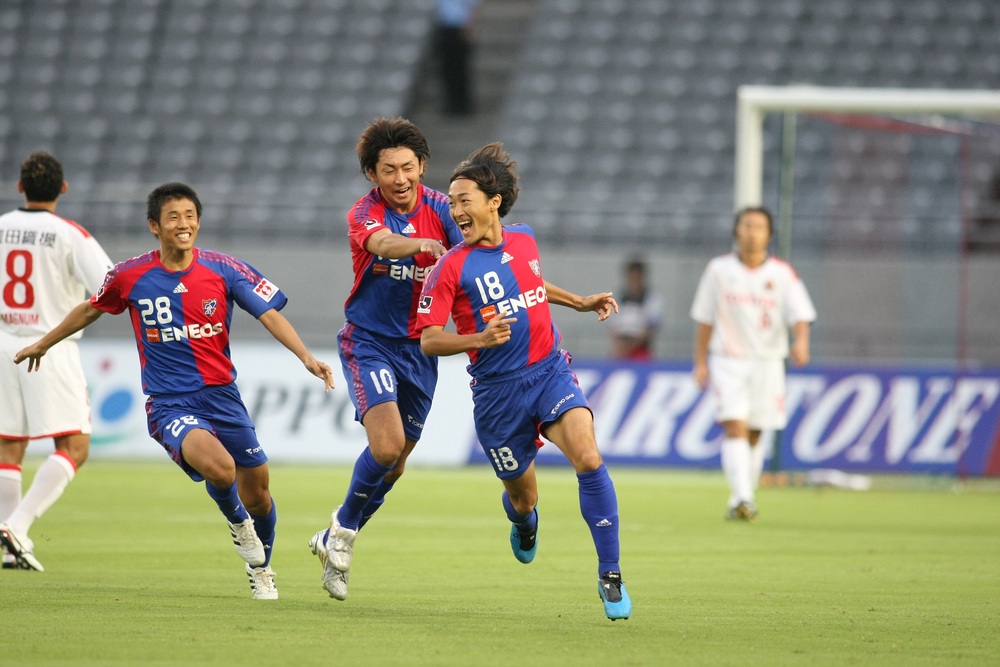
Exploding with joy, showing anger through intense action, struggling, and not trying to hide their suffering. Many fans and supporters felt a sense of empathy towards that appearance.
I am impressed by Shinada, who at the age of 22 has learned how to control his emotions, precisely because he was that type of person himself.
"Aito must be carrying pain and frustration, yet he doesn't show it. Even though he has a passionate heart, he always plays with a cool expression. I couldn't maintain a poker face, so I think Aito is amazing."
However, that is why Ishikawa is looking forward to the changes in Shinada from now on.
"From now on, as Aito starts to play in matches consistently and takes on the responsibility of competition, I think he will experience many things, such as not getting results, the team not coming together, or conversely, overcoming difficult situations as one. At such times, surely new emotions will overflow. He might roar towards the goal while holding the emblem in joy, or shed tears on the pitch. I want to see Aito like that, and when that happens, I believe he will grow even more as a player."
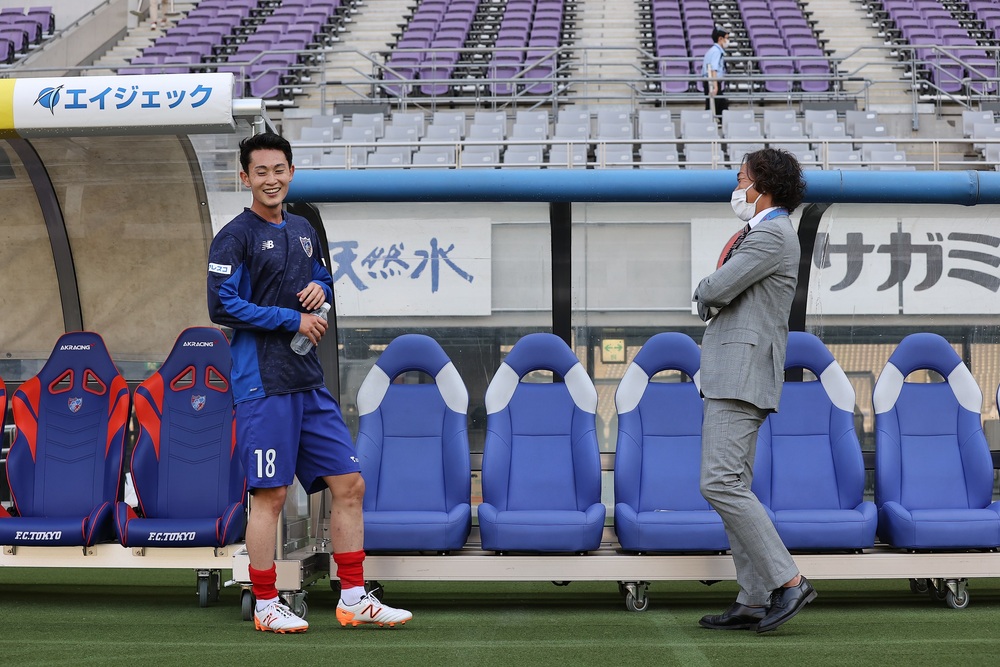
Shimada responds, savoring the meaning of Ishikawa's words.
"I am still in a situation where I am supported by the coaching staff and veteran players, so I want to engrave the behavior of my seniors in my mind and feel it. I believe there are things that can only be felt by continuing to play in matches, so I hope everyone looks forward to the moments when I explode with emotion on the pitch, and I want to look forward to it myself as well."
Number 18 will push you forward.
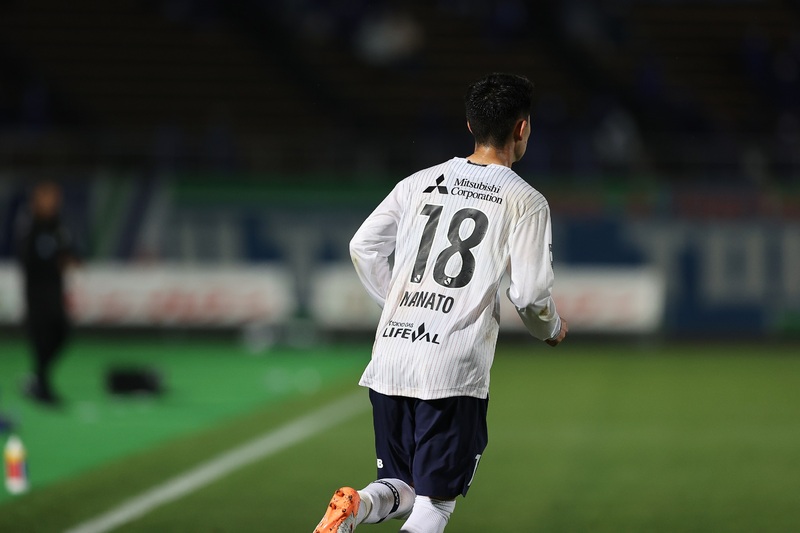
When the 2021 season began, there was no sight of Shinada wearing the number 18 for the team.
This is due to surgery for a right ankle anterior talofibular ligament injury and bilateral ankle accessory bone injury.
Although he was injured in the Vissel Kobe match in September 2020, he postponed surgery until after the season because the team was experiencing a series of injuries, and fought as a member of the team.
Therefore, during the AFC Champions League group stage final match against Perth Glory held in December, Shinada was in a condition where he had injured his ligaments when he assisted Adailton's goal.
"I was playing with both ankles tightly taped up."
On April 21, 2021, in the YBC Levain Cup match against Oita Trinita, he entered the bench for the first time in the 2021 season and stepped onto the pitch in the final stages of the game, marking his return to competitive play.
It was before the match. When I saw the number 18 jersey with the name "MANATO" in the locker room, I felt a renewed sense of determination.
"After all, the excitement is different from before. Of course, just because my jersey number has changed doesn't mean what I do changes, but I believe I need to continue to grow more and more."
What kind of number 18 do you want Shinada to be?
What is common between the two seniors is the desire to be dyed in their own colors.
What Ishikawa desires on top of that is...
"What we, who wore the number 18, could not achieve... I want to see the player wearing number 18 holding the trophy. I want to see the scene where the player with number 18 is at the center of the team that achieves the league championship."
Hashimoto reflects on his growth while wearing the number 18.
"Aito said, 'If Kento-kun comes back, I will return the number 18.' But I don't need that kind of feeling; I want him to perform so well that there won't be a place for me to return to. By playing while feeling the responsibility and pressure of wearing number 18, I was able to grow even more. I believe that carrying that strong desire to perform rather than just wearing the number after succeeding will make me stronger."
Receiving cheers from the two seniors, Shinada expresses his thoughts in words.
"Kento-kun told me, 'Number 18 will definitely support you from behind.' I don't think it means surpassing Nao-san or Kento-kun. I will inherit what Nao-san and Kento-kun have built up. I want to achieve it in the best form of winning the league championship. I will definitely raise the trophy. I want to promise that."
Watching the play of Shinada, who wears number 18, with excitement and anticipation, is surely not just Ishikawa and Hashimoto, but many others with special feelings.
The blue and red fans and supporters must be watching Aito, who has been dressed in the blue and red uniform since elementary school, with a parental-like feeling, as he reaches for the number 18 with determination and his own will.
The history and tradition of the club, as well as the stories related to the jersey numbers, are built in this way.
Date of Birth: 1999 September 19
Height/Weight: 180cm/69kg
Place of Origin: Saitama.S
Career: FC Tokyo U-15 Fukagawa → FC Tokyo U-18 → FC Tokyo
Text by Atsushi Iio
Text by Atsushi Iio
Photo by Kenichi Arai
Photo by Kenichi Arai