Q. Looking back on your professional career, it seems you have steadily stepped up to J1 clubs, joining Renofa Yamaguchi FC, JEF United Ichihara Chiba, Sagan Tosu, and now FC Tokyo this season.
A, since I have been a professional, I have always wanted to play in J1. My professional start was participating as a trainee at Renofa, so I believe the result I have now is from relentlessly working hard to get into matches and score goals from there.
Q. Last season, Sagan Tosu attracted attention with their collective style of football. In that context, player Yamashita scored 9 goals in the league matches. I imagine you were pleased with the increased recognition from those around you, but also frustrated to have fallen just short of double-digit goals.
A, the 2021 season was my first challenge in J1. I didn't know how I would perform, but throughout the year, I clearly understood the parts where I could compete and where I couldn't. I was very particular about scoring double-digit goals, so honestly, I was frustrated. After summer, I couldn't increase my 9 goals, but I thought I would eventually get there. However, due to a minor injury and more substitute appearances in the second half of the season, I couldn't reach double-digit goals. Even coming on as a substitute, as a forward, results are everything. I personally understand the big difference between 9 and 10 goals, so I was truly frustrated.
Q. There were also matches where you were alternately used with Noriyoshi SAKAI, and during the season, there were times when you started on the bench even in the match following a good performance and a goal. Of course, player selection is determined by team tactics and the opponent, but did you experience any internal conflict?
Ah, yes, that did happen. Honestly, there were times I wondered, "Why am I not being used?" However, I directed the arrows at myself, understood the areas where I was lacking, and made efforts and took on challenges in practice to appeal and get selected. Even so, the final decision is made by the coach, and I never sulked or neglected practice because of that. Above all, Sagan Tosu is a team that trains with high intensity, so I could never let my guard down. When I was not a starter, I’m not sure if frustration is the right word, but I did have a feeling of unease. However, since the other players were also working extremely hard without slacking off, I was able to have a strong feeling that I simply couldn’t afford to lose.
Q. Please tell us specifically about the sense of achievement and challenges you experienced playing on the J1 stage for the first time.
A, first of all, in terms of confidence, I was confident in my ability to score when a good ball came my way. I believe I was able to demonstrate off-the-ball movement and reacting faster than the opponent last season. Joining FC Tokyo, I am excited to play at a level where players with a higher individual skill gather, one or two steps above. Regarding challenges, I realized that in J1 even small mistakes can be fatal, and the mindset of "this is good enough" does not work. Whether it's post play, switching on defense, or finishing shots, I think this is a stage where you have to be particular about every detail to succeed.
Q. What were the most noticeable differences you felt between the defenders (DF) in J1 and J2?
A. After competing for the ball, J1 defenders reliably connect the ball to their teammates. Even when applying pressure, because their heads are up, there are times when you can't go in to take the ball. Their attention to such fine details is very high. When facing an opponent in post-work, I paid a lot of attention to the direction and angle of my trap and my body's center of gravity. In J1, I lost the ball more often than in J2, and those losses could be critical. Throughout the season, I analyzed opponents and learned to some extent through experience, but I clearly felt the difference in level.
Q, Besides his strength, I think Yamashita's smooth turns and agility are also his strengths in play.
A, I don't think I'm a particularly skilled player myself, but the most important thing for me is positioning when I don't have the ball, the off-the-ball situations. How efficiently I can move towards the goal. I have to think about what state I'll be in when I receive the ball and proactively communicate my needs to my teammates in advance, and I've focused a lot on that aspect.
Q. Regarding scoring patterns, it seems like the player has many styles, such as meeting crosses with a point or shaking off the opponent in front and swinging their foot.
A, I am right-handed, but I think my strength is that I can score with my left foot, head, or anywhere. Another weapon is scoring with few touches. I'm not the type to dribble past opponents alone and take a shot, so I play thinking that everything depends on how well I position myself and how much I ask my teammates to bring the ball to me.
Q. Is there any player you refer to or have admired since long ago?
A, the season before last was a significant experience for me, and playing alongside Hisato SATO at JEF made me realize that I changed. From daily practice, I was greatly influenced by his attitude and approach. Until then, I hadn't really looked up to or admired any particular player, nor was I very conscious of overseas players. However, from Hisato, I learned key aspects as a striker and parts that made me feel, "This is the kind of player who reaches the top level." At JEF, I was also greatly influenced not only by Hisato but by Kengo Kawamata's play, and that year became a major turning point for me.
Q. I think what Sato-san and Kawamata player have in common is what Yamashita player just mentioned earlier, "How to make high-quality off-the-ball movements."
A, I think it is exactly the demand made in places without the ball. Hisato-san demands a lot from his teammates. Kawamata-san is the same because it is essential for scoring goals. Even with crosses, he specifically tells his teammates things like "Don't just send it roughly, put it here" or "I want you to deliver it at this timing." Whether or not you can communicate like that greatly changes the quality of teamwork. Learning that attitude was very important to me.
Q. This season, I jumped into a new environment with FC Tokyo. There are foreign players with diverse playing styles and speedy attackers like Kensuke NAGAI, who is a senior from high school and university. Among them, I am looking forward to seeing how the striker Yamashita will thrive.
A, FC Tokyo is a club that has been competing at the top level in Japan since I was a teenager, and last season Diego OLIVEIRA scored double-digit goals. I am thinking about how I can compete among such strong individuals. Can I demonstrate qualities that the current players do not have? I believe the club acquired me with those expectations, so I hope to maximize those strengths.
Q. Did you communicate with player Nagai before joining?
A, yes, I have trained together in Fukuoka several times before joining, and I asked various questions about living arrangements and the environment. Since Nagai told me, "Feel free to ask me anything," I felt, "He has such a kind side" (laughs).
He was my direct senior in high school and university, and he used to come to my first kick events during high school. I never thought I would be able to play on the same team as Nagai, so I am very honored and happy.
Q. What has been your impression of FC Tokyo so far?
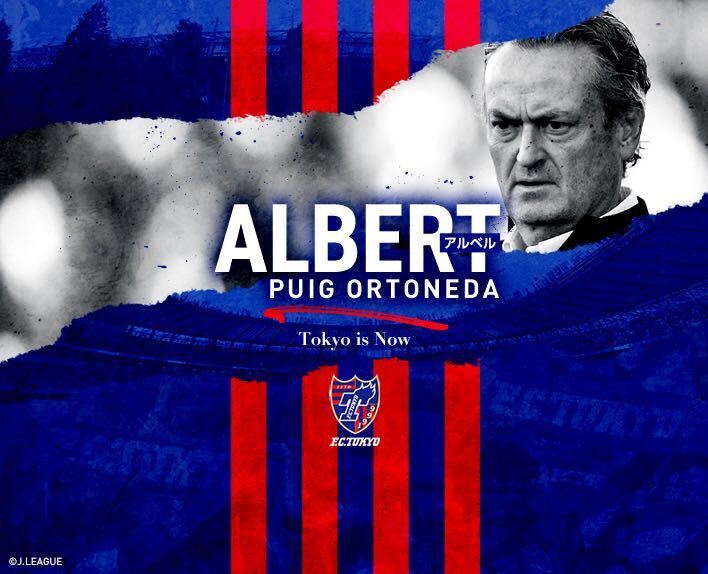
A, what stands out is the powerful attackers. Their quick attacks after winning the ball are intense, and their ability to break through individually and finish shots is amazing. In addition, the team works hard on defense without neglecting it. Also, one of the reasons I decided to join FC Tokyo this time is because Albert PUIG ORTONEDA will be coming from Niigata as the coach. He builds the team based on the concept called positional play, and I thought that style might match well with me. I have a very exciting image of how this team will fight with an attacking style and how I will fit into it. I am already thrilled about this challenge.
Q. Last season, you played for Sagan Tosu under former manager Myung Hwi KIM, where you practiced positional play. Do you feel that playing in that style brought out a new side of yourself?
A, I think I was able to learn aspects that I hadn't been aware of until then during last season. How to get past opponents, carry the ball forward, and reach the finish. How to tactically observe the opponent's movements and initiate plays even in defense. We were able to play while feeling our own growth. Honestly, it was quite hard work and tough, but I really enjoyed playing. And when I received an offer from FC Tokyo, where Albert PUIG ORTONEDA was newly appointed as coach, I honestly wanted to try playing organized and attacking football again, so I came to Tokyo.
Q. Did Yamashita himself get a sense of thriving within a flexible group that determines its position by observing the opponent?
A, well. If anything, when I was with JEF, we played a traditional 4-4-2 with many long passes in attack, and a style of defending by dropping deep. We fought in a way that used a lot of energy in areas other than just attacking or aiming for goals. However, at Tosu, I intentionally adopted a style of peeling off opponents to carry the ball forward and move toward the goal. I am a player who works in front of the goal and is brought to life by my teammates, so it also gave me an opportunity to reconsider "What style suits me best?"
Q. Since Coach Albert PUIG ORTONEDA joined FC Tokyo, I think the team's soccer style has been transformed into a different style. I believe Yamashita is expected to become the symbolic forward of that style.
A, yes, I do want to move in that direction, but of course, there are many talented attackers here, and fierce competition for positions unfolds. When a new coach comes to a team, the flow and methods often change drastically from the start, and it is uncertain whether that will lead to results. It is important to let others know your strengths and also understand the strengths of your teammates. Since the season starts early this year, I think it will be about how quickly and deeply we can build relationships. I want to take on the challenges that the coach demands.
Q. Let me ask again, does player Yamashita have strong feelings about the striker, the "number 9" position?
A, yes, he is strong. In his first year at Renofa and also at JEF, he had opportunities to play in different positions, experiencing both the excitement and the challenges. Among these, it is certain that his commitment to the position closest to the opponent's goal and the task of scoring goals has grown stronger year by year.
Q. FC Tokyo has a variety of attackers, but I believe there are high expectations for Yamashita as the long-awaited goal scorer the team has been looking for.
A, are you looking forward to it...? (laughs) If so, I am very happy, and I myself am aware that playing in that position allows me to demonstrate my best qualities. I also believe that by taking that position, I can bring out the best in my teammates. I have a strong attachment to the striker, number 9 position. I definitely want to score many goals at Ajinomoto.
text by YUKI NISHIKAWA