[Interview with Coach Albert PUIG ORTONEDA]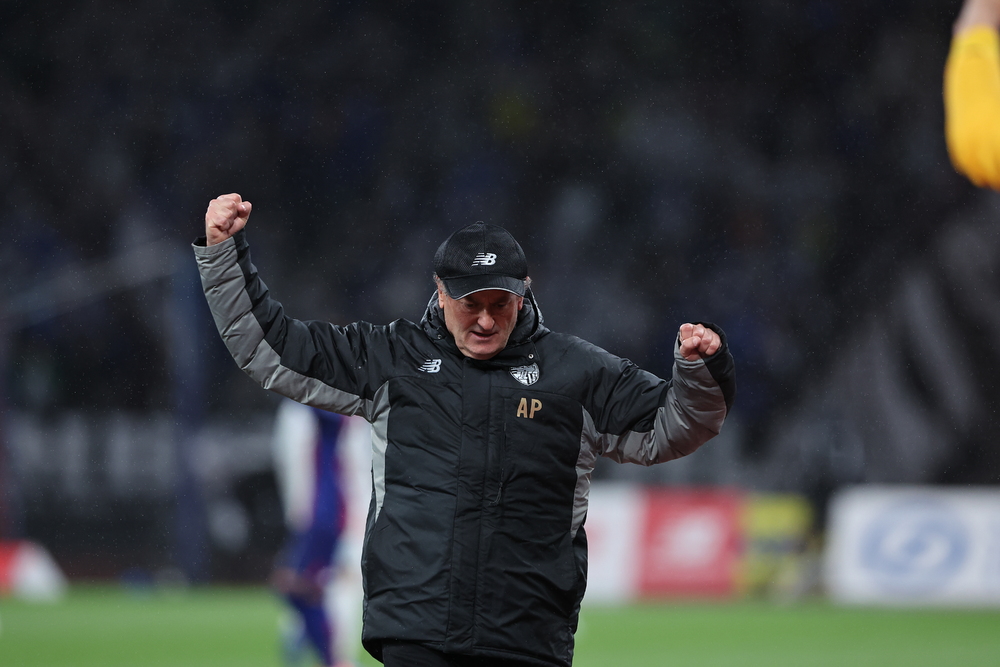
Q: How is the selection of center-backs for the match against Fukuoka?
A, there were comments on SNS expressing a desire for Renta HIGASHI. He is also one of the options, but since he is injured, we cannot count on him this time. However, there are obviously other options, and we believe there are solutions that will work well, so we are not worried.
Q: What is your analysis of Fukuoka?
A, I faced Fukuoka in Niigata during the season before last when they ultimately earned promotion to J1, so I closely observed how they changed their club direction at that time. Midway through the 2020 season, the coach changed, and they shifted focus toward a more aggressive defense, steadily accumulating points thereafter. Since then, they have continued to strengthen their squad in line with their style of play, assembling forwards who excel in counterattacks and set pieces. I think they performed well last season too. Any team would find it difficult to play against a team like them that solidifies their defense. In that sense, this match is expected to be one of the most challenging games of the season. Although the preparation period was short, I have made sure the players fully recognize the difficulty and importance of this match. Even a single mistake could be exploited by the opponent. Naturally, we want to express our attacking strengths well in tomorrow's game. I believe Fukuoka has a mentality that is committed to winning. We have also been able to consistently play with a competitive spirit from the start of this season, and we want to continue that and express a winner's mentality that surpasses theirs.
Q: I think the number of J-League clubs that have changed direction has been increasing over the past two or three years, but Tokyo is starting this year. Although it is a latecomer, do you feel that it is rapidly catching up now?
A, of course, individual preferences may vary, but I believe all playing styles deserve evaluation. However, when considering the developmental age group, soccer that does not value ball possession is inappropriate. On the other hand, in the professional world where winning is essential, every playing style has value. First, as a club, it is necessary to thoroughly analyze what kind of play the fans and supporters expect and appreciate. Once the expected style of play is clear, any playing style is acceptable, but I believe that sticking to a playing style as a club accurately reflects the club's direction, and being forced to change it based on match results is not appropriate.
For example, I think it is misguided to change to a different playing style next season just because Fukuoka is not doing well this season. If you clearly understand the playing style that fans and supporters expect, I believe the right direction is to stick to that and bring in a coach and players that fit that style to enhance its quality. We tried the same thing in Niigata. And I am proud that we are still continuing in the same direction.
Tokyo has steered towards a new playing style this season. If this is the playing style the club aims for, I believe it is appropriate to maintain the same direction whether the coach is me or another coach. The playing style I expect is clear. However, considering that many players are continuing from last season in this year's team composition, I think it is not appropriate to drastically change the playing style. I believe it is appropriate to gradually transition the playing style while utilizing the characteristics of the existing players.This year, we are fighting by bringing out the strengths of the current players, and when new players join next season, we will move on to the next stage. In any case, I believe that the strengths of each player in front of us will inevitably influence the team's playing style, regardless of what that playing style is.
Q: I think you were trying out various positions before the season started. Were you testing the players?
A, of course we tried, and considering the opposing team, we thought about what kind of game plan to use for the match in front of us and placed players in the right positions. Even within the same match, the cards we should play or whether we need to change the positions of players on the pitch vary depending on the flow of the game. Having various options at that time is a plus as a coach, so in that sense, we want to continue trying various approaches.
[Player Interview]
<Ryoya OGAWA>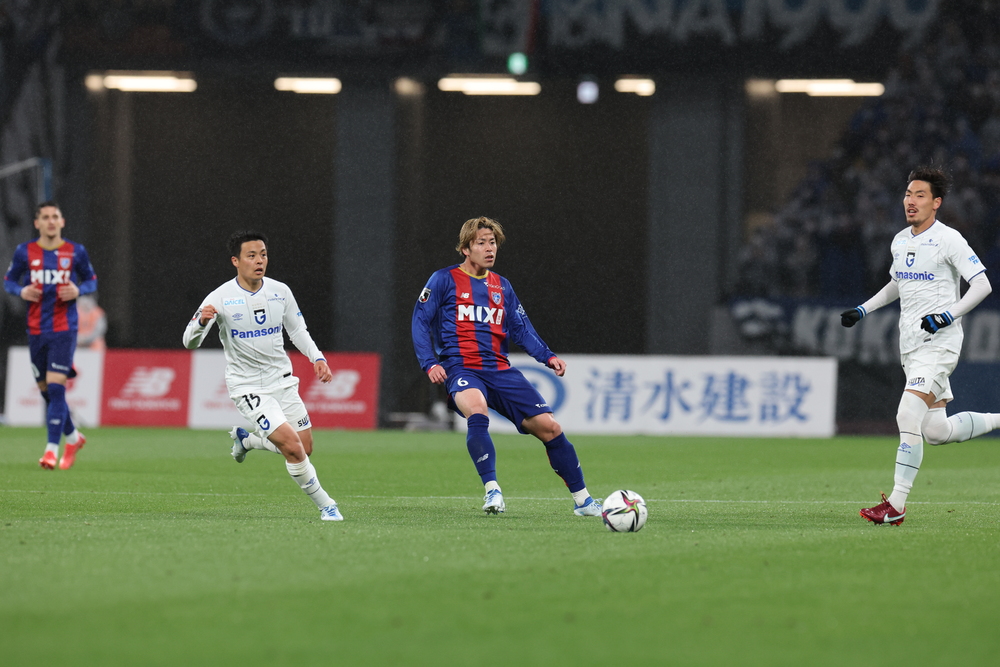
Q, the matches continue in three days, but we can win against Gamba Osaka and fight in a positive state.
I think the victory against Gamba Osaka was very significant. Winning allowed us to break into the top ranks, and I believe it boosted the team's confidence. More than 40,000 fans and supporters came to the Japan National Stadium, and the entrance production was amazing. I don't think there is any player who wouldn't be motivated fighting in that kind of atmosphere. On the contrary, I believe that was part of the reason we were able to win. That's why the next match is very important, and having won in the National environment, I hope we can keep our motivation high and not let it end there.
Q: I believe we can create several scoring opportunities, but if we don't convert as many as possible into goals, the results won't follow.
In the Levain Cup match against Fukuoka, we had possession of the ball for a long time and I think we played a good game. However, as a result, we lost because we couldn't convert our chances. In this league match, it is important not to miss any opportunities. I believe we can create several clear chances, but unless we convert even one more into a goal, the results will not come. I think we will have many periods of ball possession in the next match as well, so I want to stay focused, score reliably, and win.
Q: I think that when we hold the ball for a long time, the opponent can solidify their defense, making it difficult for us to attack, and we may end up just holding the ball. In that context, do you feel that Tokyo is able to create chances because the team has a common understanding of the moment to switch to attack while building up from the back?
There is definitely a moment when you switch on. Even if the opponent pulls back and solidifies their defense (in that state), you can't take the ball, so there is a timing when you defend from the front. We try not to miss that moment. Even when circulating the ball at the back, if you keep passing slowly at the same tempo, the opponent's defense won't break down. By using passes that skip over one player or by speeding up each individual pass, the opponent's sliding defense can't keep up, creating gaps. We want to target those moments without missing them.
Q: Do you feel that you can engage in a tactical battle with your opponent, even when it comes to just the speed of your passes?
A, I think passes that are more playful or that bait the opponent will be necessary going forward. Although there are still areas to improve, I believe the team is gradually taking shape.
Q: I believe that playing from the position of a full-back into the central space is a key point in the current style of football. Is the timing and the required role clearly visible to you?
Since starting to play football under Albert PUIG ORTONEDA, I think the biggest change has been the fullbacks moving inside more and getting involved in the attack. Including myself, there are still parts we are not very accustomed to, but it is important for the team that the fullbacks become a starting point for the attack. It is not surprising as it has become common overseas for fullbacks to move inside and play that way. There is an awareness that fullbacks need to be able to create the game more.
Q: Fukuoka has tall players with strong physicality, such as Fanma and Lukian. What are your countermeasures?
A, there is a strong forward on the front line. Fukuoka tends to roughly kick the ball forward and pick up the second ball, so I think the flow of the game will change depending on how well we can shut that down, prevent the opponent from keeping possession, and secure the second ball ourselves. As a defender, I want to do my best to shut down the forwards who become the target and not lose to them.
Q: It's important to give instructions from behind and not allow easy kicks, as well as to limit options, right?
A, prior preparation is also important. Against teams that kick the ball frequently, we want to maintain a compact formation without stretching the lines, and when the front line presses up, we aim to raise the line and play compactly. I also think they will deliver many crosses, so we want to respond to that properly as well.