

Match Review
In the previous match, Tokyo secured a 2-0 victory against Gamba Osaka in the first J1 League match held at the Japan National Stadium, placing them in 4th position. As they enter a series of matches during the Golden Week, this week they faced Avispa Fukuoka away just three days later.
About two months ago, in the second match of this season, we faced each other at the same venue in the Levain Cup group stage. At that time, despite Tokyo's lineup being mainly composed of young players due to the impact of the COVID-19 pandemic, they controlled the game by maintaining possession and pushing the opponent back. Ryoya OGAWA created several decisive chances, including a free kick that hit the crossbar, but lost 0-1 after the opponent capitalized on one chance. In order to repay the debt from that match, even though it is an away game, we seek both content and results, aiming to bring home 3 points to Tokyo.
Masato MORISHIGE is out due to injury, and Henrique TREVISAN also suffered an injury in the final moments of the last match, missing this game. The center-backs are Yasuki KIMOTO and Ryoya OGAWA. Coincidentally, OGAWA also played as a center-back in the second match of the season against Fukuoka, seeking revenge in the same position. On the left side, Kashif BANGNAGANDE is starting for the first time this season in the league. Additionally, Leandro, who scored the winning goal as a substitute in the last match against Gamba Osaka, returns to the starting lineup. For the first time this season, three Brazilian players are lined up in the starting formation in the forward positions.
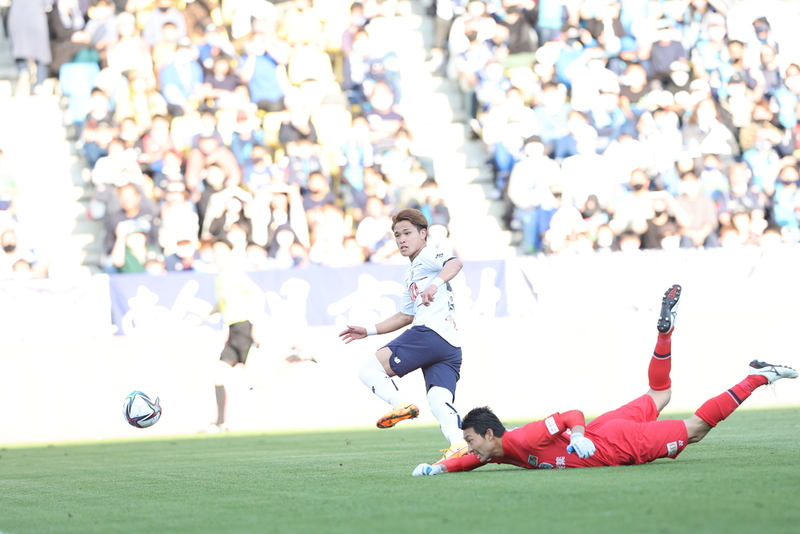
At the start, after conceding a set piece and being pressed by Fukuoka, a series of corner kicks followed. In the 3rd minute of the first half, when Diego OLIVEIRA moved to cover the goal, the ball could not be fully cleared from in front of the goal, allowing the opponent to push in and score the opening goal. Afterwards, Tokyo struggled to build up play from the back against the opponent who aggressively and quickly pressed the ball from the front, failing to carry the ball up to the forward line. Finally mounting a counterattack in the 18th minute of the first half, Kashiwa delivered a cross from the left side, and Adailton connected with a header in front of the goal, but it was stopped by the opponent’s goalkeeper with a great save. Tokyo, unable to settle the ball against Fukuoka’s relentless pressing from the front, did not miss a brief opportunity. In the 24th minute of the first half, during a midfield battle, when the opponent defender’s back pass to the goalkeeper was short, Kuryu MATSUKI quickly reacted and recovered the ball. He then dribbled past to the front of the goal, outmaneuvered the goalkeeper, and calmly slotted the ball in, scoring his first professional goal to equalize.
This equalizer changes the flow of the match. After the restart, Tokyo maintains possession of the ball, moving it at a faster tempo than the opponent can close in, gradually entering the Fukuoka territory. In particular, Yuto NAGATOMO engages in the attack deep in the opponent's area through combinations with Adailton and Leandro. He opens wide along the touchline or plays in central spaces, participating in the buildup of the attack from positions where he is not marked by the opponent, becoming a key player on the right side. It seemed they had taken control, but in the 39th minute of the first half, when the ball reached Yuya YAMAGISHI in the vital area, they were unable to stop the opponent's breakthrough, allowing a shot to be placed into the bottom right corner of the goal, resulting in a lead for the opponent.
At the start of the second half, Tokyo wanted to take the initiative, but at the 3rd minute of the second half, Tatsuya TANAKA broke through on the right side and delivered a cross, which Lukian headed in near the near post to extend the lead. At the 13th minute of the second half, Leandro had a chance from a corner kick and attempted a direct shot aiming over the opposing goalkeeper's head, but it was narrowly saved. While connecting passes in midfield and looking for openings, at the 17th minute of the second half, a build-up mistake was intercepted and Yamagishi broke free, scoring in a one-on-one with Jakub Słowik. Wanting to change the momentum, Tokyo brought on Keita YAMASHITA, Ryoma WATANABE, and Kazuya KONNO at the 20th minute of the second half. At the 25th minute, Kensuke Nagai, who came on as a substitute, crossed from the left side into the box, and Diego contested the ball which spilled loose, allowing KONNO to take a shot but he missed contact. Conversely, at the 27th minute of the second half, a long ball was played behind the defensive line, Lukian broke through again, and the deficit widened to four goals. Tokyo continued to fight back until time was up trying to close the gap by even one goal, but they could not create any decisive chances and the match ended.
Faced with a tough result, Tokyo is halfway through the challenge of integrating a new style. Without turning away from reality, they will continue to address issues and prepare for the match against Sagan Tosu at home Ajinomoto Stadium in four days.
[Interview with Coach Albert PUIG ORTONEDA]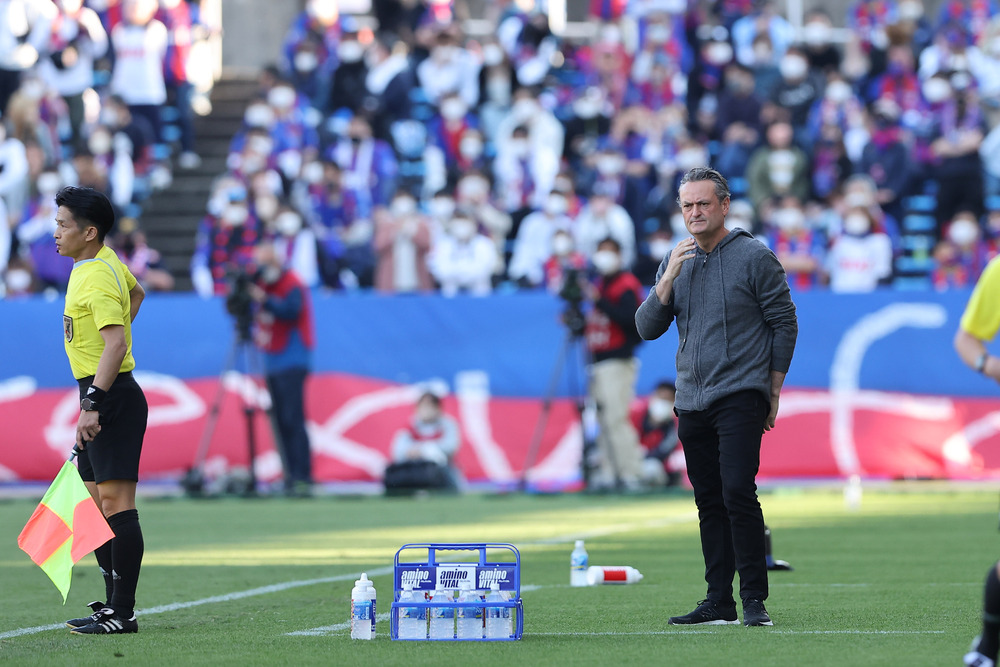
Q, please review the game.
A, we anticipated that the first few minutes of the match against Fukuoka, who play very aggressively on defense, would be extremely important. Despite that, we conceded a goal early on. That initial goal had a significant impact on the flow of the game.
After that, we were able to equalize, but I believe we were able to control the match well during the periods before and after that. I also think we responded well to Fukuoka's counterattacks, which are one of their strengths. However, it is true that the second goal we conceded had a significant impact. It was very disappointing, especially since it happened during the time we were dominating the match.
Then, at the start of the second half, we conceded the third goal on Fukuoka's first counterattack. We had to push forward more aggressively, and each time, we struggled against Fukuoka's weapon, their counterattacks. This led to us conceding multiple goals.
This season, we are working on significant changes. In that sense, incidents like today can happen. I would like to commend our opponent today, Fukuoka. I understand that our playing style leads to accumulating points consistently. Of course, we have many areas for improvement. However, in order to always aim for the top, we believe our playing style is effective, so we want to continue down this path.
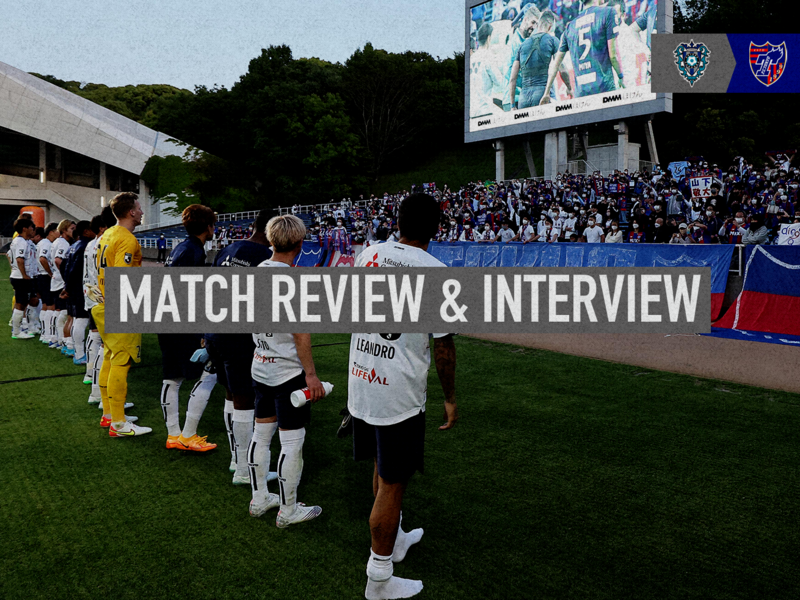
And today, despite the defeat, I would like to take this opportunity to thank the fans and supporters in Tokyo who applauded us after the match. It was clear from their applause that they are supporting the path we are taking.
Q: This season, for the first time, you lined up three Brazilian players in the forward position, with Leandro in the center and Diego OLIVEIRA on the side. What was the intention behind this?
A, we arranged the formation like this aiming to create a numerical advantage in the central midfield. And I believe it was quite effective. We anticipated that Fukuoka's center backs would be strong. Therefore, instead of fighting there, we aimed to compete in a different zone. Especially in the first half, I think we successfully created a numerical advantage in the central midfield and from there effectively generated chances.
However, soccer is a sport where the number of goals scored is what counts, and today it is clear that Fukuoka scored more goals than us and secured the victory. The match result is the most important aspect of soccer. For us, today's match was a negative result. However, we have another game coming up on Sunday, so we hope to show a well-improved performance then.
Q: While the offense has become stronger, was there any part where the defense became weaker?
A, the first goal conceded was from a corner kick. The second goal was not due to poor defense from the front, but rather a mistake in the defensive line that led to the goal. In that sense, I do not think the defense from the front was bad. Also, the goal conceded in the second half was, I believe, due to poor risk management during our attack.
Fukuoka has a physically strong two-forward setup at the front line, and if space is given to them, they can make very dangerous plays. A very difficult match scenario against Fukuoka is when they have a lead that allows them to focus on defense. Since the match developed in that way, I think it became a game where their strengths were more effective. That is why the second conceded goal is regrettable. I believe this greatly determined the flow of the match.
Q: Please evaluate Matsuki's goal that tied the game.
A, I think he played well. He has been continuously improving this season. Although he had chances in recent matches but couldn't score, I am glad he was able to score a goal today. I am very satisfied with his performance. However, he still has room to grow, and I believe he needs to develop further to become a great player. By continuing to play with our play style, I think he can grow even more.
[Player Interview]]
<Kuryu MATSUKI>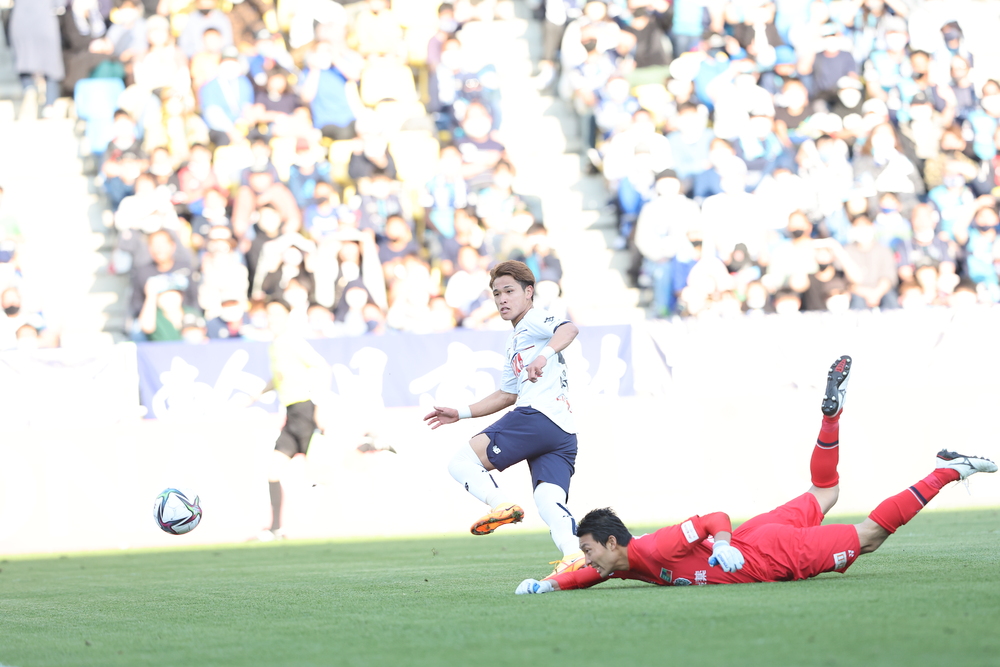
Q: It was a disappointing result. On the other hand, you scored your first goal in the J-League.
A, It would have been good if I could have gained momentum with my own goal, but since I couldn't do that, I did nothing except scoring, and it was a match that left issues to be addressed.
Q, please review the goal scene.
Looking at the goalkeeper, at first I thought I would shoot to the left, but I felt the distance to the goalkeeper made it difficult to take the shot, so I dodged and calmly decided to place the ball in.
Q: What do you think about scoring goals as a professional?
A, I am also seeking results. Although I couldn't lead the team to victory with a goal, I hope this goal will give us momentum, and I will continue to play aiming for results from the next match onward.
Q: It was your first professional goal in the 10th match since the opening. Did it feel late to you?
A: I was aiming for a goal since the opening match, and I think it was late.
Q: There are three Brazilian players in the forward line, which is different from before. What was the plan going into this?
A, Leandro was moving freely, Adailton was opening up, and Diego was able to play inside. The plan was for myself and Abe to get involved within that, but we ended up adapting to the opponent's play. I think it would have been better if we had received the ball more between the lines and increased the number of wedge passes to the front line.
Q, Do you feel any changes now that you have turned 19 years old the day before yesterday?
I personally feel that 18 and 19 years old are significant ages. There are many players who are active overseas in their teens, so compared to them, I feel that I still have a long way to go both technically and mentally. I want to focus more on achieving results.
<Ryoya OGAWA>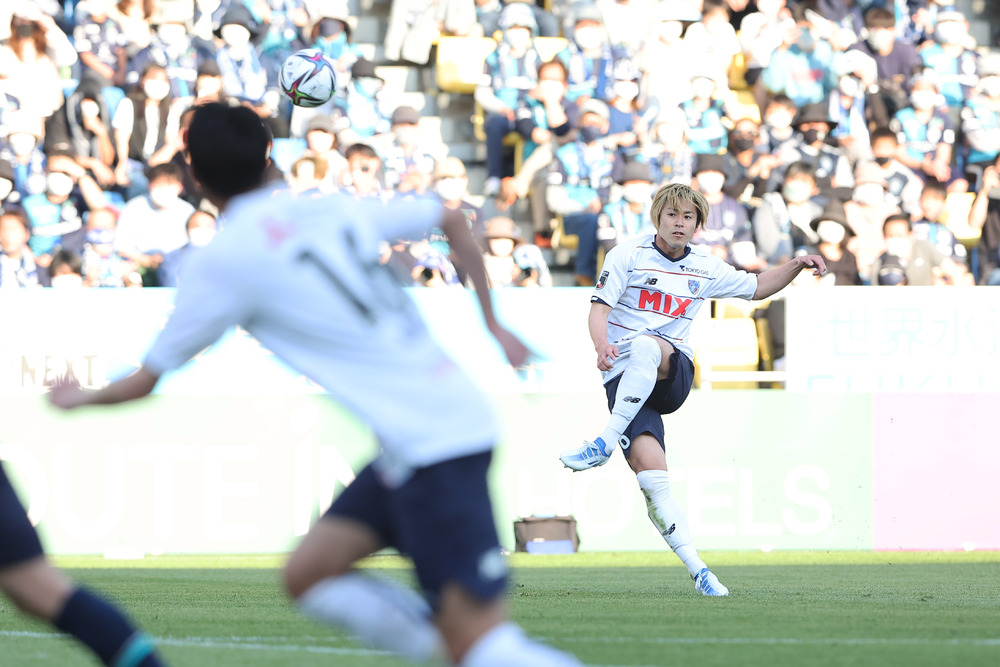
Q, please review the game. How was it?
A, we allowed the opponent to play the way they wanted, and we couldn't play the way we wanted. I believe this result came about because of that.
Q: How was it playing as a center-back?
A, we conceded goals at the start of both the first and second halves, and since we were being pressed by the opponent even before conceding, I think as a center back, I needed to push up from the back and clear the ball effectively.
The second goal was ultimately conceded after being dribbled past, but since it started from losing the challenge, I believe if I had properly repelled it, it wouldn't have resulted in a goal. Knowing it was a team that plays long balls, I think I should have cleared them more effectively.
Q: This time, the three forwards are Brazilian players, which has increased the emphasis on offense and, indirectly, I think it has also put a significant burden on defense. What are your thoughts on this?
A, there are some unavoidable parts, but we wanted to push our line up a little more. There were times when we couldn't pick up the second ball and the team became stretched out, so I think we need to adjust the defensive line's push-up and the forward press.
Q: I think it was a match where you felt the difficulty of being a center-back.
A, I think the center backs will be the busiest, especially in the match against Fukuoka. Since it was a game with intense battles for the ball, as the center back entrusted with the role, I believe I had to give it my all.
Q: How do you feel about the future?
Whether playing as a center back or a side back, once you are on the field, you must play with full effort in the position entrusted to you for the team to win, and I hope to contribute to the team's victory.
Q, many fans and supporters came to cheer.
A, I feel sorry that you came all the way to distant Fukuoka to support us. I want to do my best to make you happy in the next match against Tosu.