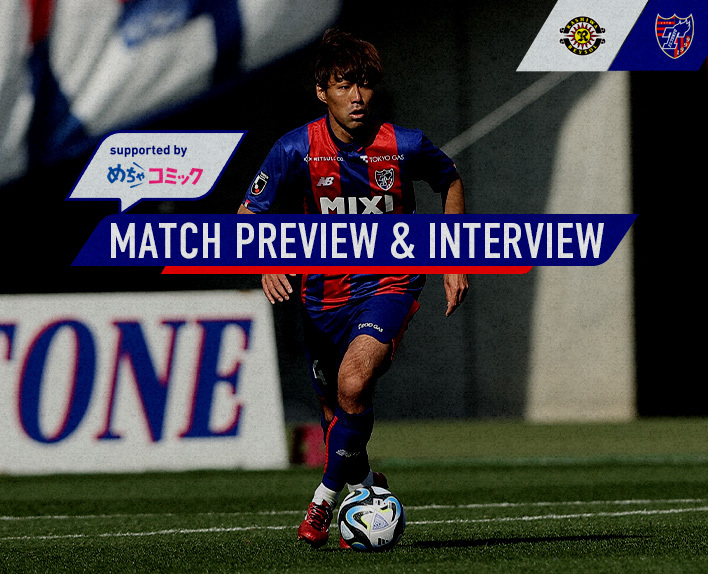


Review of the previous match against Urawa

The difference in victory and defeat was due to the brilliance of the strategy.
The stadium has been allowed to operate at 100 percent capacity, and cheering with voices has been lifted in all seats, bringing back the "voice" to the J-League, which has faced restrictions due to the spread of the novel coronavirus infection.
Tokyo's home opener. Over 38,000 spectators gathered at Ajinomoto Stadium, where the thrill of watching sports was palpable, and expressing joy, anger, and sadness was encouraged, creating an electrifying atmosphere typical of a professional football match.
In the first half, Tokyo showed a willingness to maintain possession of the ball, but they disrupted the flow with a simple mistake just before getting to the finish. There was a period where they couldn't find their rhythm, but after the 30-minute mark of the first half, they launched an offensive with coordinated pressing in the front line and short counters after regaining possession.
The halftime break saw the match turn around with rising expectations for the second half. Coach Albert PUIG ORTONEDA made a move, bringing Shuto ABE onto the pitch in place of Keigo HIGASHI, adjusting the midfield arrangement. This was one of the clever tactical decisions.
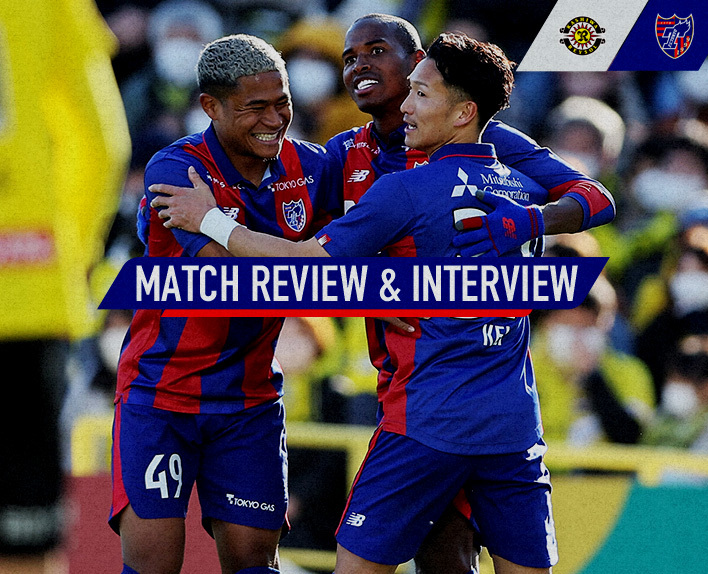
From the early stages of the second half, Abe made several runs into the space on the side of the penalty area, known as the pocket, to create chances. In the 21st minute of the second half, Abe received a pass from Kashif BANGNAGANDE on the left side, made a sharp turn to evade the defender, and delivered a cross. Kei KOIZUMI couldn't make contact, but the ball hit an opponent and went into the goal. Tokyo took the lead in an unexpected way.
Then, immediately, Coach Albert PUIG ORTONEDA launches his second arrow. In the 24th minute of the second half, he sends in Ryoma WATANABE to replace Teruhito NAKAGAWA, who had a near miss with a shot that hit the crossbar in his debut match in Tokyo.
Then, six minutes later, the substitution strategy pays off perfectly. From a throw-in on the right side, the ball was connected by Adailton and Diego OLIVEIRA, and Diego made the last pass to the pocket just in front of the left diagonal of the goal in the penalty area. Responding to this, Watanabe made a one-touch finish and slotted it into the goal for an additional point.
Both of the substitution cards played a role in the scoring, showcasing the brilliance of Coach Albert PUIG ORTONEDA's tactics that led to victory. At the same time, the second half, where they maintained possession of the ball in the opponent's territory while fending off the press from the Urawa Reds' frontline, reflected the continuation and maturation of the style of "playing football with the ball" (Coach Albert PUIG ORTONEDA) that has been carried over since last season.
<Match Preview>
Last season, the two matches against Kashiwa Reysol left contrasting impressions.
In the first half of the match at home Ajinomoto Stadium, we struggled to advance the ball against an opponent that pressured us man-to-man from the front. We entered the final stages of the game without showing much in terms of attack, and in stoppage time, we conceded a goal from a corner kick. It was ruled a handball with the support of VAR, resulting in a draw, but it left a bitter aftertaste.
On the other hand, the second half of the match played away at SANKYO FRONTIER Kashiwa Stadium, commonly known as "Hitachidai," had a completely opposite development.
Against an opponent who applies intense pressure from the start, maintain an exquisite position and sense of distance, using varied passing to evade them. Not only evading, but also advancing the ball, taking advantage of build-up play from our own half to get behind the opponent and take the lead from the first half.
As the second half began, they aimed for the opponent's back, who had come forward to launch a counterattack, and piled up goals with simple attacks. In the second half, they allowed Kashiwa to score 3 goals, resulting in a shootout-like match, but in the end, they achieved a resounding victory with 6 goals, finishing 6-3. Kashif BANGNAGANDE scored his first professional goal, and Kuryu MATSUKI marked his second professional goal, showcasing the rise of young talent and shining a bright light on Tokyo's future in this match.
What kind of impression will this season's matches leave behind?
In the previous match, Kashiwa took an early lead in their home opener. However, in the second half, they allowed Gamba Osaka, who had found their rhythm, to come from behind and maintain the lead until stoppage time. In the end, Hosoya was fouled in the penalty area and earned a penalty kick, which he successfully converted himself, equalizing just before the end.
Pressing from the front line, they intercept the inaccurate pass hurriedly sent forward by the opponent, triggering a counterattack that swiftly brings the ball to the goal for a finish. Kashiwa is thoroughly committed to their style and has been refining that precision since last season.
The key point against opponents who increase their intensity and press towards the ball side is how calmly Tokyo can move the ball and evade the pressure. It is important not only to evade but also to draw out the opponent with intention, utilize space, and break through to shake the net.
Last season, we struggled against opponents with high intensity and quick pressure at the ball. However, after a fulfilling preseason, as I think about tomorrow's match, I envision the blue and red team moving the ball with confidence, shedding any sense of inferiority.
[Interview with Coach Albert PUIG ORTONEDA]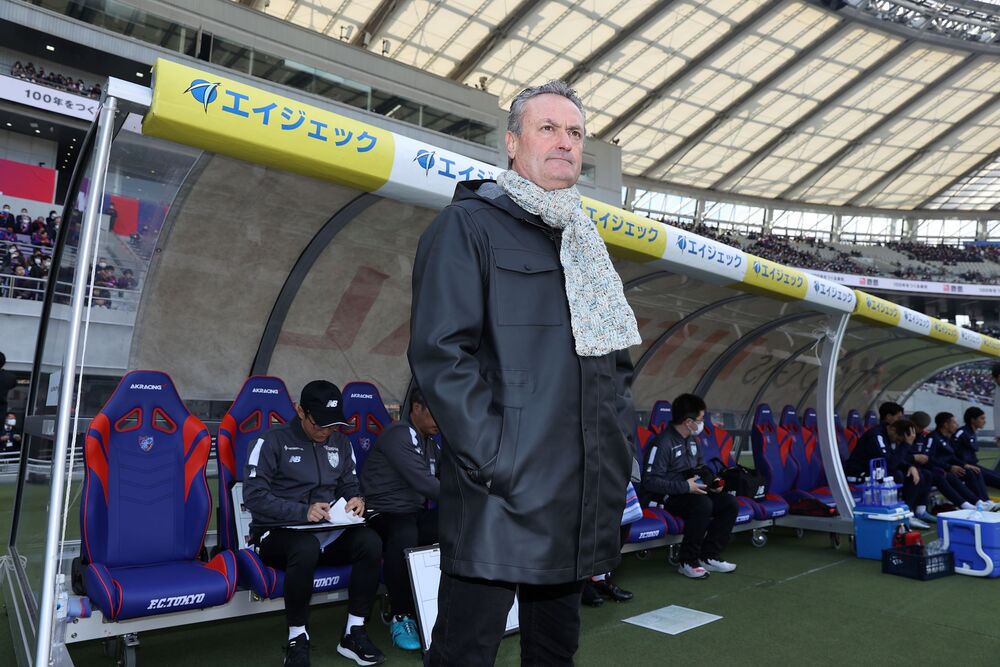
Q: What kind of care will you provide in the absence of players like Kuryu MATSUKI?
A. To compete at a high level in every tournament, we need to prepare a team with a deeper roster. We believe that is not the case for us, so we can only hope for the success of our young players. Young players must seize these kinds of opportunities. Every player starts their professional career when they are young. To survive in the professional world, I think it is essential to make the most of the chances given at a young age. The team is steadily maturing. In that sense, I believe they will overcome this situation.
Q, I think we were able to take the initiative and attack during the camp. Even in the opening match, when things weren't going well, we made adjustments during the game and created good opportunities. How confident are you about that?
A, we cannot always dominate the match. We want to continue using the quick attacks toward the goal, which have been our weapon so far. Last season was the first year of changing our style, but in most matches, we were able to surpass our opponents in ball possession rate. The only match where we had lower possession was probably the one against Urawa. However, in this season's opening match against Urawa, we were able to surpass them in total possession rate. The style I expect from Tokyo is a unique style, aiming to be a team that can attack using all kinds of weapons while making the most of the ball. Last season, the most emphasized point was to convey that "the ball is important" and to instill that idea into the team. The season has just started, but we are gradually beginning to firmly press the opponent and continue attacking. Quick attacks that utilize the space behind the opponent's defensive line are also one of our weapons, and we want to continue keeping that option.
Q: What are the key points in the match against Kashiwa?
A. We believe it is our own play. If we can properly express good play, the chances of winning will increase. However, matches have various developments. There will be good plays from the opponent during the game, and there will also be dangerous situations arising from our mistakes. In such circumstances, to seize the momentum and control the match, it is important for us to play with confidence in ourselves.
Q: What are your thoughts on the use of young players?
A, I hope tomorrow's match will be an opportunity to give young players a chance. Whether they possess mental strength will determine if they can continue to succeed as professional players in the future. I believe young Japanese players are well trained in both skills and tactics. However, unless Japanese soccer as a whole fully understands that mental strength is essential to succeed in the professional world, further growth will be difficult. I only ask two things from young players: first, bold play, and second, mental strength.
Q: Is the presence of veteran players like Nagatomo, Morishige, and Higashi important for the growth of young players?
A, this is one of the important points for the team. I believe one of the secrets to this team's strength is how much the veteran players contribute to creating a good atmosphere both on and off the pitch. When players become veterans, I think they generally fall into two types. One type is players who want those around them to adapt so that they themselves can play more comfortably. The second type is players who, while performing well as players themselves, also put energy into encouraging the growth of other players, especially younger ones.
Q: I was talking with player Nagatomo before the practice started.
A, Nagatomo is the soul of Tokyo. He is truly a great role model. Even when he is on the bench, he fights alongside the team as if he were running around on the pitch. Whether it is Nagatomo or other players, Tokyo has veterans who are happy to see young players grow and encourage them. On the other hand, unfortunately, in the soccer world, there are players who negatively affect those around them in order to play themselves. We have the great Nagatomo. I believe he is an important figure for the team, the club, and the future ahead.
[Player Interview]
<Yasuki KIMOTO>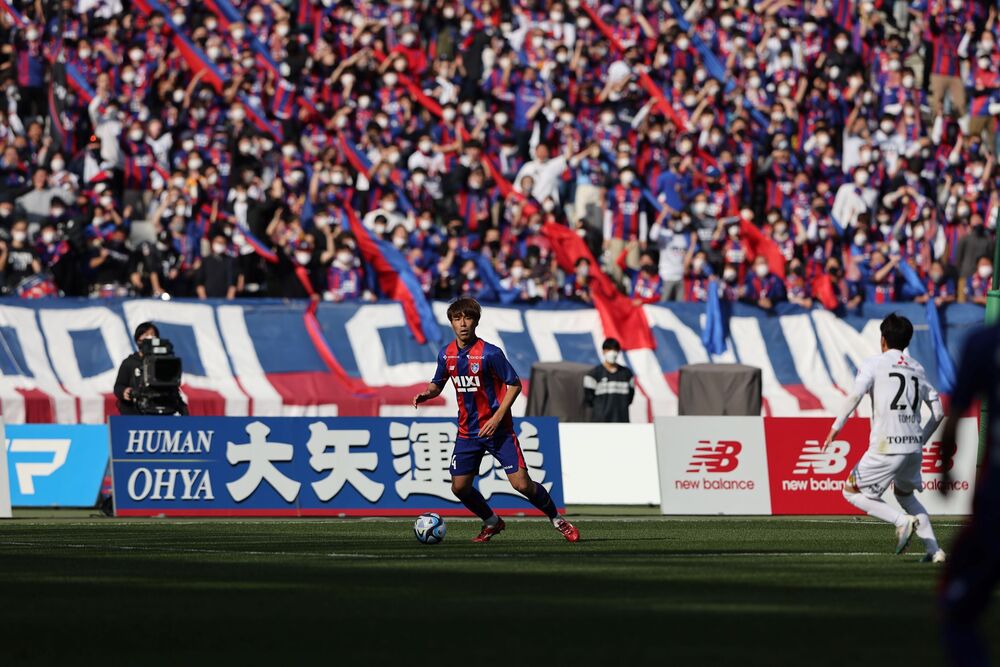
Q: You achieved a good victory in the opening match, but what were the factors behind it?
A, each player was able to prepare well and welcome the opening match. Regarding the match content, there was a period in the first half when we struggled against the opponent's press, but I believe that being able to play patiently without conceding any goals during the difficult times led to the goals in the second half. Truly, each player fought hard, and in terms of content, I think the patience shown in the first half is an improvement from last season.
Q: How was the match with 100 percent vocal support?
A, the atmosphere was fantastic. The cheers helped us give our last bit of strength, and playing amid the support of fans and supporters is a goal for professional soccer players. I want to express my gratitude for this environment. It was great to be able to play the match in such a wonderful atmosphere.
Q: Last season's away game against Kashiwa was a big win, but do you have a good impression of it?
A, we were able to win with a large number of goals, so it leaves a good impression, but the defense conceded 3 goals. Just like the opening match, if we can keep a clean sheet, I believe the forwards will definitely score, and if we can maintain that, we can accumulate 3 points. As a defender, while focusing on keeping a clean sheet, I also want to express my own strengths more in the attacking aspect.
Q: What is your impression of Kashiwa, and what measures do you want to take as a team to prepare for the match?
A. Based on last season's impression, I think we will have a game where we keep possession of the ball. We want to deliver good balls from the center backs to the front line, and since the opponent's strength is their sharp counterattacks, we want to stay focused for the full 90 minutes in both offense and defense, playing in coordination along the defensive line.
Q: In the opening match, there were goals scored that reflected the ball possession the coach demands and the penetration into the pocket, and I believe the results show what we have built up from last season and during the camp.
We have all been working on practicing how to penetrate the pocket. The results we achieved in the opening match give us confidence. In that sense, I believe we have proven that what we have been doing was not wrong. I think countermeasures will be taken from now on, but I hope we can continue to play the same style of football. We identified some challenges during the match, so I hope everyone can improve together starting from practice.
Q: It was your first match with the number 4 on your back, how did you feel about it? Please also tell us about your experience partnering with Henrique.
Regarding the jersey number, I wasn't really conscious of it during the match, but I want to play in a way that makes the viewers feel that my play and myself as a player have changed even a little. The center-back partnership with Henrique has played several matches since last season, and I feel that we can bring out the best in each other. Since many of those matches had both good results and quality content, I had no worries at all and think it was good.
Q: What kind of play is expected from you, Kimoto?
A, I was the oldest in the defense line, and the staff expects me to show leadership and speak out from the back. It is also my own challenge, but I want to consciously speak out. I want to make a stronger presence in the defense area.
Q: Please share your enthusiasm for the match against Kashiwa.
This is an away game, but we will definitely deliver a victory, so we hope many fans and supporters will come. For those who cannot come, we hope you will cheer us on via DAZN.
<Kashif BANGNAGANDE>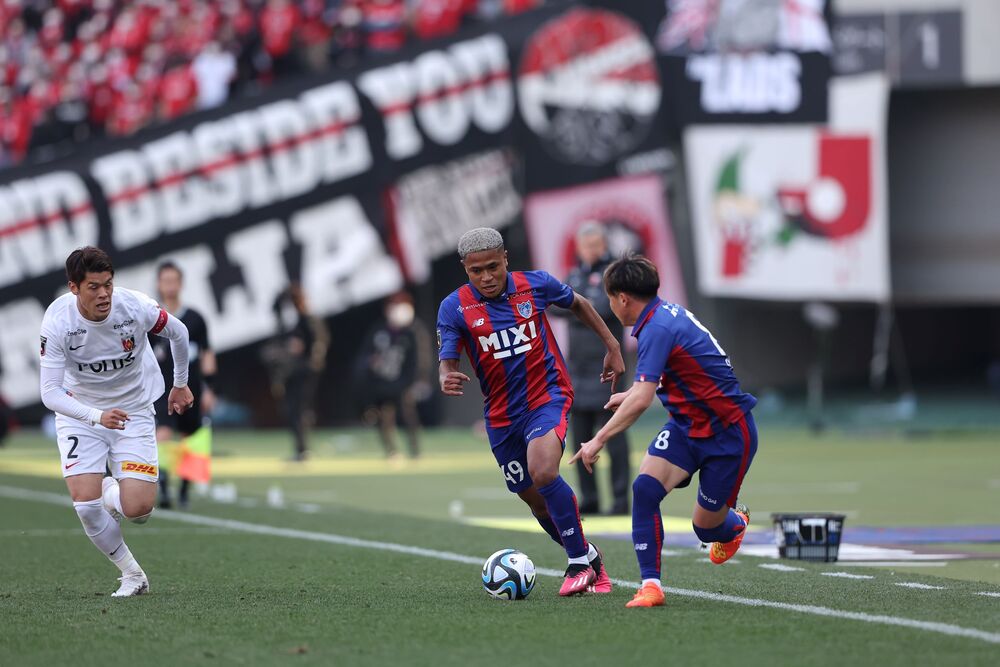
Q: You actively participated in the attack during the opening match, but do you want to continue that in the match against Kashiwa as well?
A, while participating in the attack, I want to manage risks properly. In the previous match, there were some dangerous moments because I advanced too far up front, so I hope to correct that.
Q: In the match against Urawa, were you aware that playing high up the pitch would create space?
A, it was expected that Urawa would target the space I created by moving up to the front line. Within that, I think I could have managed risks better. I feel it is necessary to play with a good balance between offense and defense.
Q: During the match, do you aim for specific targets when delivering crosses? How does it feel?
A: This season, I am focusing more on looking inside and delivering crosses. Although it hasn't led to goals yet, I want to aggressively pursue results. In last season's away match against Kashiwa, I was able to score my first J1 goal, which is a good memory, but in the second half, I couldn't play as I wanted and was involved in conceding a goal. There are good players up front, so I hope to participate in the attack by properly handling crosses and other situations.
Q: I believe we had a successful experience in the opening match by taking the space on the side of the penalty area, known as the 'pocket'.
In the match against Urawa, we were able to use the pockets we had built up from practice. I think it was a game where both the team and I personally felt good about it. I want to increase the number of times we do this in future matches.
Q: I heard that after bringing the ball to the pocket, you freely decide and aim for the goal.
A, after using the pocket, I have been working on it with various ideas from practice. I believe that if I keep using it more and more in matches, the number of goals will increase, and I think things are moving in a good direction.
Q: Do you want to be involved in scoring?
A, I feel like my repertoire of movements in front of the goal has been increasing, and I have various patterns in my mind. What matters next is the result, and I think it’s about how much I can connect those to scoring goals.
Q: What did Nagatomo say when he jumped off the bench to speak?
A, I was told to continue because my positioning during defense and my attacks are going well. I am always taught about fine position adjustments at the right timing. During the match, I can only see from my own perspective, so I received advice from Nagatomo, who has more experience in the same position, and there were plays where I actually made corrections and succeeded. I am truly grateful.
Q: Nagatomo said that Kafumi's growth is also a motivation for him. Does he often reach out to you?
A, fortunately, I am regularly encouraged by others. The presence of player Nagatomo is truly inspiring, so I want us to continue motivating each other.