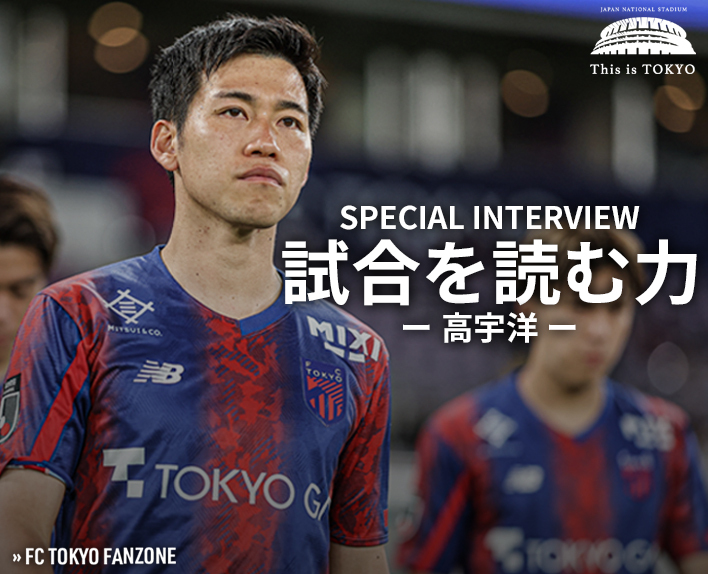


Number 8 is in the center of the pitch.
Repeatedly gesturing widely to draw out the ball, he explores the switch for attack through a series of precise passes. If you watch a match in Tokyo, you will quickly notice his presence.
This season, Takahiro KO has completely transferred from Albirex Niigata. Although there was a period at the beginning of the season when he struggled to get playing opportunities, he made sure to deliver results when the chance came, becoming an indispensable presence as the blue-red "link man" who connects strong individuals.
His invisible weapon──. That is the ability to read the game. The team, which often decided matches based on individual abilities, is trying to add the ability to adapt and communicate in order to accumulate victories.
Both individuals and teams are still in the process of development. However, he clearly sees the path for Tokyo to become stronger.
Text = Tomo Aoyama
──First, how do you feel looking back on the battles so far?
Looking back at the first half of the season, I feel that there were many matches where we could have done better, taken more points, and should have won. However, on the other hand, there were also matches where we managed to equalize in difficult situations and secured a draw. To move up further, it is absolutely necessary to minimize fluctuations and achieve consecutive wins. Additionally, I strongly believe that we need to win at home in the second half of the season, and I think that by doing so, we can move up.
──Looking back overall, there are times when we play good football and times when we struggle because we can't find an effective way to attack. Since the season opener, what have you built up, and what do you feel remains as challenges?
I strongly feel the same way. As I mentioned earlier, there are ups and downs in the content. It depends on how aggressively we can start and take on the challenge. When things are going well, I think we can play our style of football and build momentum. However, when things are not good, we tend to be on the defensive and often struggle to take on challenges. When the willingness to receive the ball is weak and the reaction to second balls is slow, I feel the game becomes difficult.
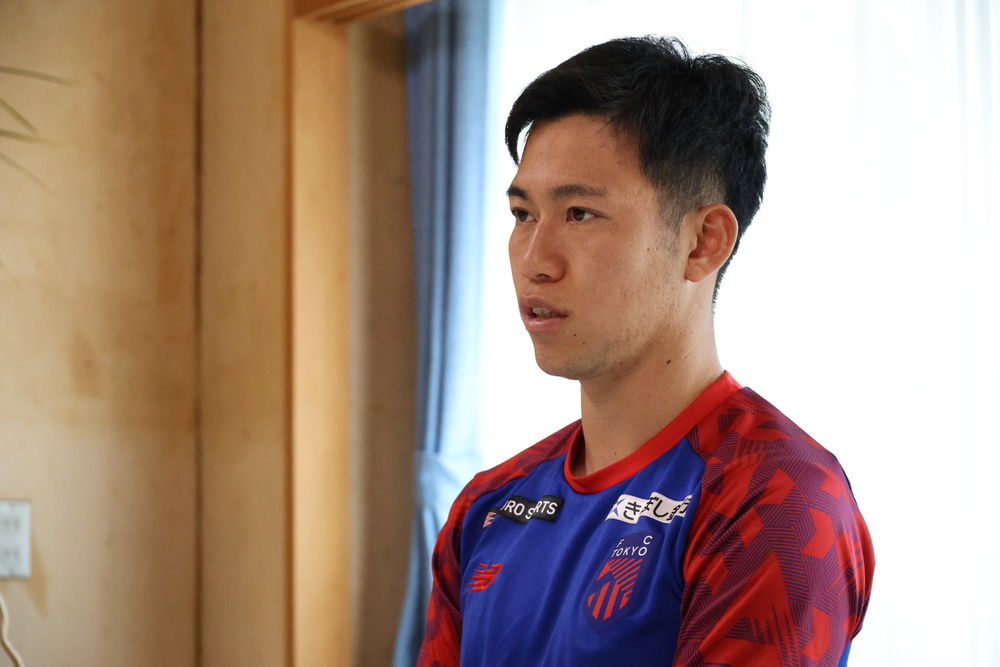
──I want to think about solving that issue. My impression is that even in matches where the ball is being passed around, the team struggles in games where they cannot create changes or switch up their attack after entering the attacking third.
As for me, I want to create a bit more rhythm, so if there are players who can be used easily, they should be used easily. If they can get behind the defense, it's fine to run and use them simply. Tokyo has many players with high individual ability, so there are situations where they can break through on their own. Of course, that's not a bad thing, so it would be good to differentiate between individual strength and creating rhythm as a team. We're heading into the summer now, so I think it's also important to consider how we approach our battles.
── On the other hand, shifting focus to defense, the team was troubled by the many avoidable goals conceded.
To be honest, there were many easy goals conceded. There were few scenes where we were completely broken down or goals conceded, so most of the goals were due to our own mistakes. I think that is a matter of concentration. Recently, those kinds of goals have decreased, so I want to make corrections so that each individual can take responsibility and continue to improve.
── On the flip side, if we reduce easy goals conceded, the team's performance should improve as well.
There is no doubt about it. I believe that by reducing the number of goals conceded, we can start to see the top. The top teams have fewer goals conceded, so this is an area we must focus on carefully. We have been able to improve little by little, and recently, I have the impression that we are putting our bodies on the line in front of the goal and our concentration has increased.
── Player Taka transferred to Tokyo from this season, and there was a period at the beginning of the season when he struggled without getting many opportunities to play.
The most difficult thing after transferring to Tokyo was playing while moving. Albirex Niigata was a team with a set framework, where each individual played while maintaining their position. But in Tokyo, it was more about individuals moving freely and connecting within the organization, so that was challenging.
──In Sec. 4 of the 2024 Meiji Yasuda J1 League, I got my first opportunity to play against Avispa Fukuoka. By bringing the team's first victory of the season in this match, I completely became the blue and red "linkman" from there on.
Personally, I truly believe that the match against Avispa Fukuoka was a turning point. I had heard that we hadn't won away in Fukuoka for about 20 seasons, so I also thought, "We’ve got this." We had a sense that things were gradually improving through the camp and practice matches, and since the team hadn't won in the first three opening games, I was preparing myself to be ready whenever I was called upon. More than that, I approached the match with the determination that "If I can't deliver results here, my life in Tokyo is over." I think it was a very good game both in terms of content and result, and I was able to show what I had prepared thoroughly.
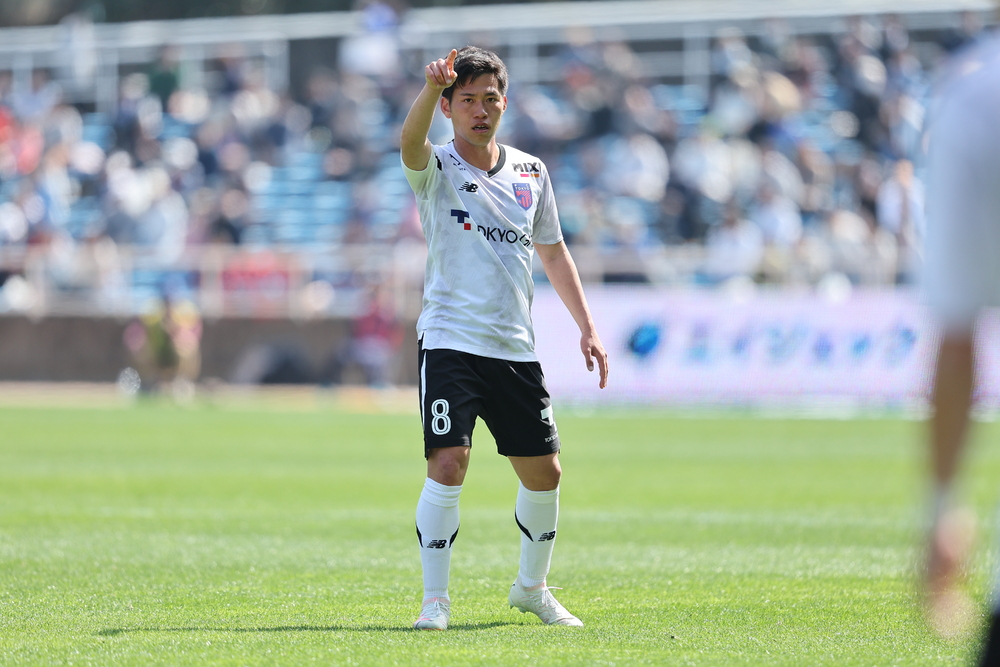
──As a defensive midfielder acting as the team's link man, Takahashi is constantly talking and giving instructions with gestures during the match. What are you observing, feeling, thinking, and focusing on while on the pitch? Please tell us about your thoughts and actions.
I see myself as a position that connects with those around me, so I always have to be involved in both offense and defense. First and foremost, communication is a basic premise and, in my view, the most important thing. What’s necessary for that is "observing." Of course, it’s about grasping the flow of the game during the match, but I also think about how to design the entire 90 minutes, how to guide the team in a positive direction, and whether we have calculated backwards from winning. It’s about how well you can sense the flow during the match. Since soccer involves an opponent, while aiming to play our own style, I also take into account the opponent’s system and condition, as well as the situation of my teammates, and communicate while making decisions.
──As I mentioned earlier, I described him as a "link man," and I have the impression that he connects the strengths of each player as a defensive midfielder.
Peter CKLAMOVSKI's soccer style is to attack quickly vertically, but personally, I want to create a good rhythm there. It is absolutely necessary to switch between fast vertical attacks and attacks that control time and the ball. I have discussed this with the coach, and he told me, "You can make decisions on the pitch," so I focus on playing organized soccer while connecting well with the surrounding players.
──In Sec. 21 of the J1 League against Hokkaido Consadole Sapporo, I heard that in the second half, you talked with Riki HARAKAWA about "the opponent's stamina dropping, so this is the decisive moment," and the team increased the pressure. Do you feel that your ability to read the flow of the game has improved as well?
There are quite a few of those. Tokyo has many players with strong individuality, and the key is how to connect them. I think Tokyo is a club that is expected to win more, so I believe I have greatly developed the sense of controlling the game and bringing the team closer to victory. During the match against Hokkaido Consadole Sapporo, I was talking with Muriqui and we clearly noticed the opponent relaxed during that period, so we said, "This is the moment to finish them off."
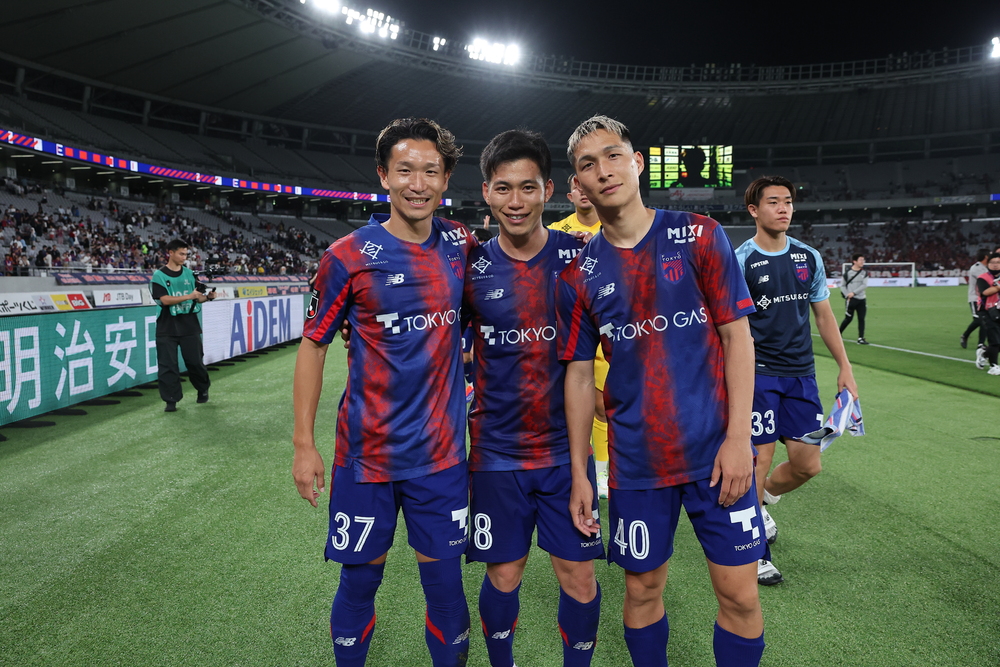
──Has your awareness changed since coming to Tokyo, especially in terms of trying to play by reading the flow of the game?
It has definitely changed. I have come to realize how important it is to observe those aspects as a defensive midfielder since coming to Tokyo.
── How to respond when the opponent takes measures against Tokyo and things don't go well. I think that will be a major point in the second half of the season.
There will definitely be games throughout the season where we are forced into a disadvantage, like the away Sec. 19 match against Shonan Bellmare. The ability to secure a win in such matches is very important, so getting 3 points there was significant. However, playing many games like that is physically and mentally tough (laughs). As I mentioned at the beginning, it’s crucial to reduce the fluctuations as much as possible. The team must firmly keep difficult periods to zero. While it’s necessary to discuss and make adjustments during halftime or after the match, the ability to sense and correct things during the game based on the atmosphere and rhythm is absolutely essential. What actions we can take while making those adjustments will be important from here on. We are gradually getting better at this, but there are still areas where we lack strength. So, not only as a team but also personally, I want to be more perceptive, communicate more, and work to connect the team effectively.
──As a team, one-touch passes and vertical passes that change Takahashi's rhythm have become the switch for our attack.
This season, there seems to be quite an increase in the number of balls challenged in the attacking third. There are also scenes where that has successfully led to goals. Since we have many strong players up front, we want to challenge while supplying the ball to them in good situations. The only thing is to avoid losing the ball badly. As long as we try up front, we can recover the ball, so I want to keep challenging while improving my individual quality in that regard.
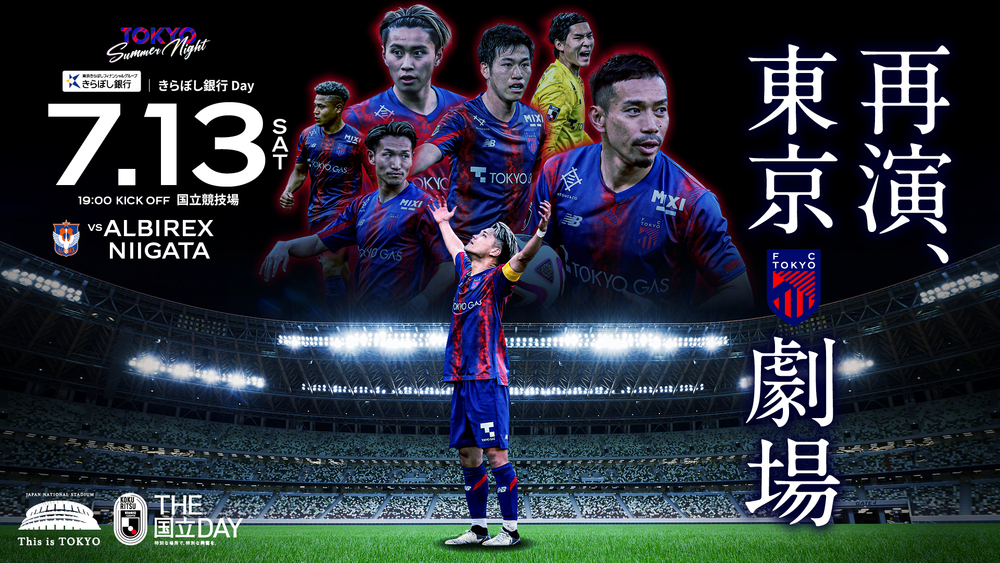
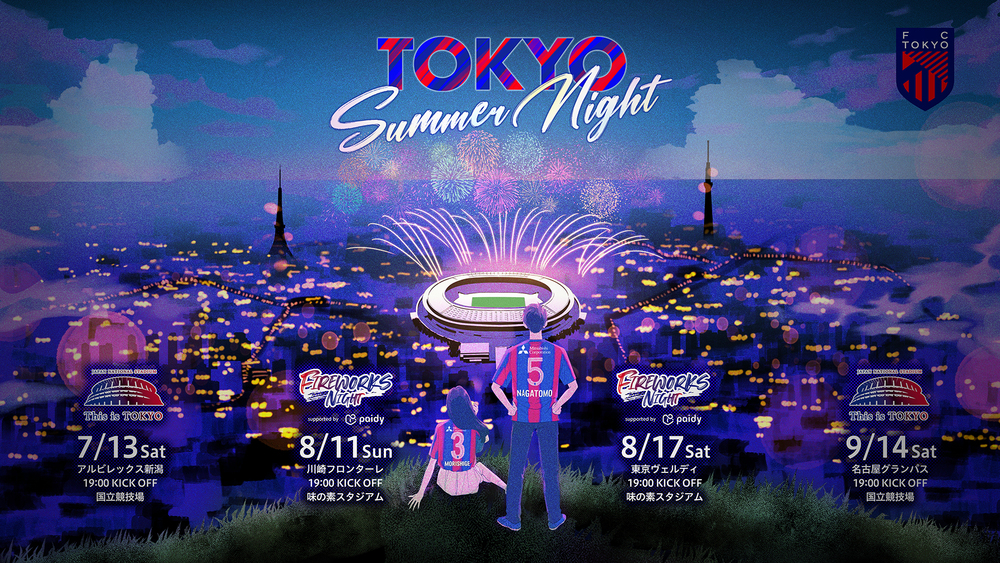
──Now, on July 13th, there is a match against Niigata at Japan National Stadium.
I think the atmosphere at Japan National Stadium is truly wonderful. I was also impressed by the player entrance production, and since many fans and supporters come, it really boosts motivation. I noticed the projection mapping effects during the team huddle. It really feels like entertainment (laughs).
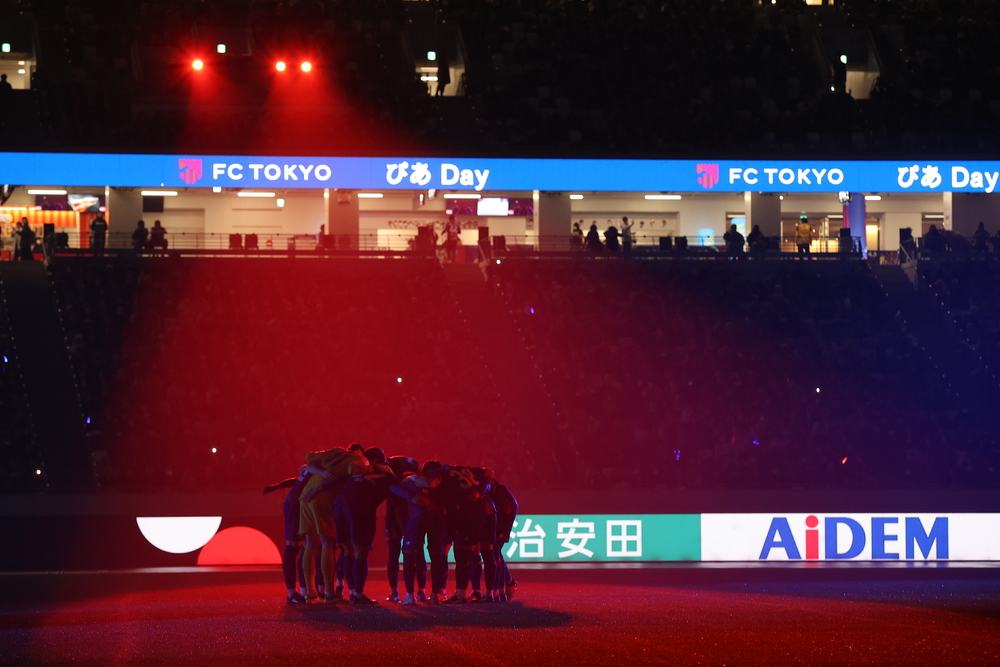
──At the Japan National Stadium, there was the "phantom goal" in the Urawa Reds match (J1 League Sec. 7). It was a splendid middle-distance shot, but...
It happened, didn't it? (laughs). It was canceled because Kuryu MATSUKI was in an offside position.
──I still haven't been able to score my first goal in Tokyo. While I have the impression that I have become the mainstay in creating the game, personally, don't you also want to do work that decides the match, such as finishing and assisting?
I definitely want to aim for it, and since I haven't been able to take many shots, I think I should get into the goal area more. However, as a basic premise, I value risk management and the team's balance, so it's more like if there's a chance within that framework.
── This season, the team plays football where the opposite side back moves into the cross from the side back, so risk management in the back remains a key point.
That's right. This year, there are many scenes where the fullbacks push up and enter the penalty area, so it's inevitable that we defensive midfielders stay back to maintain balance. With that in mind, I want to make decisive contributions like providing the final pass or taking shots. If the defensive midfielders can score, I think it will make things easier for the team, so I always try to be conscious of aiming for middle-range shots as well.
──The opponent is the former team, Niigata. We won the last match away.
We definitely want to win this time as well and achieve the season double. I often watch Niigata's matches, and I really think they are a wonderful team. While valuing the part they have built up of connecting the ball, it gives the impression that both players and staff are fighting without wavering.
──So, how shall we finish it off this time?
It's about which line we set the block on and how we apply the press. When we played away, the plan I had in mind worked quite well. Depending on the opponent's members, I want to carefully observe the flow on the pitch and think through it to do well this time too.
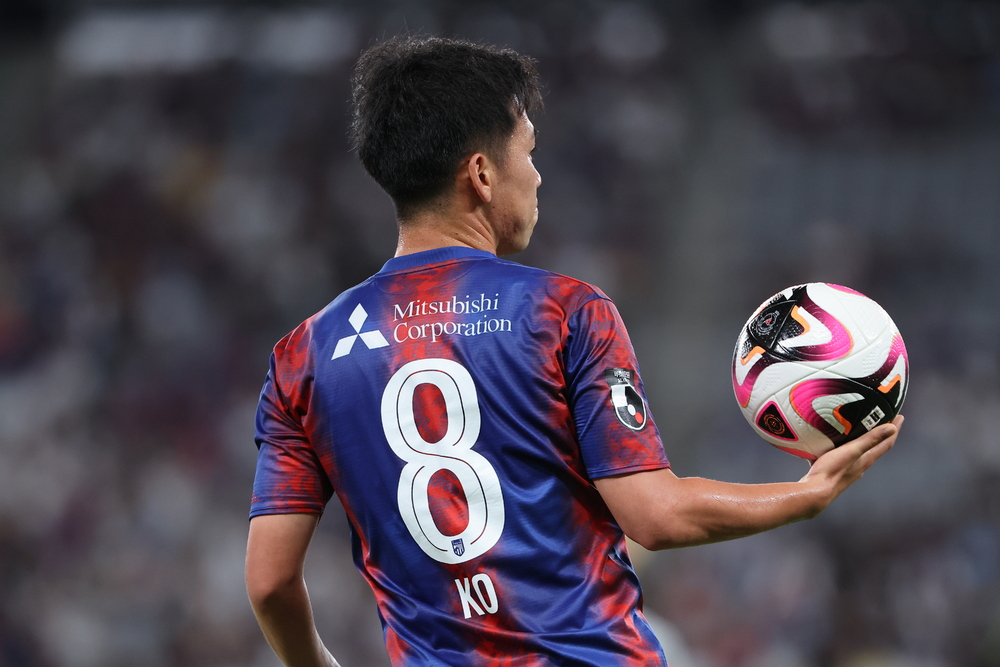
──Finally, how do you view Tokyo's potential for this season?
There were games in the first half of the season where we could have earned more points, so if we develop the mental toughness to close out those matches and strengthen the team as a whole, we should be able to climb even higher. Also, the importance of winning at home cannot be overstated. At the start of the second half, we managed to beat Sapporo at Ajinomoto Stadium, and the home consecutive matches against Fukuoka were games we absolutely wanted to win consecutively, but we ended up losing. I strongly feel that we need to become a team that can firmly secure victories in matches like those. The word "adaptability" will continue to be a key theme, so both as a team and individually, we need to become more flexible and responsive to our opponents. Personally, I want to make a stronger impact both offensively and defensively. First, without getting carried away by emotions, I want to stay grounded and fight to win each match steadily.