

<Match Review>
The sixth match of the seven-game series in April's congested schedule is the postponed Sec. 2 of the J1 League. Tokyo welcomed Nagoya Grampus, led by former manager Kenta HASEGAWA, who was in charge until the end of last season, to their home Ajinomoto Stadium. Tokyo has drawn two consecutive league matches 0-0. While there is a tendency to focus on the inability to secure a win, they have gained a solid sense of progress in terms of the quality of their play, making this match an opportunity to secure three points at home and reinforce their growth.
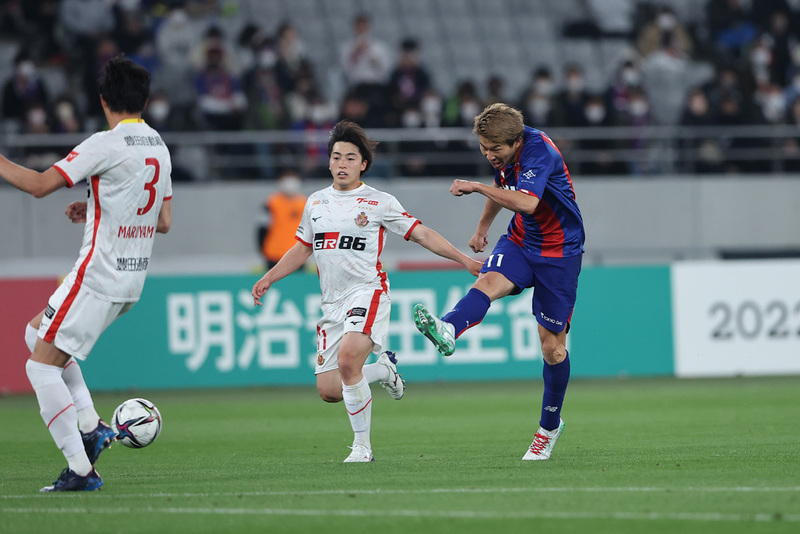
From the start, Tokyo maintained possession and moved the ball at a fast tempo to penetrate the opponent's territory. In the 8th minute of the first half, Kensuke NAGAI received a pass near the left side outside the penalty area and took a curved shot aiming for the right corner of the goal, but LANGERAK made a fine save and prevented the ball from hitting the net. After that, there were periods when Nagoya held the ball, but Tokyo advanced while moving the ball with few touches after regaining possession, aiming for the opponent's goal. In the 30th minute of the first half, during a set-piece opportunity, they pushed the ball in front of the goal, and Shuto ABE took a powerful one-touch shot on the ball that spilled outside the penalty area, but once again LANGERAK saved the ball flying through the crowded area. In the 40th minute of the first half, Tokyo exploited a brief lapse by Nagoya. Targeting the space behind the advancing side back, Ryoya OGAWA delivered a vertical pass. Reacting quickly, NAGAI used a burst of speed to turn and leave his marker behind, dribbling into a deep position. He sent a pass back near the goal line, but it just missed Kuryu MATSUKI, who was running in at the near side.
In the second half, we want to strengthen our attacking posture, but just four minutes in, Yoichiro KAKITANI takes advantage of the space behind. Jakub SLOWIK is evaded as he rushes out of the penalty area, but he manages to stretch his body and arms to clear the ball as he returns to the penalty area in response to KAKITANI's dribble, avoiding a crisis. After the danger, a chance arises. In the 8th minute of the second half, Matsuki's wide play allows Nagai to break into space on the right side towards the Nagoya goal. His powerful shot hits the right post, and Diego OLIVEIRA pushes in the rebounding ball, but this shot is also deflected off the crossbar and does not result in a goal. Although we created several scenes of entering near Nagoya's penalty area, we couldn't bring it to a finish and the match ended with time up.
After playing the 5th match of the group stage of the Levain Cup with a two-day interval, there will finally be about a week of break. The next league match is against Gamba Osaka at the Japan National Stadium on April 29. After three consecutive draws, I want to share the joy of victory with the fans and supporters at the Japan National Stadium, which will host its first J1 League match.
[Interview with Albert PUIG ORTONEDA]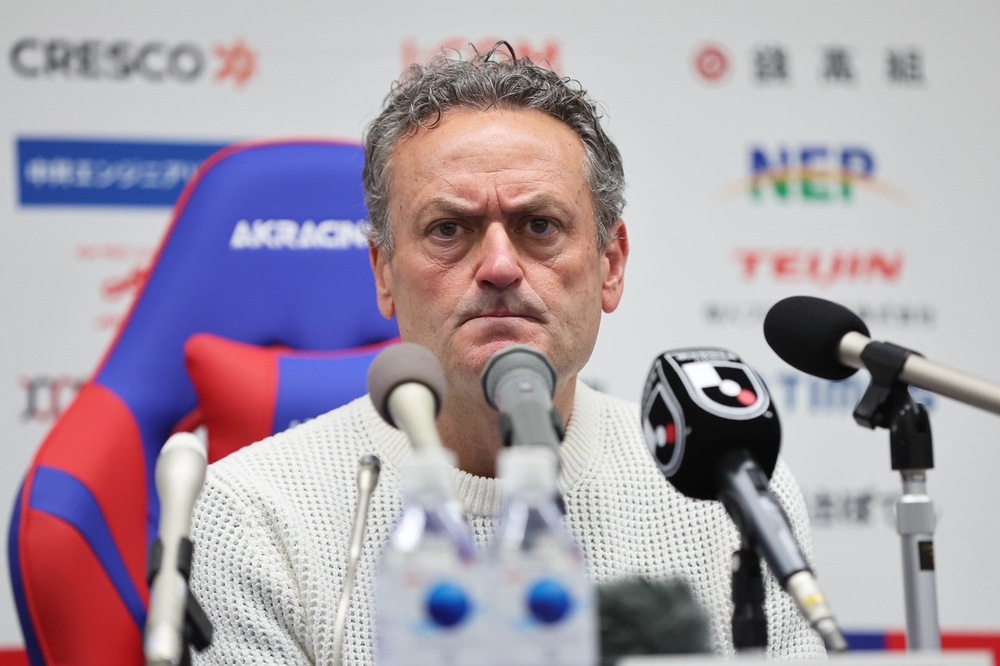
Q, please review today's game.
A, we understood Nagoya's potential even before the match. We imagined Nagoya would continue pressing intensely from earlier on, but when the game started, I think they played with a slightly deeper defensive block.
In the first half, we aimed to exploit spaces and utilized players who excel in that area. In the second half, we intended to bring in players who are more skilled at playing with the ball at their feet. However, we faced a situation where we struggled to attack against an opponent who had lowered their block and solidified their defense.
The team is currently in a growth phase, but there has been improvement in controlling the game with the ball without making major mistakes. However, the part where our small mistakes triggered Nagoya's counterattack remains an area for improvement.
The J1 League has been filled with closely contested matches. Therefore, I believe that the results of the matches can swing in favor of either team based on the details. We had the chance to hit the post twice in the second half.
Today, I am satisfied that the players were able to dominate the match with the ball for a long time. It has only been about three months since the team started, but they have grown steadily to the point of dominating the match with the ball. The understanding among the players has also increased with each match. As a result, they are now able to make good plays automatically.
The players have demonstrated a high level of play with a strong focus on winning. Everyone is giving their all for the team. For example, Morishige continued to play for the team despite experiencing severe pain in the final stages of the match, symbolizing the commitment to giving their best for the team's victory. Additionally, the players who came on as substitutes late in the game delivered outstanding performances despite entering during a challenging period, which is highly appreciated.
Q: It seemed that the flow changed when Nagoya made three substitutions at the same time while they were in possession of the ball. Please tell us the roles you expected from the three players.
A, what is clear is that Tokyo always plays aiming for victory. Today, by earning 1 point, we are still holding onto the top positions. Some people may be satisfied with that. However, we always play aiming for victory, and when we cannot win, it is frustrating.
When we used our three substitution cards, we were controlled by Nagoya in the match, but we made substitutions to win, and the team acted well. I believe it turned into a situation where we regained control of the match.
What I asked of them was, first, to play with high intensity in attack. And to play boldly for victory. The introduction of Hotaka NAKAMURA was due to Ryoya OGAWA being tired, and I sought contributions in defense. The introduction of Mita and Keita YAMASHITA was aimed at the attacking aspect, seeking plays directed towards the goal in pursuit of victory.
I believe that making a total of five substitution changes involved risks. Because we took that risk, even though Morishige was injured in the final stages, we were unable to make a substitution. However, I think that without taking risks, nothing can be won. Neither Tokyo nor I are cowardly.
Q: There was a critical moment right after the start of the second half when we were caught off guard, but Jakub SLOWIK made a great save. Please provide your evaluation.
There was a critical moment, but if my memory is correct, it was a situation that arose from our mistake. It was good that Kuba (Jakub SLOWIK) made a wonderful reaction there. It wasn't exactly the counterattack they aimed for; I recognize it as a situation that came from our error.
[Player Interview]
<Yasuki KIMOTO>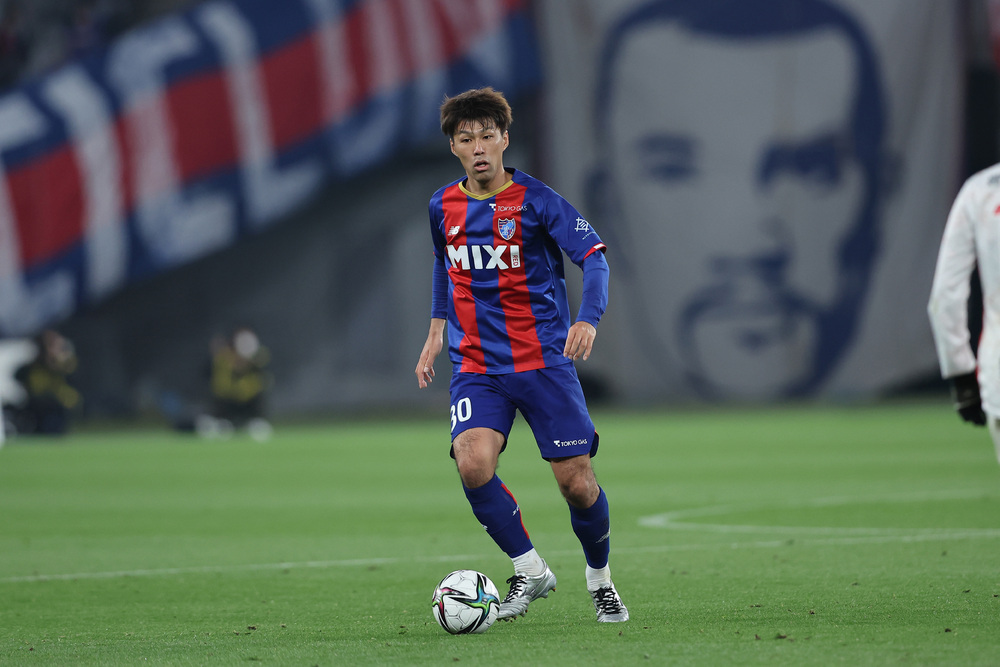
Q: As a defensive player, you must feel a sense of accomplishment having achieved three consecutive clean sheets, but how do you perceive the current situation where the team is not scoring?
A, as a result, we have finished three matches without conceding a goal, but there are still dangerous moments. Currently, we are able to secure 1 point thanks to the goalkeeper's big saves, so we want to work on not allowing chances in the first place.
Regarding the inability to score goals, it is not just a problem with the forwards; the distribution from the back has not been going well in the past few matches, so I think we need to improve the distance between the back and front as well as the quality of the ball.
Q: At the beginning of the season, there was a clear style of high pressing, but now I think we are at a stage where we are building on that. How do you recognize the challenges at this stage?
A, since we were able to show the fast-break style that we had until last season, I think if we cannot differentiate between the fast-break and slow-attack parts, the number of chances will not increase.
Q: I think that slow attacks take time to build, but what do you think needs to be tried?
A, I want to challenge with more intensity. I think we need to be more creative by making runs behind the defense and boldly using direct passes. It's better to play without fearing mistakes, and around the start of the season, including myself, there were more areas where we needed to challenge, so I believe that is necessary.
Q: It was a match against your former club, and I think there were players like Kakitani who were difficult to face. What are your thoughts on facing them again?
There are players with high individual skills such as dribbling, and Yoichiro Kakitani and Matheus played together last season and were reliable players, so I have the impression that we struggled today.
Q: There was a discussion about not allowing any chances, but does that mean there are still areas for improvement even with a clean sheet?
A, there were moments when we successfully coordinated and defended well on the defensive line, but there were also situations where we gained possession due to the opponent's mistakes. In that sense, although we managed to finish without conceding any goals, I feel the need to further improve our defensive level.
<Kensuke NAGAI>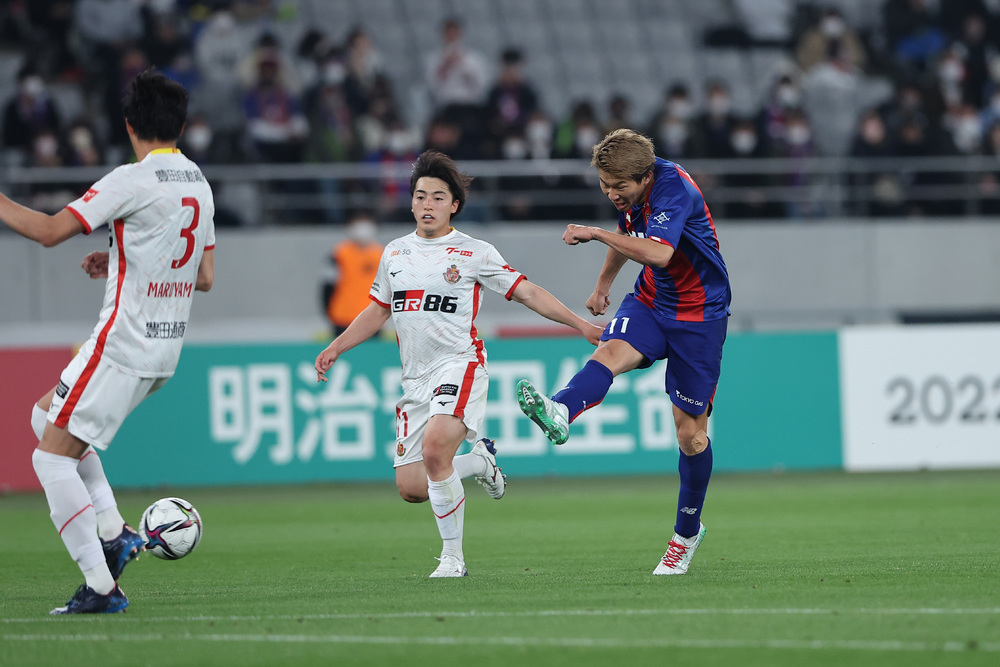
Q: It was a match against Coach Masaru HASEGAWA from Nagoya. What was your mindset going into it?
A, having fought together for four years, it felt strange this year to be on opposing teams.
Q, please review the play that hit the post in the 8th minute of the second half.
A, Matsuki gave a good pass, and the trap went well, so I was able to take a shot, but it was touched by LANGERAK and hit the post.
Q: It was three consecutive scoreless draws. How do you feel as an attacking player?
A: We have chances, but we haven't been able to convert them in the front line, so I feel responsible. Since the defense has been keeping clean sheets, I hope we can score a goal and create a good flow.
Q: I think the team is working on valuing and connecting the ball, but it seems to lack intensity compared to the beginning of the season.
A, I believe the main issue is that we haven't been able to score. I think once we start scoring, the tempo and flow will improve, so I want to focus on getting goals.
Q: How did you see Coach Hasegawa's Nagoya today?
When we were in Tokyo, we didn't use the 3-5-2 formation, so it's quite difficult to put into words, but since we have a strong two-striker front line, I thought they would adapt to that, and the whole team unified our intentions to face that.
<Jakub SLOWIK>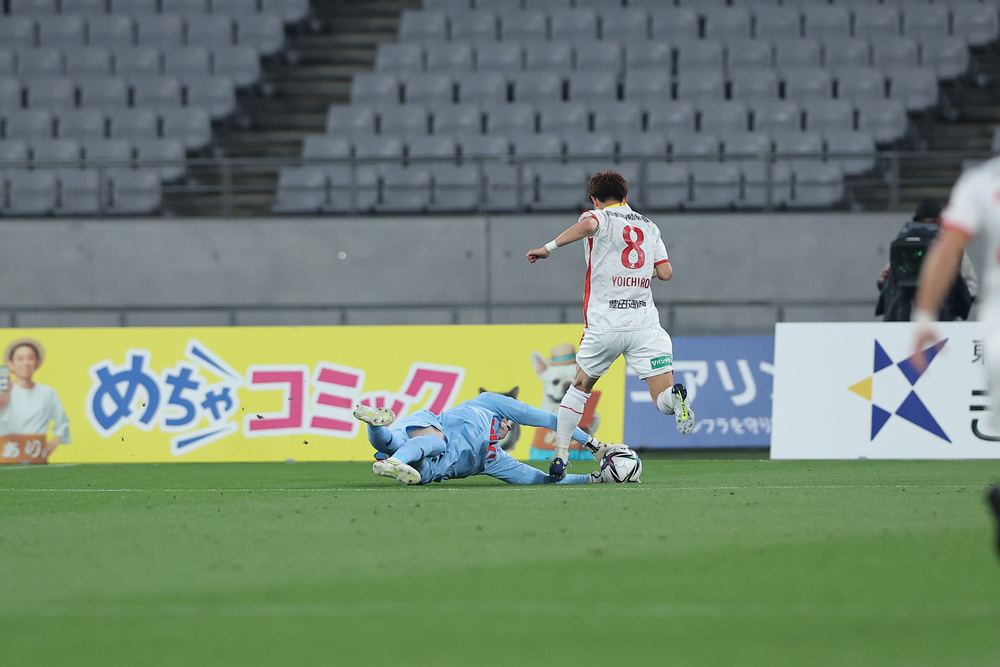
Q: How did you feel after reflecting on the 90 minutes?
A, it was a match where we could have earned 3 points, so it is very disappointing that we did not. Both Tokyo and Nagoya had chances against a tough opponent, so I think a draw is a fair result.
Q: You made several big saves to protect the goal. How did it feel?
A, my job is to protect the goal, and of course, it is not just by my own effort, but if by protecting it myself in the end the team can achieve a clean sheet, I will give it my all. I think it was very good that the entire team was able to finish without conceding any goals today.
Q: There were moments when we were pushed back, but I think we managed to defend with focus. What kind of encouragement did you give during the match?
A, there were difficult moments throughout the match, but I focused on building a solid defense line and overall defensive structure, and communicated clearly about what kind of defense we should play.
It is unfortunate that fans and supporters cannot cheer out loud, but since the environment allows for clear communication of instructions, I think we were able to stay focused and well-organized. However, it is disappointing that today's match ended in a draw. As a team, we want to properly prepare to overcome this situation and secure 3 points.
Q: We have been drawing matches, but please share your enthusiasm for the next game.
A, all players hope to win, and regarding the next league match, we will be able to play our home game against a wonderful opponent, Gamba Osaka, at the Japan National Stadium. We want to unite as a team, prepare well from practice, and deliver 3 points to our fans and supporters.
<Shuto ABE>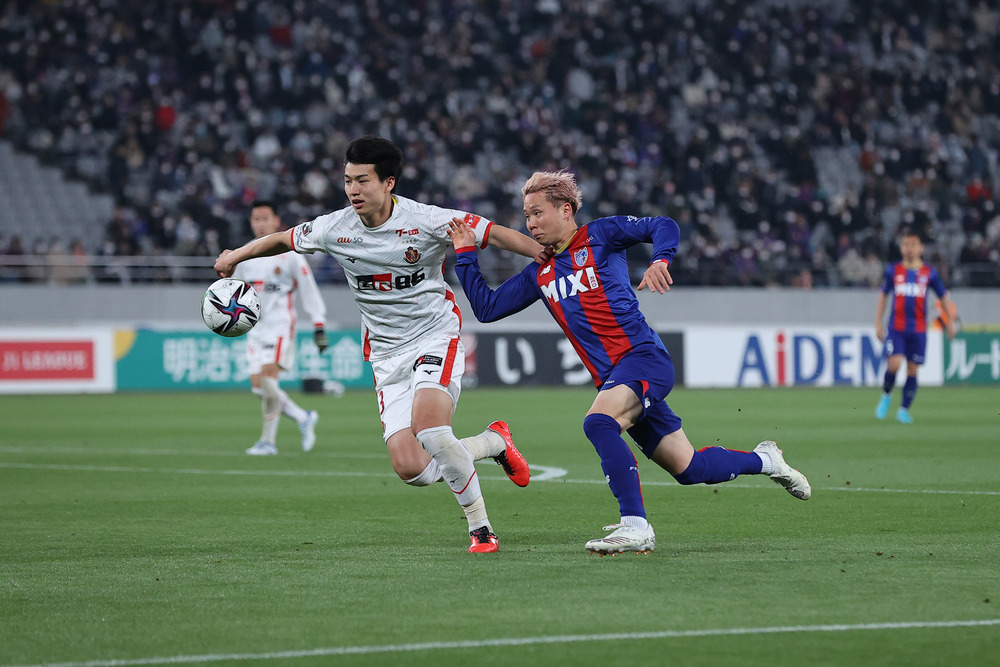
Q: How did you feel after reflecting on the 90 minutes?
A, we couldn't create many chances, but it's very frustrating that we couldn't convert the limited opportunities we had. On the defensive side, I think keeping a clean sheet was one positive takeaway.
Q, I think there were moments when you broke through by moving into the space on the side.
A, the coach had told us to be aware of creating space during practice, so I played with that in mind. However, there were moments when running could have created opportunities, so I think I could have done it more often.
Q: How was it playing against Sapporo and Nagoya with a three-back defense in the last match?
A, the opponent used a three-back formation, and when the sides dropped back, they had five players, making it difficult to break through the block as the midfield was not left open. We need to increase movements like the third player and find ways to break through effectively; otherwise, we cannot score. I believe we have no choice but to coordinate together in practice.
Q: I think we were able to keep our defense compact from the second half.
A, there were not many scenes where we were broken down, but the way we lost the ball was poor, and there were several occasions where we faced counterattacks, so I think it will improve if we work on how we lose possession.
Q: There were several good scenes in the attack after winning the ball.
A, if we do not secure a goal after winning the ball in a good position, the game will become difficult. Since we also put power into that, there is a physical toll as well. I believe that when we win the ball in an advanced position, we must have the ability to finish and score a goal.
Q: The next league match is at the Japan National Stadium, what preparations would you like to make?
Since we have gone three consecutive matches without scoring, we want to relieve that frustration. Although we have the Levain Cup this weekend, we will all prepare well and aim to secure 3 points on the stage of the National Stadium as a gift to our fans and supporters.