

The financial report for FC Tokyo for the fiscal year 2023 announced on May 21. Operating revenue recorded the highest in the club's history at 5.929 billion yen, achieving an increase of 660 million yen compared to the previous year. On the other hand, there is also the current situation of recording a deficit for four consecutive years.
What kind of initiatives were there? And what is the current position of the club as it completely breaks away from the COVID-19 pandemic and looks towards the future?
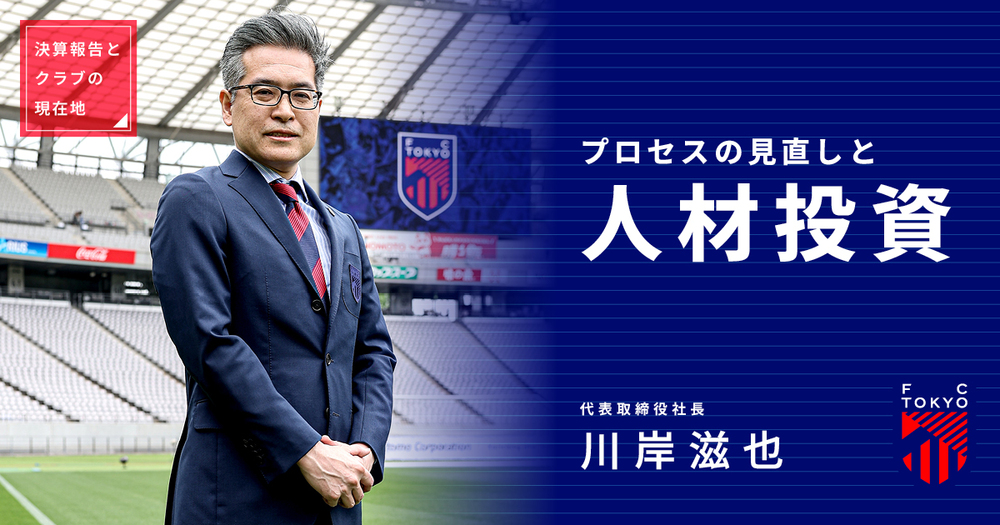
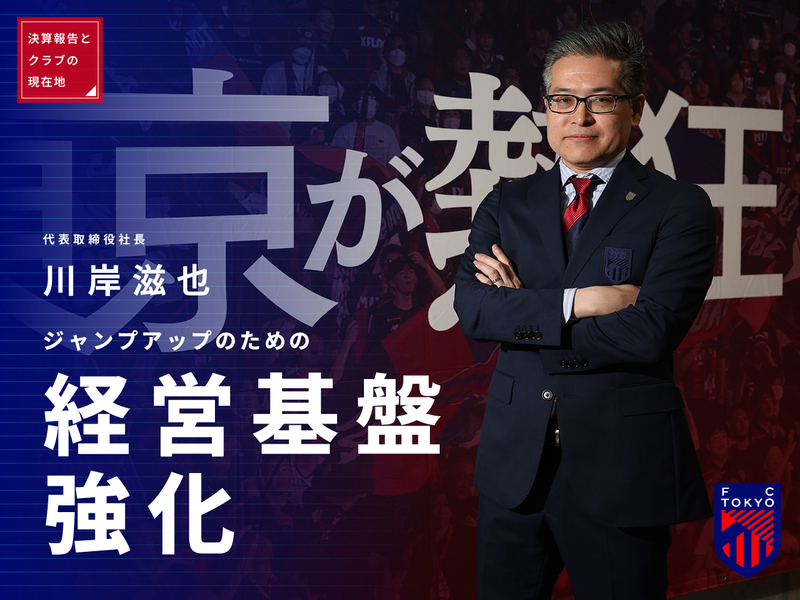
In the second part, we spoke with President Shigeya Kawagishi about the current status of the emblem change, as well as the dual aspects of business and strengthening.
Interview and Composition = Kei Sato (Freelance Writer)
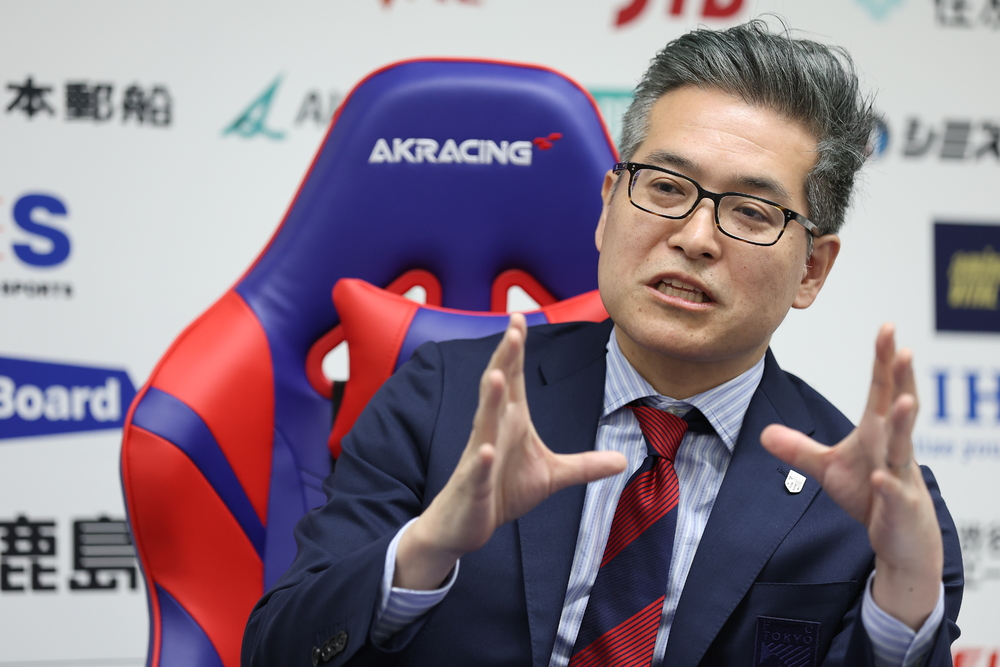
──From the 2024 season, the club emblem has been renewed. Please tell us again about the background and the effects of this change.
Kawagishi What I felt when I became president was that the goal setting within the club was ambiguous. While the fans and supporters shared the goal of "winning the J1 League," there were various opinions on what kind of club they wanted it to be. Therefore, at the beginning of the 2023 season, we formulated 'FC Tokyo VISION 2030' and shared the goal setting, including the direction of the club.
Change of Emblem was not something I considered at all when I became president, but while formulating VISION2030, I began to think about the nature of the emblem as well. There are many things we need to do to achieve VISION2030. Therefore, we reached the conclusion to change the emblem to show our determination to move forward and take on challenges. The design embodies the meaning of "inheritance and innovation." One supporter mentioned, "I can feel a considerable determination knowing that there will be criticism, yet you still choose to proceed." As we reset our goals as a club, it coincides with the 25th anniversary of the club's founding, and this initiative was aimed at taking a new step into the next quarter-century.
──How do you feel about the current situation with the adoption of the new emblem?
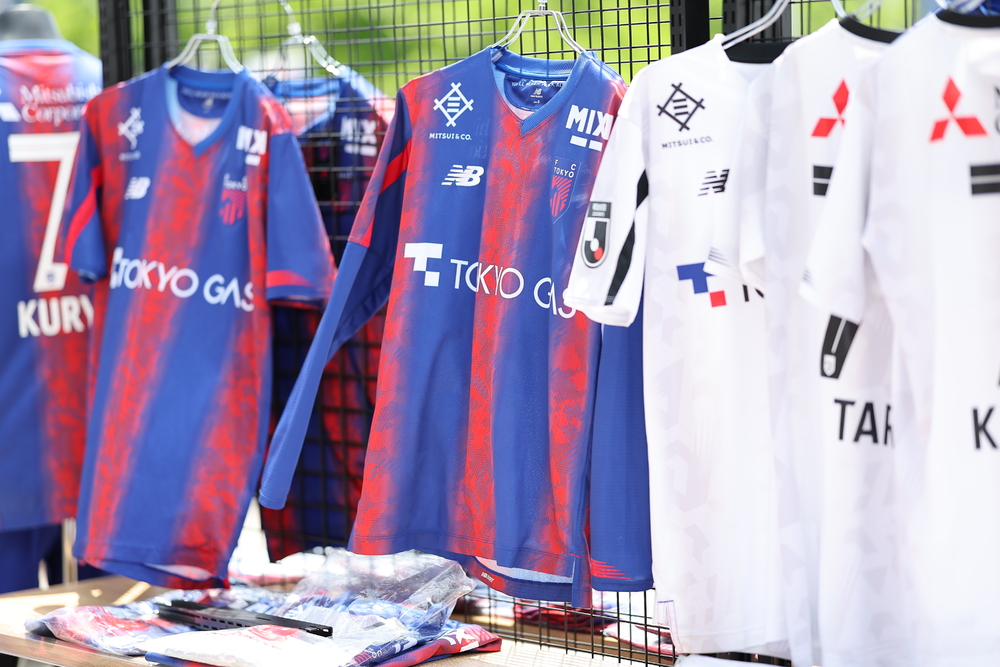
Kawagishi I don't think everyone is fully convinced, but I also feel that it is gradually being accepted. Opportunities for people to actually pick up the goods have increased, and the 2024 season uniforms are selling significantly better compared to the same period in the 2023 season. Sales at the stadium have also reached unprecedented numbers, marking a better-than-expected start in that regard as well. Since there are still not many well-established products using the new emblem, we will gradually proceed with product development. We hope to continue showing the club's commitment and activities, and eventually move forward to gain full acceptance from everyone.
──I think the increase in uniform sales is a trend that has continued since last year. Is there a possibility of further revenue growth in 2024?
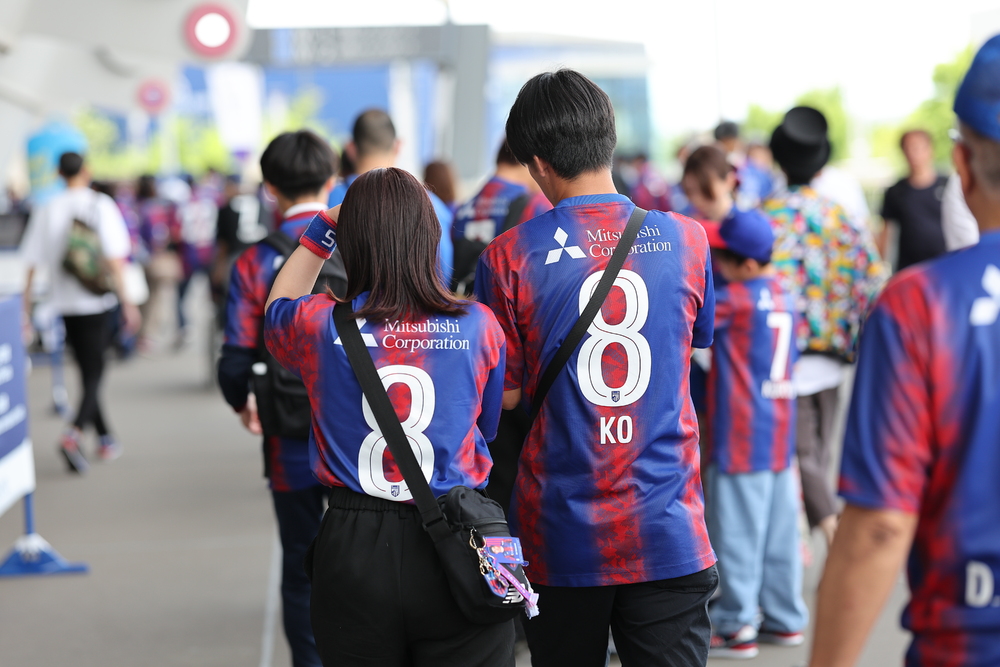
Kawagishi The majority of merchandise sales at any club come from uniforms. This is something I discussed with Chairman Naoki Ogane, and I have heard that FC Tokyo has had a culture of supporting the team by wearing blue or red items. Even before I took office, we have been working on encouraging everyone to wear the uniform to show their support, and the results are beginning to bear fruit now. In fact, merchandise sales have been steadily increasing even during the COVID-19 pandemic, and after overcoming the pandemic, we saw a jump up last season. This season, it looks like we can reach an even higher level.
──Is it expected that merchandise sales will exceed the planned figures?
Kawagishi The figure for the 2023 fiscal year was 600 million yen, but I believe it will exceed that. However, according to the financial results announced by Urawa Reds, merchandise revenue was 1.65 billion yen. There are always those above us. While firmly recognizing the possibilities, I would like to aim for around 900 million to 1 billion yen first.
── Within 'VISION2030,' the year 2023 was positioned as the 'recovery from the COVID-19 pandemic.' How do you summarize this past year?
Kawagishi We were able to "recover" faster than expected. The impact of the COVID-19 pandemic was quite significant, with sales dropping from 5.6 billion yen in 2019 to 4.6 billion yen in 2020. When I became president in 2022, I was worried about how far we could recover. Given the situation, we considered the 2022 and 2023 fiscal years as a phase to first restore sales to the same level as 2019, before the pandemic.
However, in the 2023 fiscal year, we were able to surpass the 2019 fiscal year. Initially, we thought that we would enter the "Phase 2" of the "VISION 2030" re-growth period after the 2024 fiscal year, but I believe we can say that we have entered it as of the 2023 fiscal year. However, it is also important to understand that we have not fully recovered everything from before the pandemic.
──What does that mean?
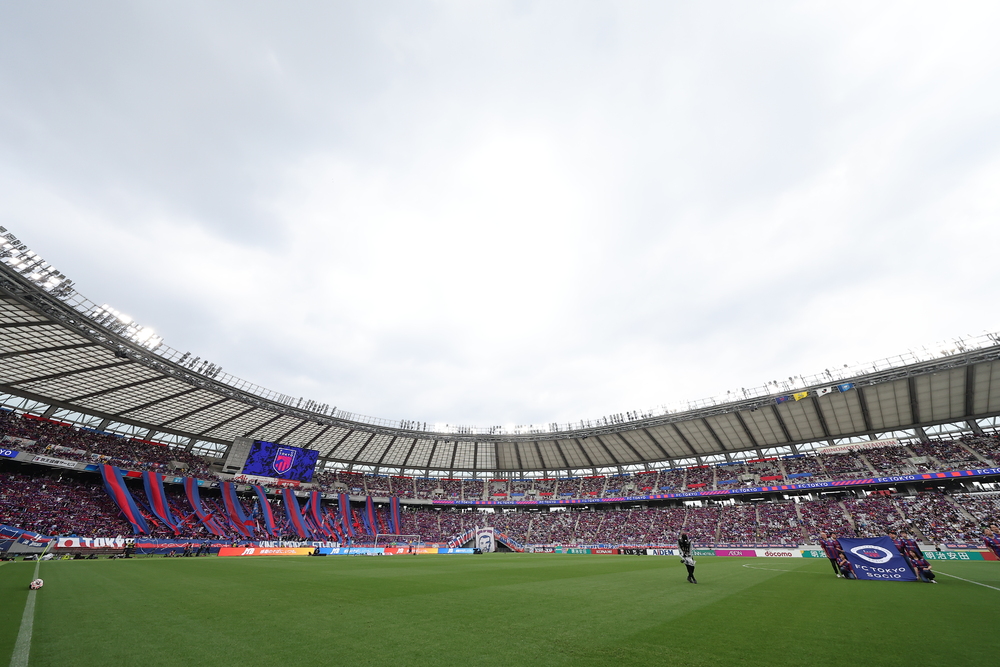
Kawagishi Compared to before COVID-19, attendance has only recovered to about 93 percent of the 2019 season. Upon examining the details, it became clear that there has been a significant turnover. In other words, it is not that 93 percent of the people who attended around the 2019 season have returned, but rather that new attendees have come, resulting in the 93 percent figure. This fact is also shared among the clubs, but it must be accepted calmly.
── I think it will continue to be a very difficult task to attract new customers, but for example, does holding matches at Japan National Stadium have a significant impact?
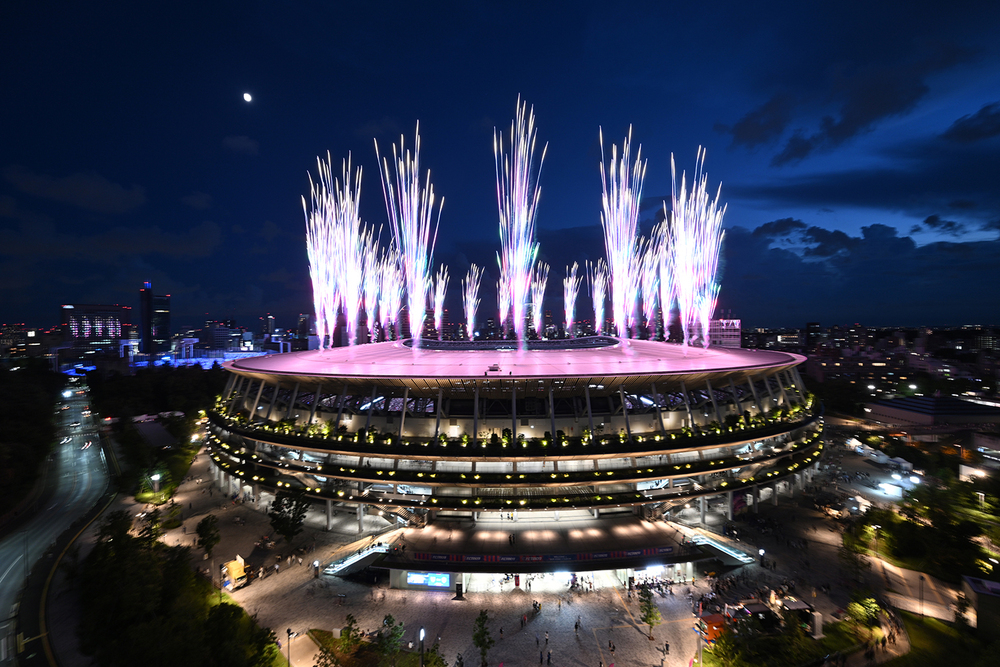
Kawagishi Counting from the 2022 season, we have already held 6 matches at Japan National Stadium. The effect is definitely showing. The number of people registered with FC Tokyo using the J.League ID is about to reach 600,000. This is an outstanding figure in the J.League, and most of these registrations were made as part of initiatives aimed at the National Stadium events. Analyzing the residential areas, it is clear that they are more concentrated on the east side of Tokyo compared to when matches were held at Ajinomoto Stadium. In terms of being able to approach people we have never encountered before, holding matches at the National Stadium is an important opportunity.
── To turn new customers into repeat customers, I believe we cannot ignore improving the core appeal of soccer itself. Conveying that appeal to people who have not yet experienced it and enhancing the attractiveness of the soccer played by the team are two wheels of the same cart. While it may not be a matter of prioritizing one over the other, what are your thoughts on this point?
Kawagishi First and foremost, a professional sports club's value lies in the team's performance itself. In the case of FC Tokyo, since it is a soccer club, the essence and results of soccer, as well as the presence and name value of the players, become the source of the club's value. The business staff's job is to convert that value into money and enable reinvestment. It is clear that what is communicated from the pitch, that is, the performance, is crucial, and this is an undeniable fact. It is also a fundamental principle not to neglect investment in that area.
When I first took office as president, I was an outsider to soccer, so I didn't immediately know what to do in that regard. On the other hand, I was able to quickly identify areas for improvement in the business aspect. Therefore, I focused on improving the business side that I could tackle. As a result, we were able to increase sales to nearly 6 billion yen in two years. That said, personally, I feel that the business side has reached its peak. I also have the sense that we are close to the maximum value we can achieve on the business side. As I mentioned earlier, the club's brand value is built through soccer. Therefore, the next step is to elevate our performance in soccer as well. The theory is to turn the gears with soccer and recover through business. While the competitive aspect has not been untouched, I plan to take a more proactive approach starting this season, and we are actually beginning to take action.
──Specifically, what kind of initiatives have you started?
Kawagishi Last season, we finished 11th in the Meiji Yasuda J1 League, which is obviously not a satisfactory result. There is no doubt that we must improve in terms of performance. However, the difficult part is that this area is all about "people." For example, even if we have analysts and introduce various analysis systems, it is people who arrange those and express them on the pitch. When you think about it that way, it’s a very analog world, which is why it’s so challenging. Improving player performance also depends on people, so it is necessary to invest in the fundamental "people." Of course, this is done with consideration of the field’s intentions, but specifically, we have increased the number of staff involved in the football side of things.
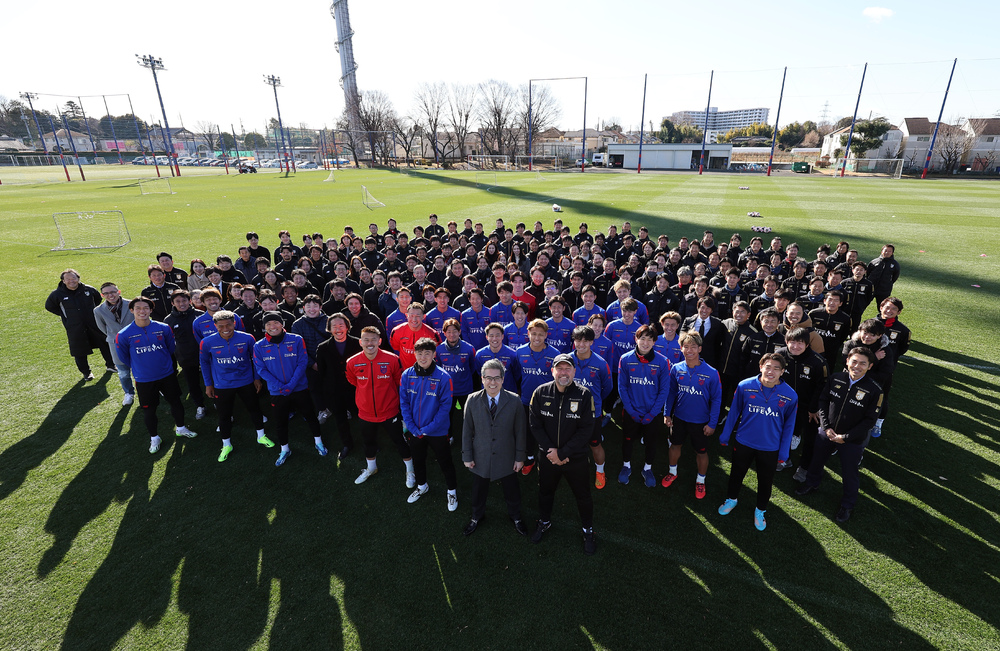
──When covering the practice, there are many staff members, voices are loud, and I feel more energy than ever before.
Kawagishi Of course, I understand that simply increasing the number of people does not immediately lead to results. We must carefully assess the situation at every step. Another point, which I have also discussed with General Manager Mitsushiro OBARA, is that sports heavily depend on mental strength, and I felt that FC Tokyo experiences significant ups and downs. To minimize these fluctuations and maintain a high level, we have added staff who can support the mental aspect.
What the club can support in terms of improving competitive performance is fundamentally an investment in people and the environment. Therefore, we have first strengthened our staff. I believe we have established a system that can support players and the team more meticulously than ever before.
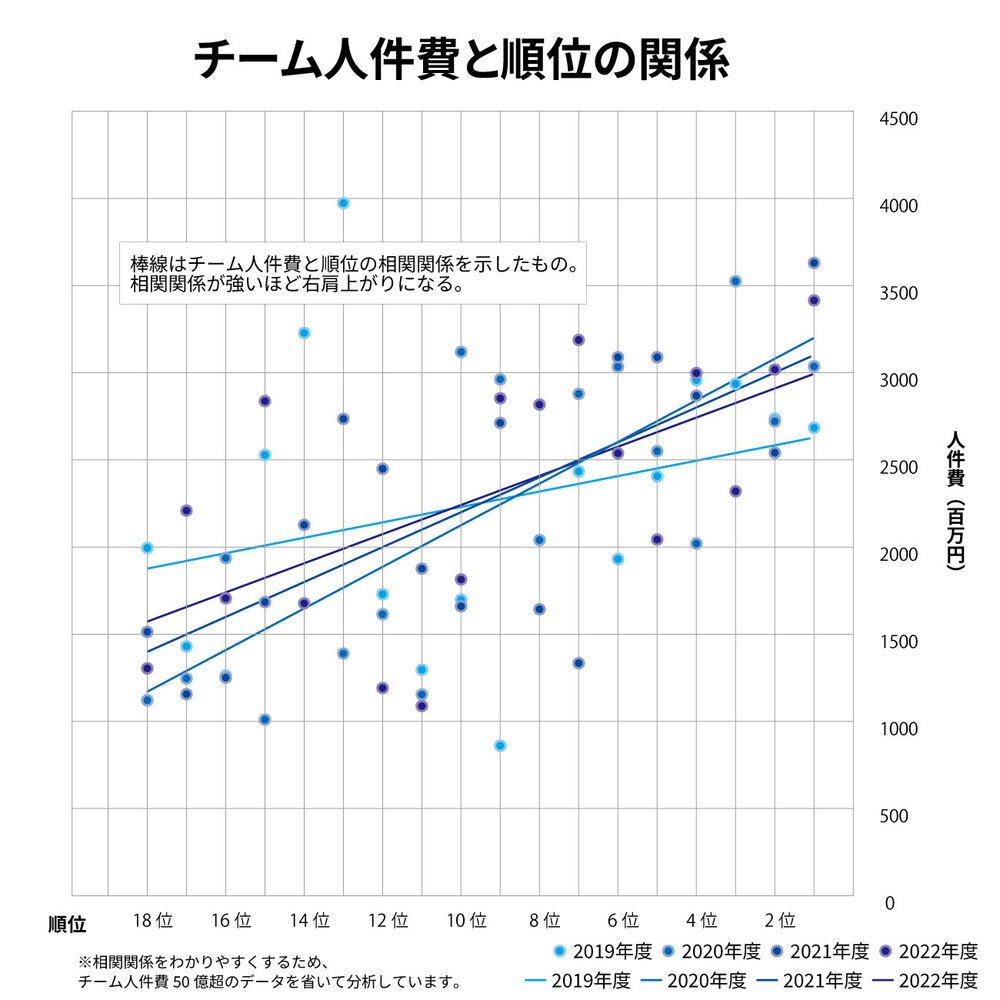
──What are your thoughts on player reinforcement? Looking at last season's standings, Vissel Kobe, which had the highest top team payroll in 2022, and Yokohama F.Marinos, which was second, ended up finishing first and second in the league respectively. FC Tokyo's payroll was 2.538 billion yen, ranking 9th overall. There are many similar cases in major European leagues as well; what is your perspective on this?
Kawagishi I think that is exactly right. No matter how much we analyze, there is definitely a correlation between personnel expenses and rankings. We recognize that our reinforcement budget ranks 9th in the league, and that is an area we want to address as a club challenge. For that reason, we are focusing on increasing sales from the business side, aiming to build a solid organization so that we can make investments properly.
However, this also means that it will take some time. Therefore, I feel that we must do what we can to rise to the next level as soon as possible. I want to strengthen our management foundation and create a situation where we can jump up at some point. Of course, it is not acceptable to take a gamble and end up failing in a year, so I also want to expand our base while identifying the right moments to take risks. At this point, I cannot promise anything to our fans and supporters, but I want to convey that we are considering such policies.
──Finally, please give a message to the fans and supporters.
Kawagishi The club's tradition since its founding, including the change of the emblem, has changed, and everyone may have had various feelings and thoughts, which might have caused the FC Tokyo family to become somewhat divided last season. This season, the team's performance seems to be gradually stabilizing, and I feel that the support at the stadium has become more united. I want to sincerely express my gratitude for creating such a wonderful atmosphere. Based on the club policy presented in 'VISION2030,' we aim to move forward and make the 2024 season a season of even greater unity. Let's continue to move forward together.
The first part is here