

The financial report for FC Tokyo for the fiscal year 2023 announced on May 21. Operating revenue recorded the highest in the club's history at 5.929 billion yen, achieving an increase of 660 million yen compared to the previous year. On the other hand, there is also the current situation of recording a deficit for four consecutive years.
What kind of initiatives were there? And what is the current position of the club as it completely breaks away from the COVID-19 pandemic and looks towards the future?
In the first part, we spoke with President Shigeya Kawagishi about the background of the highest sales ever and four consecutive periods of deficit, as well as the support for the academy, which has undergone significant changes.
Interview and Composition = Kei Sato (Freelance Writer)
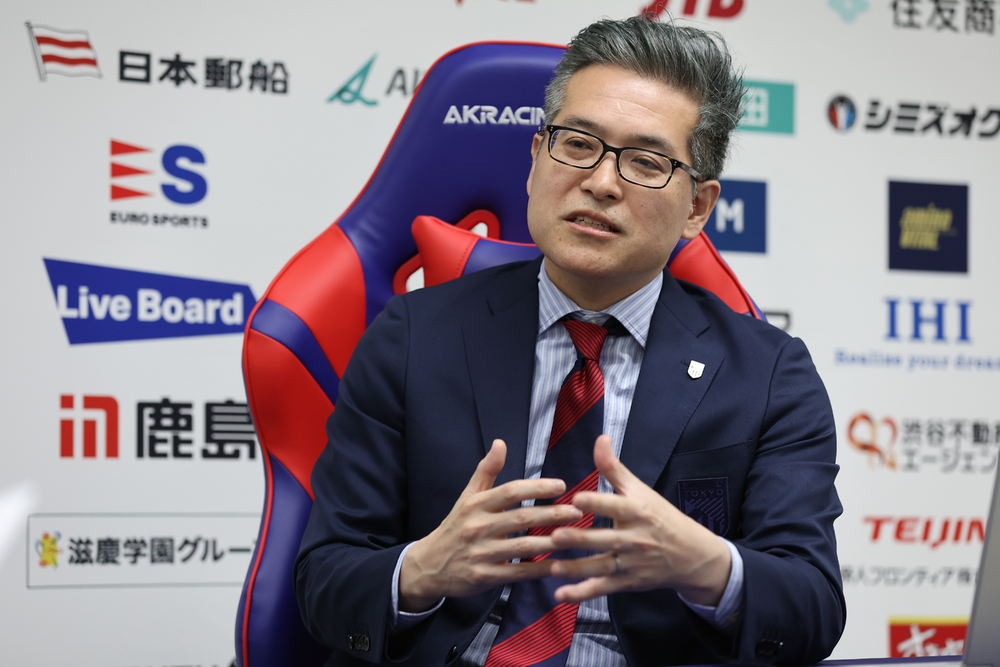
──The financial results for the fiscal year 2023 have been announced. First, please share your thoughts on these figures.
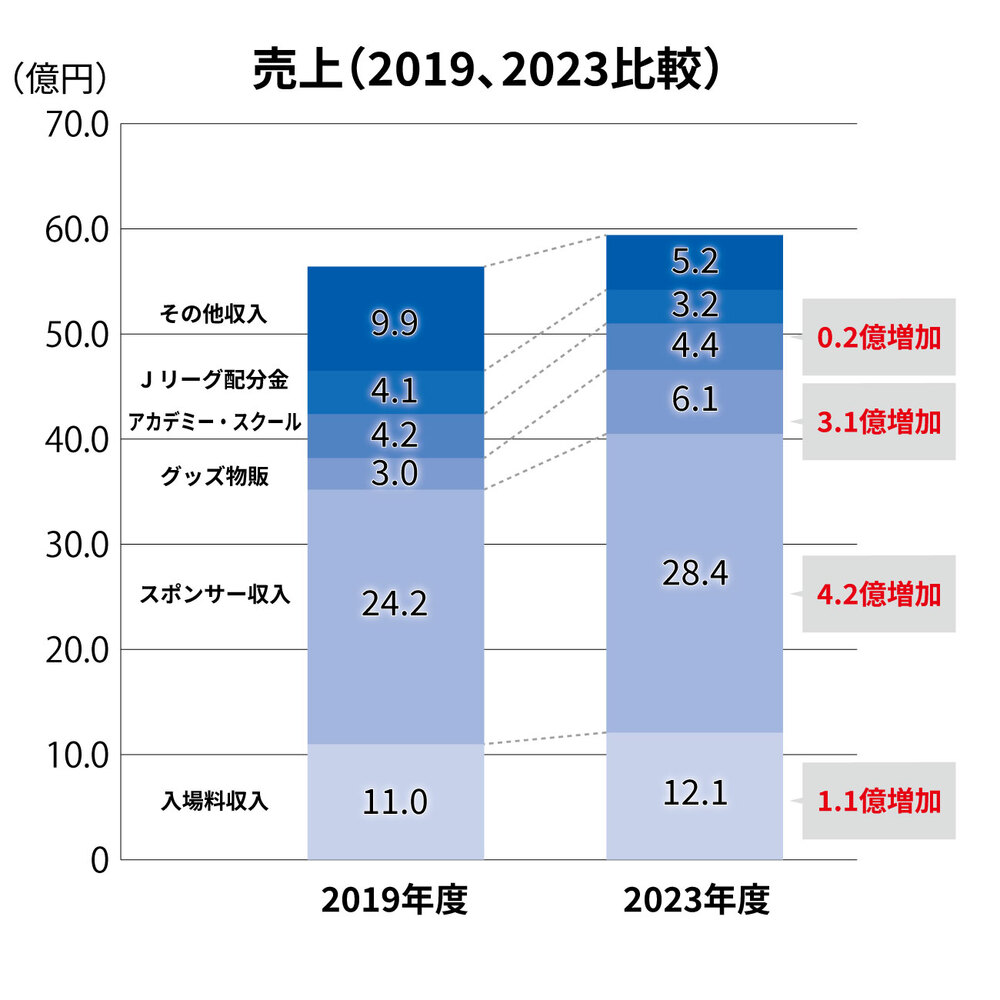
Kawagishi The scale of the club's management is indicated by its revenue. In the fiscal year before COVID-19, 2019, it was approximately 5.635 billion yen, while in the fiscal year 2023, it is approximately 5.929 billion yen. We were able to increase it by about 300 million yen. Compared to the previous year, this is an increase of 660 million yen. This is the highest figure in the club's history, surpassing the previous ceiling. We are grateful to the players, of course, the team staff, club employees, fans and supporters, and our partner companies.
── What is the reason behind achieving the highest sales ever?
Kawagishi It can be said that various initiatives have been reflected in the numbers, not just one thing. We have focused on all segments (fields). First, how can we increase the largest advertising revenue? Regarding ticket revenue, we are seeing recovery from the COVID-19 pandemic, so how much can we grow it? And then there is merchandise revenue. FC Tokyo previously had merchandise revenue of about 300 million yen (as of fiscal year 2019 before the pandemic), which was among the lowest in the J1 League overall. The same goes for the school program. Previously, it was promoted in the context of outreach activities, but we changed our perspective to properly view it as a school business. We believe that these multifaceted improvement efforts have produced results.
──The main source, advertising revenue, was 2.84 billion yen.
Kawagishi The revenue increased by about 300 million yen compared to the previous year. It has been two years since I became president, and I believe that by reviewing and organizing the sales system to take responsibility for the target figures, we have achieved certain results. Ticket revenue, including SOCIO (annual tickets) sales, increased from about 900 million yen in the previous year to 1.2 billion yen. Merchandise revenue had reached 400 million yen as of the previous year, but in fiscal 2023 it exceeded 600 million yen. This was all thanks to the efforts of each person in charge.
──Were there any common points for improvement across each segment?
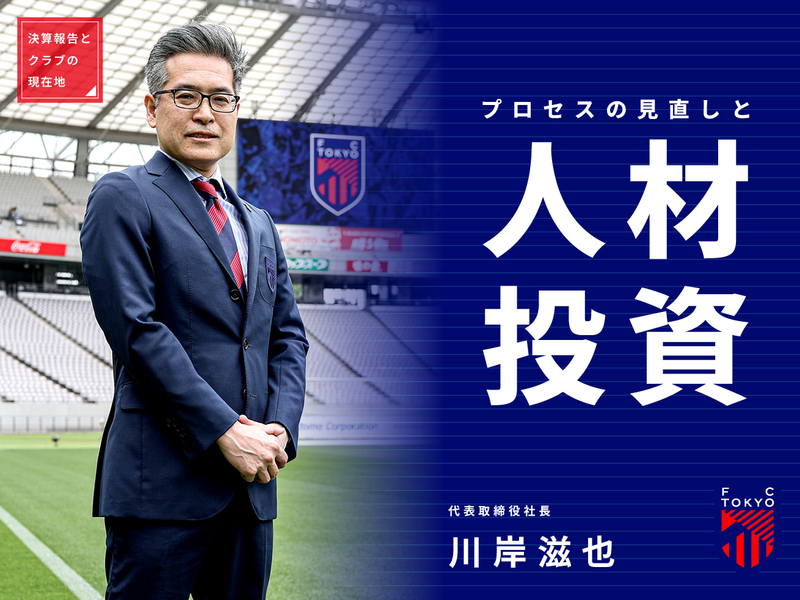
Kawagishi We have been working on a thorough review of our processes and investing in human resources. In particular, we are actively investing in our personnel. This is something I realized again after becoming the president of the soccer club, but without people, we cannot generate numbers, and we cannot grow the club. We consider increasing our excellent staff and developing talented individuals as an investment, and we are actively working on it. We may not be a very large company, but we have increased our business department staff by at least 10 people. To be honest, I did not expect the overall numbers to grow this much in just two years.
──Do you also feel a change in the awareness of employees and staff?
Kawagishi I feel this every day. I have been sending a message that I want everyone to clearly think about "why we do each task." The 'FC Tokyo VISION 2030' established in March last season is a guideline to align the direction of each individual, and as a result, the managers of each department organized what kind of numbers they should aim for and what efforts are necessary for that. I believe that by working diligently together, we achieved the highest sales ever.
──What specific initiatives were undertaken to increase merchandise revenue, which was among the lowest even within J clubs?
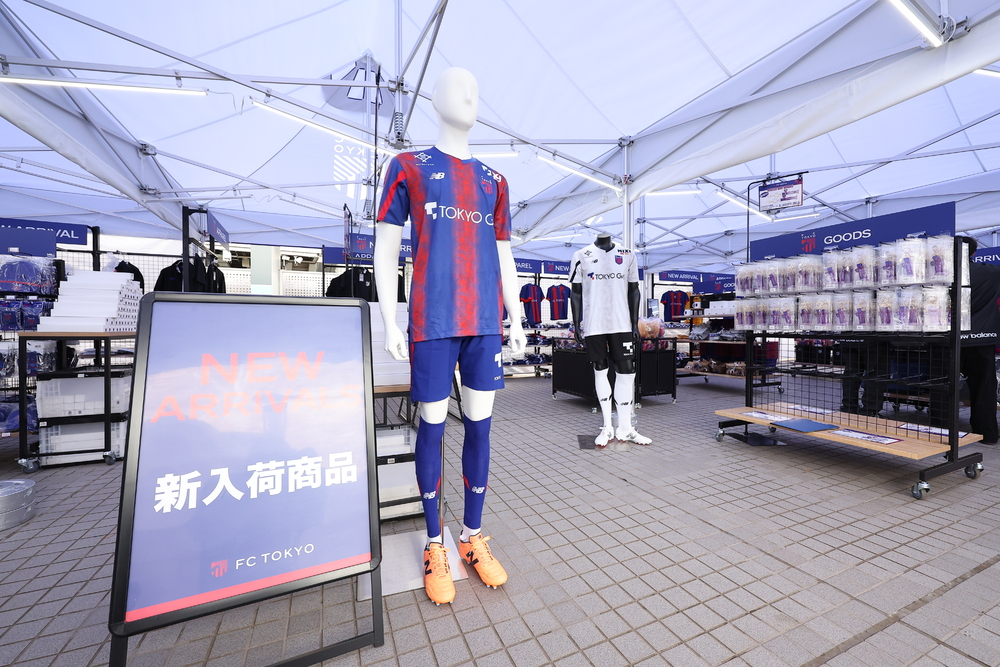
Kawagishi First, we talked about changing the mindset. For example, regarding the sale of uniforms. Previously, there was a mindset to avoid ordering too much due to fear of inventory risk, and it seems the person in charge struggled with the initial order quantity every season. However, uniforms should be items that fans can buy whenever they want. I told the fans and supporters that we should stop having situations where there is nothing available for sale when they visit the goods shop. Even if it means taking on the risk of ordering stock, we want to properly prepare the products. If there are items available for sale, sales will increase. Although there are still cases of stockouts, we have been ordering more products than last season and managing inventory risk accordingly.
── On the pitch, it is often said that "you can't expect big returns without taking risks," but isn't it difficult to change your mindset to take risks on the business side?
Kawagishi As stated in 'VISION2030', when we think about Tokyo becoming FC Tokyo, we cannot move forward if we stay timid, and we will never reach that stage. A challenge is definitely necessary. Naturally, there will be trial and error in the process, but it is through that that we gain awareness. Of course, we discuss how much return there will be, but the management team has firmly maintained a perspective that allows for this as we move forward.
Additionally, a significant factor was becoming a group company of MIXI, Inc. Until now, Tokyo Gas was the parent company, providing support, but in terms of capital relations, the club was independently managed and did not have a management structure capable of absorbing deficits. However, now in discussions with MIXI, it is considered acceptable to establish a business plan that includes deficits, as long as it can be clearly explained. In that sense, we have planned for deficits in both the 2023 and 2024 fiscal years, but those deficits will be absorbed by MIXI, allowing for a more aggressive management approach. Previously, we might have wondered what to do when surplus funds ran out or if capital increases would be necessary. Now, the mindset has shifted from what to do with excess funds to how to utilize them effectively.
──In the financial report, the operating loss was approximately 96 million yen, and the final net loss was 228 million yen. Although this marks the fourth consecutive term with a deficit, can we consider this figure to be as planned, as explained earlier?
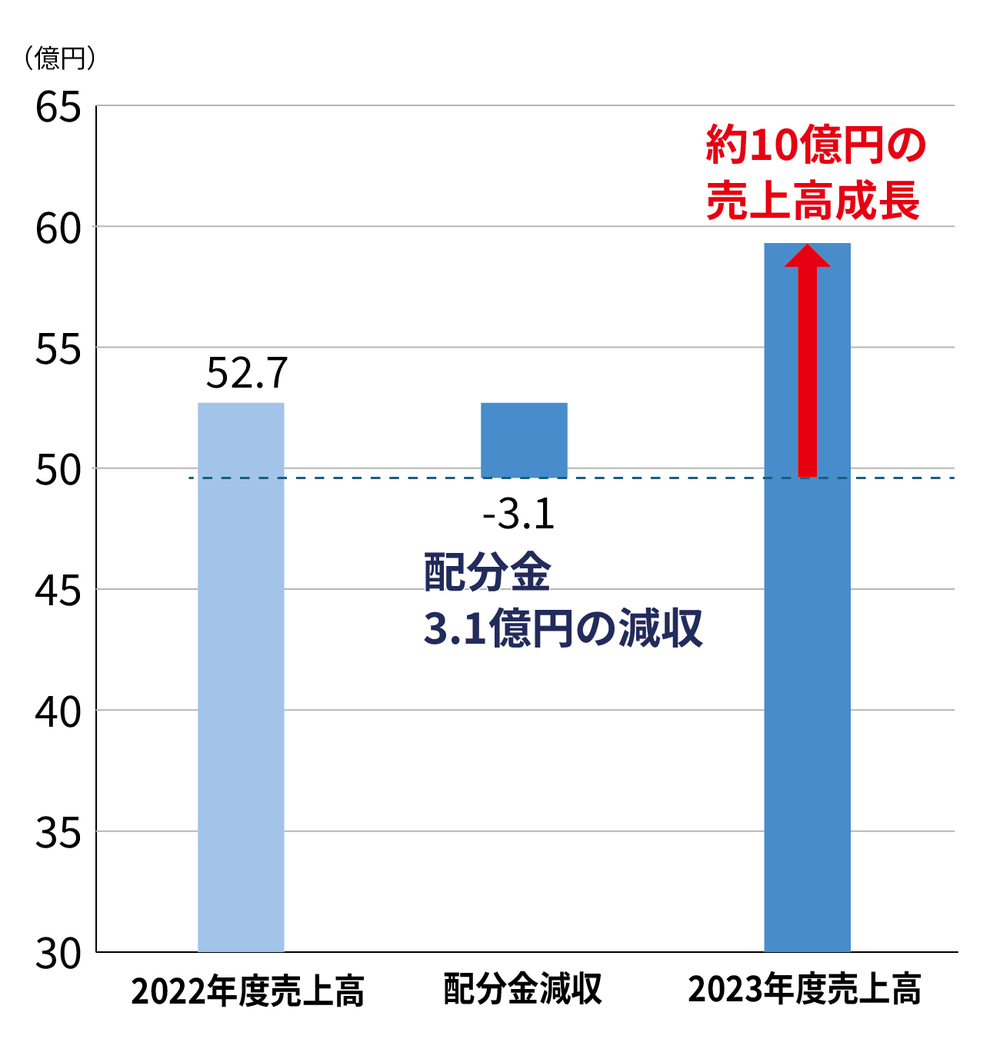
Kawagishi That's right. To explain a little more about the 2023 fiscal year results, first, there was a change in the revenue side as a premise. By finishing 2nd in the Meiji Yasuda J1 League in the 2019 season, we received philosophy reinforcement allocation funds from the J.League for the following three seasons, amounting to 250 million yen, 250 million yen, and 200 million yen respectively. This ended with the 2022 fiscal year. Also, the equal distribution funds were reduced by 110 million yen.
The changes in revenue were understood before the start of the 2023 fiscal year, and it was important to determine how to respond to these changing "premises." The operating loss for the 2022 fiscal year was 87 million yen, and when adding the decrease in distribution income of 310 million yen, it would normally result in a loss of about 400 million yen. The management challenge for the 2023 fiscal year was to see how much recovery could be achieved from this negative 400 million yen. At the beginning, it was explained that sales increased by 660 million yen compared to the previous year, but considering the decrease in distribution income, it calculates to nearly a 1 billion yen increase in sales as the club's actual performance. I believe this figure is good considering the current scale and strength of the club, and it significantly exceeded our plans.
Impairment was also carried out, but this is a way of accounting for future costs in advance. Considering future prospects, this was implemented to increase management flexibility from the fiscal year 2024 onwards. The capital is also robust, so there are no issues at all.
──There was talk about shifting the focus from promoting the school to making it a business. How about the academy? An initiative called Academy Supporters has started for fans and supporters.
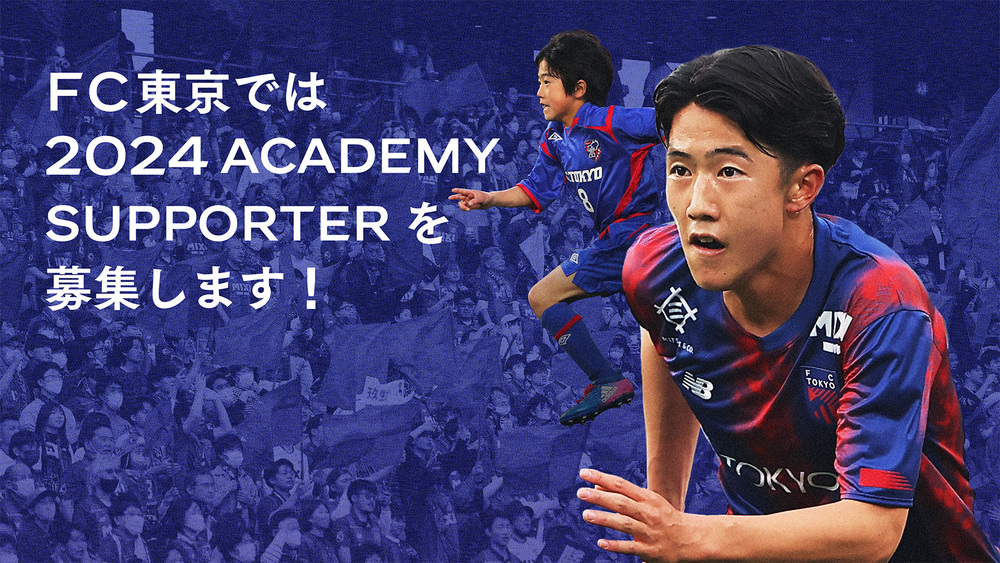
Kawagishi Until now, we have had fans and supporters support the academy in the form of club support members. However, in reality, it was a program close to a so-called fan club organization. Therefore, we adopted the idea of aligning the reality with the content, and the previous program was changed to OFFICIAL MEMBERSHIP. On the other hand, we also received voices expressing a desire to support the academy, and after much discussion on what form would be best, this time we have renewed it as Academy Partner and Academy Supporter.
──What are the differences between Academy Partners and Academy Supporters?
Kawagishi In broad terms, the Academy Partner is for companies, and the Academy Supporter is for individuals. We are moving forward while listening to various opinions on whether this structure is the best, but we have already received applications roughly as expected, and I honestly feel it was good to get started. To be frank, the Academy's operating costs are very large, and if you look at it in isolation, it results in a significant deficit. While it is an important investment for the club in terms of nurturing players who will succeed in the top team in the future, it is also necessary to make efforts to expand the Academy's activities while managing the deficit. We started this initiative to respond to those who want to support the Academy by establishing a new program for them and to make the Academy's activities more active overall.
── Please tell us again what the academy means to the club. Last season, we won the J.League Best Youth Development Club Award for the third time in six seasons.
Kawagishi Tokyo has a large population and can be said to be one of the prefectures with the most children playing soccer. Not all current academy players are from Tokyo, but considering this fact, we believe we have a mission as the capital's club to produce professional players. Over the past few seasons, looking at the entire J.League, about 50 to 60 players on average per season who came from the FC Tokyo Academy have been playing as professional soccer players. I think this is wonderful, and we believe it is a strength of our club that must be permanently maintained.
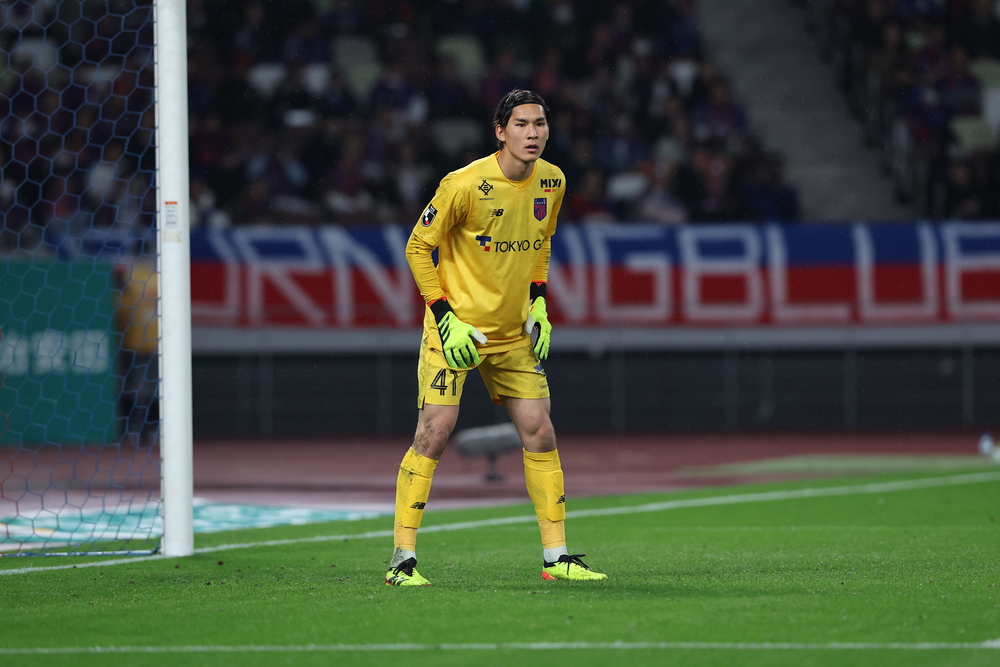
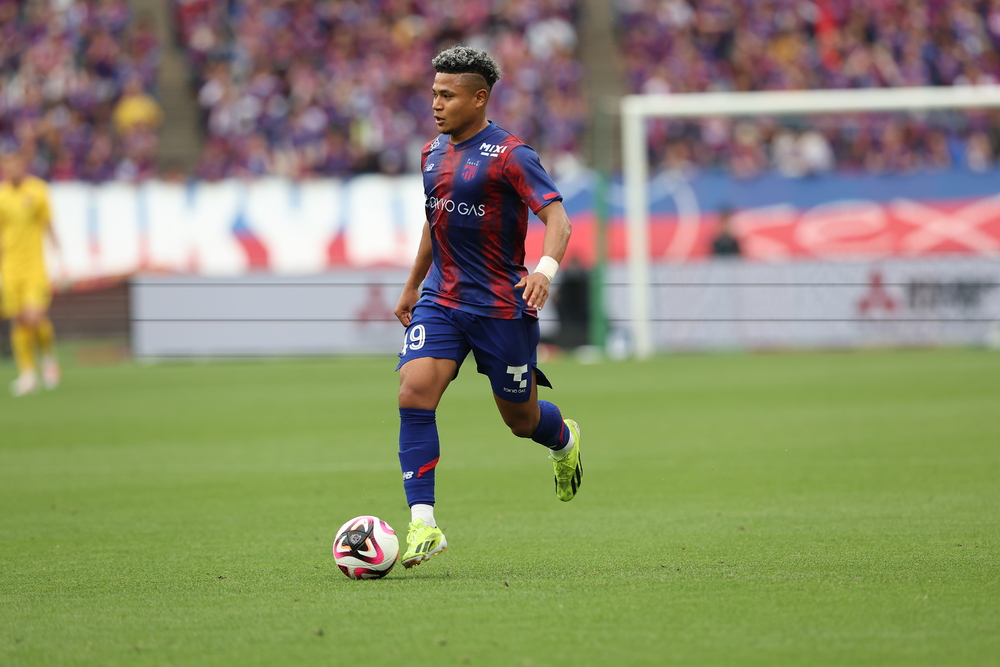
Currently, looking at the top team members, there are many from the academy, and the club is in a very good cycle. This is a very favorable situation in terms of team composition. When acquiring players from outside, it often requires a penalty fee associated with contract termination, but if we develop our own players, that is not necessary. Moreover, if there are many players from the academy, we can invest a significant amount of money when we do need to acquire from outside. I believe that having academy graduates perform at the top level has many advantages in various aspects.
Kashif BANGNAGANDE
However, considering the landscape of the global football world, the J-League's position is not at the top. Players will inevitably aim for the world's top leagues, and there is a reality that they want to challenge themselves overseas. It is unavoidable that players from the academy will eventually move on. If that is the case, it becomes important for us to develop them properly and earn transfer fees. We believe it is extremely important to establish a cycle of reinvesting those funds to develop players who can succeed globally and grow the club.
The second part is here